


Annual Georgian tasting, Cabaret des Oiseaux, visits to Lijsternest and Loire fairs, non-alcoholic Gut Oggau, incoming Denavolo, Shun Minowa, sparkling Japanese wine, Otter's Pet Nat Blanc and more!
Dear all,
It’s February already! We hope you all made it through the grey January month in good spirits and, like us, are looking ahead to February with enthusiasm. This month certainly started off well: as tradition dictates, last weekend we visited around ten natural wine fairs across the Loire Valley, where we tasted the new vintage(s) with nearly forty of our Zuiver producers. On our way to the fairs, early on a cold Friday morning, we also paid a visit to the beautiful, all-natural vineyards of Lijsternest near Kortrijk. In this newsletter, we briefly report on our visit to Lijsternest as well as on the fairs and the new vintages.
Besides looking back, we’re also happy to look ahead and warmly invite you to our annual Georgian tasting. The shipment of the Georgian wines arrived last December, and on Monday 16 February we’ll be opening the wines for the first time. Furthermore, this month we’re also releasing the wines of Cabaret des Oiseaux, have (finally!) received the new wines from Denavolo and Shun Minowa, there’s good sparkling news from Japan and Alsace, and we’re expecting entry-level wines as well as the excellent alcohol-free range from Gut Oggau.
Read on below for the fair and visit reports, the invitation to the annual Georgia tasting, and all the latest wine news.
INVITATION: ANNUAL GEORGIAN TASTING
MONDAY 16 FEBRUARY
12:00 - 16:30
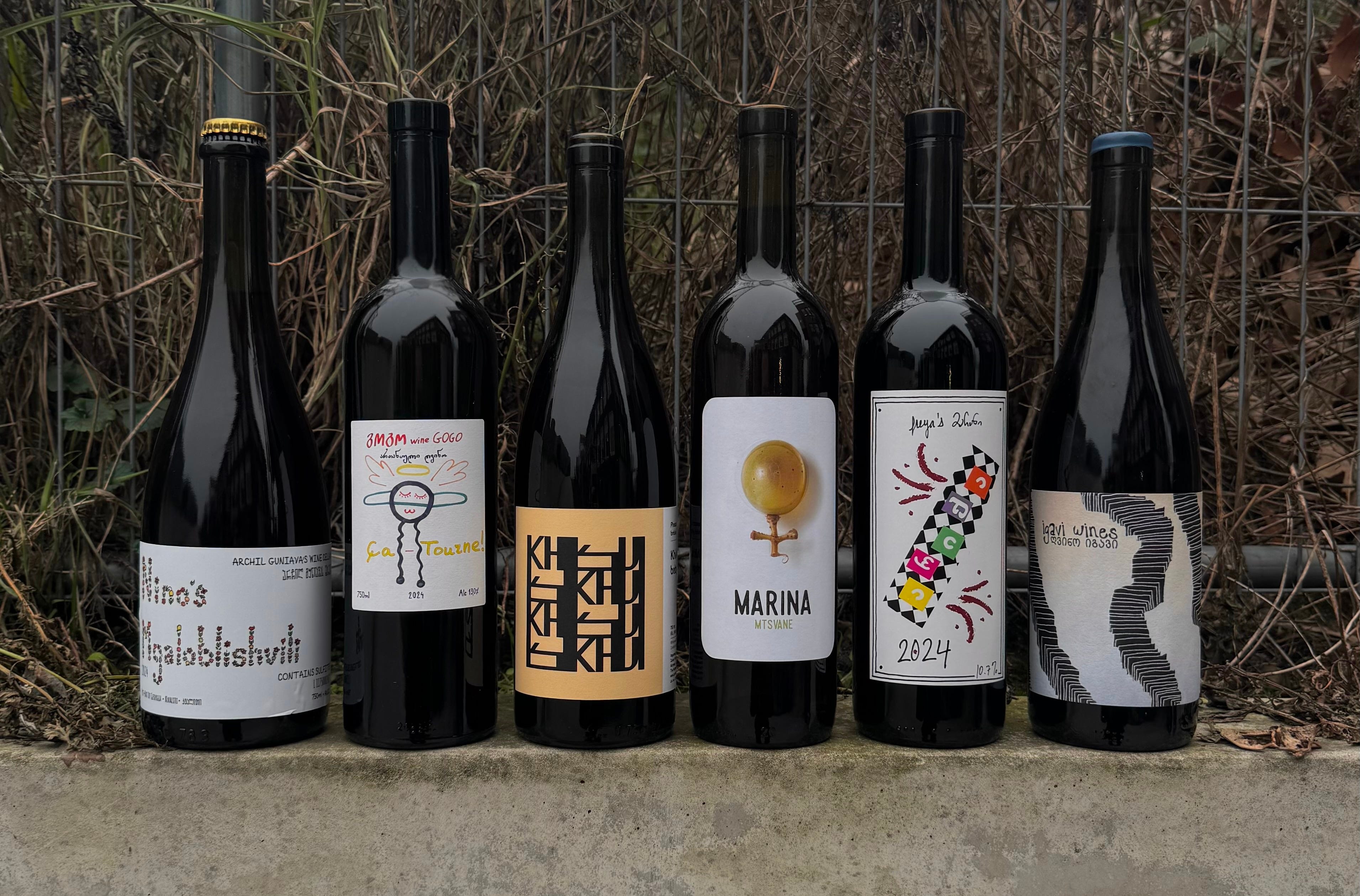
As is tradition, this spring we’ll once again be hosting our annual Georgia tasting at Restaurant Choux. This year we’ll be opening wines from the familiar dozen Georgian producers, and in addition we’ll be pouring wines from a new Imeretian producer named Aidan Raftery, who makes wine under the Igavi Wines-label.
Dick brought Aidan’s wines back with him in May 2025 after his visit to the Georgian wine fair Zero Compromise, and after tasting them we were immediately convinced. Even though our Georgian portfolio is already quite extensive, we simply couldn’t resist — especially since the reds were electric and mesmerizing…
The tasting will take place on Monday 16 February, from 12:00 to 16:30. During the tasting, the 2024 vintages (as well as selected 2023s and 2022s) from the producers listed below will be open to taste. Given the very limited quantities from many of these producers, this tasting may well be the only opportunity this year to try these wines.
Archil Guniava (Imereti)
Mariam Guniava (Imereti)
Makaridze (Imereti)
Freya’s Marani (Imereti)
Ramaz Nikoladze (Imereti)
Iago’s Winery (Kartli)
Marina’s Wine (Kartli)
Kortavebis Marani & Tamuna’s Wine (Kakheti & Kartli)
Gogo Wine (Kakheti)
Andrias Gvino (Kakheti)
Manavi Wines (Kakheti)
Pheasant’s Tears (Adjara, Meskheti, Imereti, Kartli & Kakheti)
NEW: Igavi Wines (Imereti)
Please RSVP for this tasting by emailing info@zuiverwijnen.nl, including the name of your restaurant, café, bar or shop, and the number of people attending. The tasting is free of charge for all our professional clients and is open walk-in.
VISIT TO WIJNGAARD LIJSTERNEST, KORTRIJK
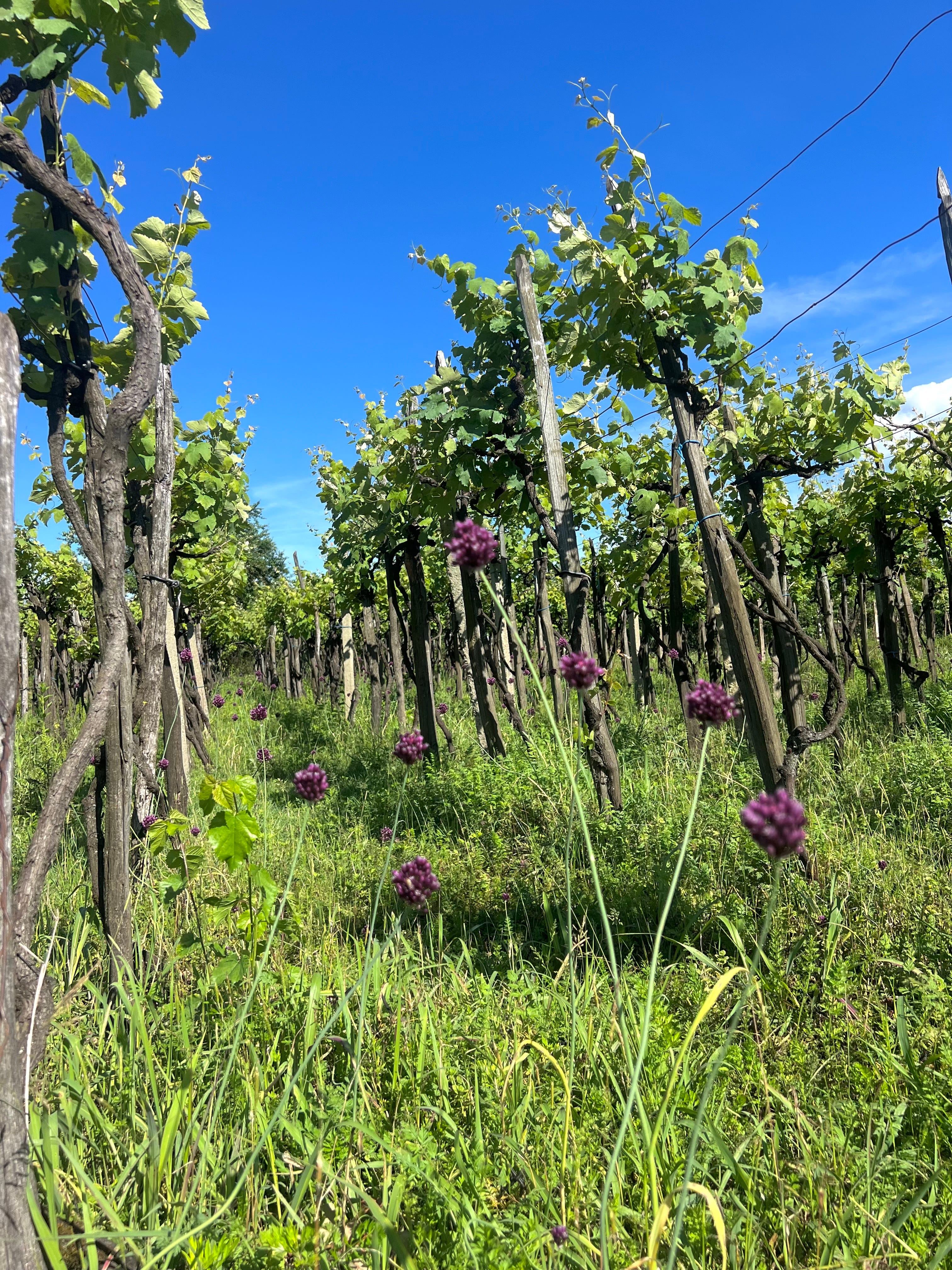
Last Friday, we visited Servaas Blockeel of Wijngaard Lijsternest in Otegem, just west of Kortrijk. Servaas planted his vineyards here in 2013 and has been making wine since 2015 from a range of hybrid grape varieties. He consciously chose lesser-known crossings from Switzerland—varieties that not only thrive in Belgium’s cooler climate, but are also naturally resistant to fungal diseases. His goal was clear: to create a vineyard that gives back more than it takes. As Servaas puts it himself, “the ecological aspect always comes before our perception of quality.”
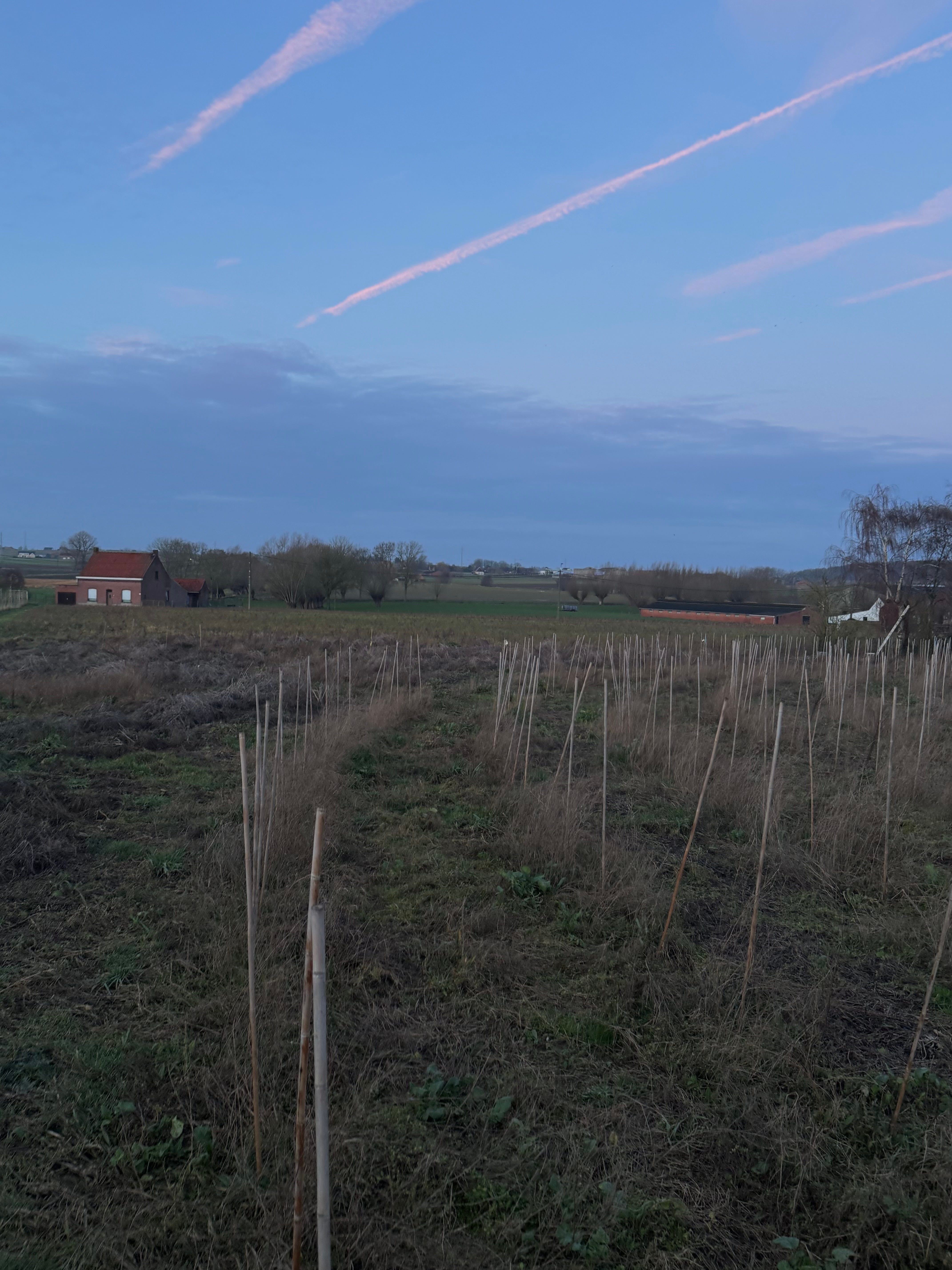
Early in the morning we visited Servaas’ own planted vineyards, where he told us he has never sprayed—something that is highly exceptional for vineyards in Northern Europe. He is fiercely independent in this, placing the health of nature, and the holistic ecosystem in particular, at the very top of his priorities. In the vineyards, Servaas works according to the no-till method inspired by Masanobu Fukuoka, meaning the soil is not ploughed or tilled, and therefore not compacted or opened either. Also, hedges, trees and other shrubs are planted throughout the vineyards to stimulate insect and animal life. Servaas recently also planted new vines in only two rows of each 5 kilometers long. Because of this pattern, Servaas’ uses both less surface area compared to planting in many short rows, as well as attracting more animals and therefore more biodiversity.
Before becoming a winegrower, Servaas worked on the construction of self-cleaning swimming ponds, based on the natural interaction between algae and plants. There too, improving and harmonizing the ecosystem was the starting point—an approach he later translated directly to his vineyards. When we asked how he came up with the idea of planting disease-resistant hybrids and decided never to spray, Servaas simply said: “I used to work in a natural way with the swimming ponds as well.”
Servaas is convinced that by creating healthy, complex soils and truly giving biodiversity space, you contribute to the landscape and can harvest grapes of exceptional quality. Despite never spraying copper or sulfur, he has rarely faced disease pressure and still harvests an average of around 40 hL/ha—high for (more-than-)organic vineyards that are neither ploughed nor sprayed.
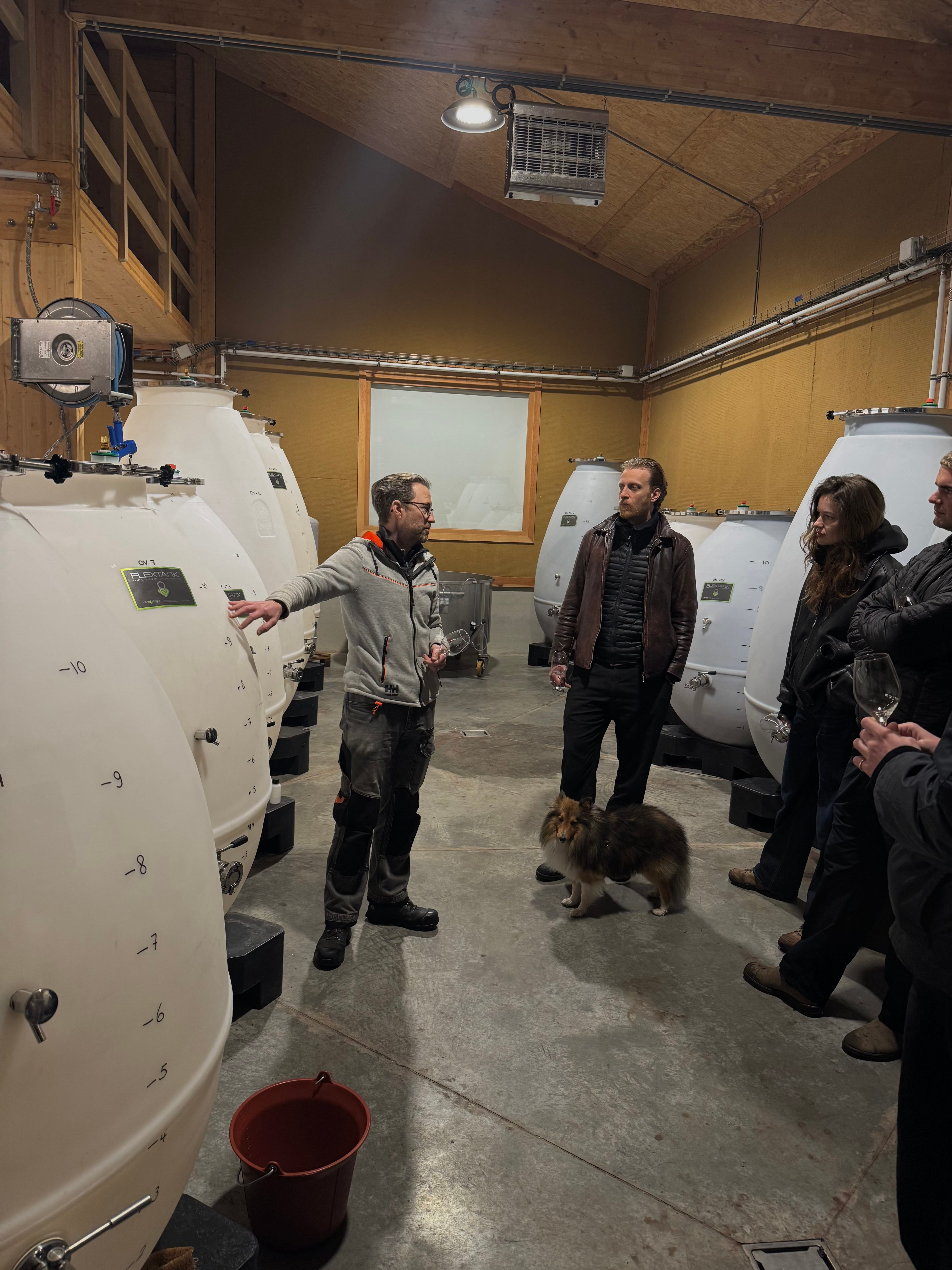
In the cellar, Servaas is equally committed to minimal intervention and to preserving the fruit—and therefore the character of the grapes. Destemming is done by hand, and fermentation and ageing take place in large, egg-shaped, breathable plastic vessels. Wines are made parcel by parcel, with each cuvée coming from a distinct soil type. We tasted several red and orange wines from tank from the 2024 and 2025 vintages, as well as the floral, grassy orange Oker 2023 (Solaris, Bronner, Sauvignac, Rinot, Riesel), the juicy, elderberry- and cassis-driven red Mag Da 2023 (Solaris, Rondo, Bronner, Muscat Bleu), and the energetic, rousing red Fatima 2023 (Solaris, Rondo, Bronner, Muscat Bleu, Cabaret Noir, Sauvignon Soyhières, Rinot, Riesel) from bottle—all of them incredibly good. While many—especially in the classical wine world—still turn up their noses at hybrid, disease-resistant varieties, we believe Servaas is making some of the most energetic hybrid wines in the Benelux.
Also worth checking out is Servaas’ new Substack, where he writes about his findings and advocates for natural agriculture.
VISIT TO LOIRE WINE FAIRS
After visiting Lijsternest early Friday morning, we drove straight to the Loire Valley—the natural wine epicenter of the world during the first weekend of February. Winemakers from all over Europe gather here to pour their wines at around twenty fairs and salons scattered throughout the region, making it the perfect opportunity for us to see many of the people we work with in a relatively short amount of time.
Friday, January 30
On Friday afternoon, after a long drive from Kortrijk to Angers, we visited the fair Les Pénitentes. After being absent for several years, it returned to its original location in the heart of Angers. More ‘classic’ natural wine producers such as Hervé Villemade, the Mosse brothers, and the Labet family were present, but our focus was primarily on a number of Georgian producers and the Puzelat sisters of Clos du Tue-Boeuf, with whom we tasted the new vintages.
Zoé and Louise Puzelat officially took ownership of the domaine from their father Thierry last year. Since the 2020 vintage, they have been leaving a clear mark on the domaine’s new direction. We tasted a wide selection of 2023s, 2024s, and even some 2025s, where the delicate touch of the duo was clearly evident. Notably, many of the more elegant wines are now bottled without sulfites—something their father used to do more often. The wines were pure, incredibly juicy, aromatic, with beautiful acidity and pronounced minerality. Favorites included the new Le Petit Buisson 2024 (Sauvignon from a silex soil), Le Brin de Chèvre 2024 (barrel-aged Menu Pineau), and the wildly energetic, almost rhubarb-like Pinot Noir La Caillère 2024. All bright and living terroir wines.
We also tasted extensively with John Wurdeman of Pheasant’s Tears, together with Iago, Ketevan and Tamuna exploring the full range of their new Georgian releases, which will also be opened during the Georgia tasting. Highlights included the orange Khikhvi 2024 from Kakheti by Pheasant’s Tears, as well the high-energy Chkhaveri 2024 from the Islamic region of Adjara on the Black Sea, and Mtsvane 2024 from Iago’s wife Marina—again wonderfully aromatic and floral, as good as good Mtsvane can be. From Ketevan (bottling under Gogo Wines), we were deeply impressed by the aromatic light-orange Ça-Tourne 2024 (Rkatsiteli Vardisperi and Mtsvane) and the lightly oxidative Rkatsiteli Ti Sogno Bene 2024— both finally made from her own grapes after three disastrous years in which she lost the entire harvest. Ketevan is back, and the wines speak for themselves.
After Les Pénitentes, Dick drove to Beaulieu-sur-Layon, where the new Northern Rhône range from prodigy Thibaud Capellaro stole the show with his fantastic orange Le Temps d’une Bise, the red Pierre Taillée, and the new version of La Canuse. We also caught up with familiar faces, including Marie Bourdon and Simon Rouillard, before tasting with István Bencze of Bencze Birtok, who brought a range of mainly white wines, amongst which the Riesling 2023 and incredibly mineral-rich Furmint 2023 were the favorites, besides the new Autochton Red 2024 which had a tension reminiscent of the best Auvergnes reds.
Saturday, January 31
Saturday was the busiest day of the fairs. In the morning, we started at the Naturall-fair, where we were able to taste with about ten winemakers we love to work with. We tasted the 2023s and 2024s of lightly oxidative, razor-sharp Chenins and intoxicating Pineau d’Aunis from JP, Noëlla and Juliette Robinot; sampled long-aged bubbles from Núria and Manel of Clos Lentiscus; tasted the new vintage of the affordable orange fireworks from the La Rural brothers; were blown away by the wines of Marto (including his orange 100% Kerner…) and the micro-work from Wilfried Garcia of Domaine Cotzé in the Pyrenees, including his first (chique!) domaine wine. Due to an internal split within Naturall, Tom Lubbe of Domaine Matassa and Justine & Patrick of La Bohème were unfortunately absent, but we managed to catch up and taste extensively with Tom later in the day at the back of a van on a parking lot, as well as during dinner on Sunday...
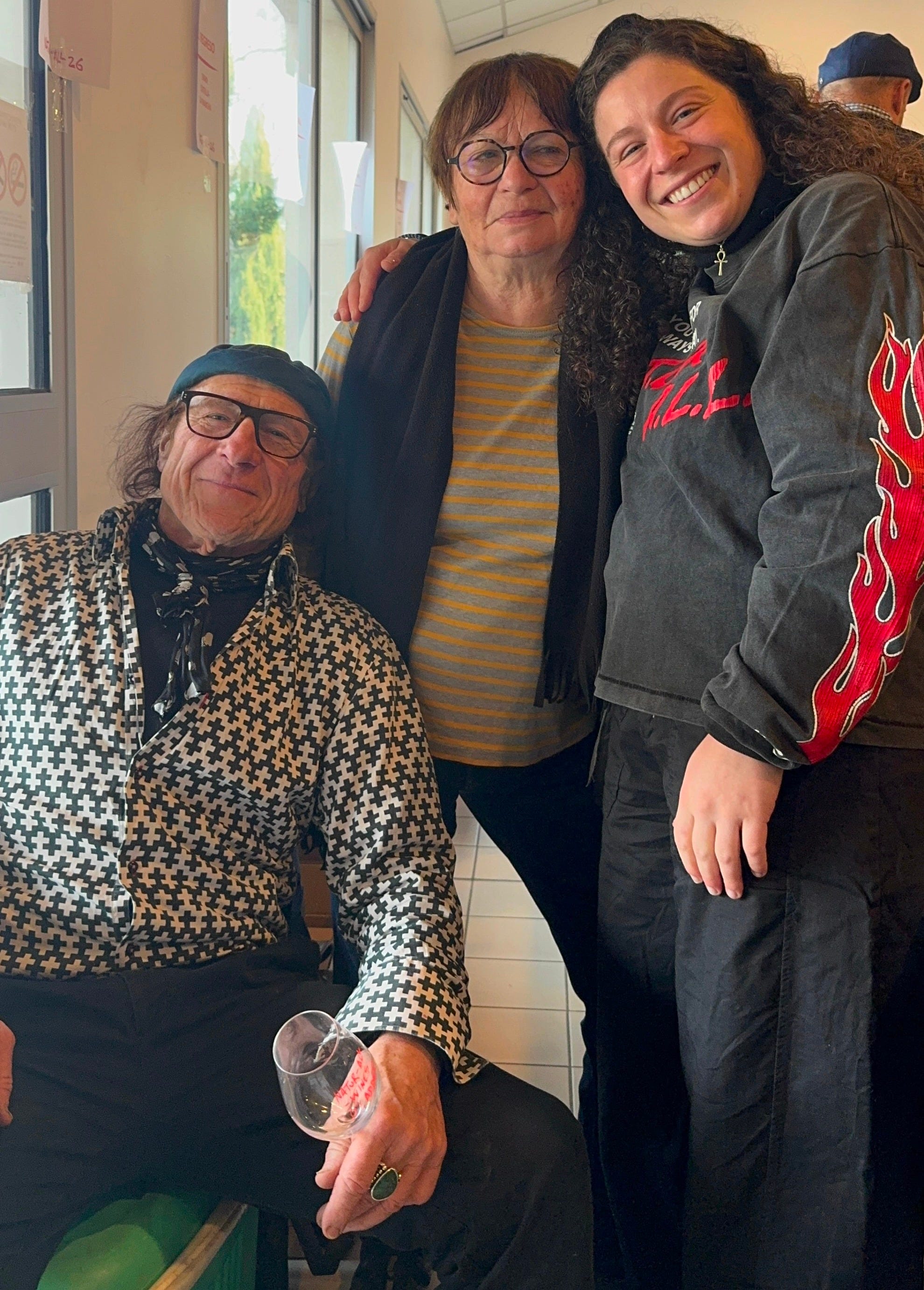
At the new salon Digressions, we met Miha and Tom from L’Absurde Génie des Fleurs, tasting all the 2024s and some tank samples of the 2025s. Just what we needed to recharge our energy—after the first wine, smiles appeared, and not long after, everyone was giggling. The wines of Miha and Tom have a crazy, uplifting and positive effect on many, and we can’t wait for them to come to the Netherlands later this year to show our clients the 2024s, which have been resting in our cellar for a while now…
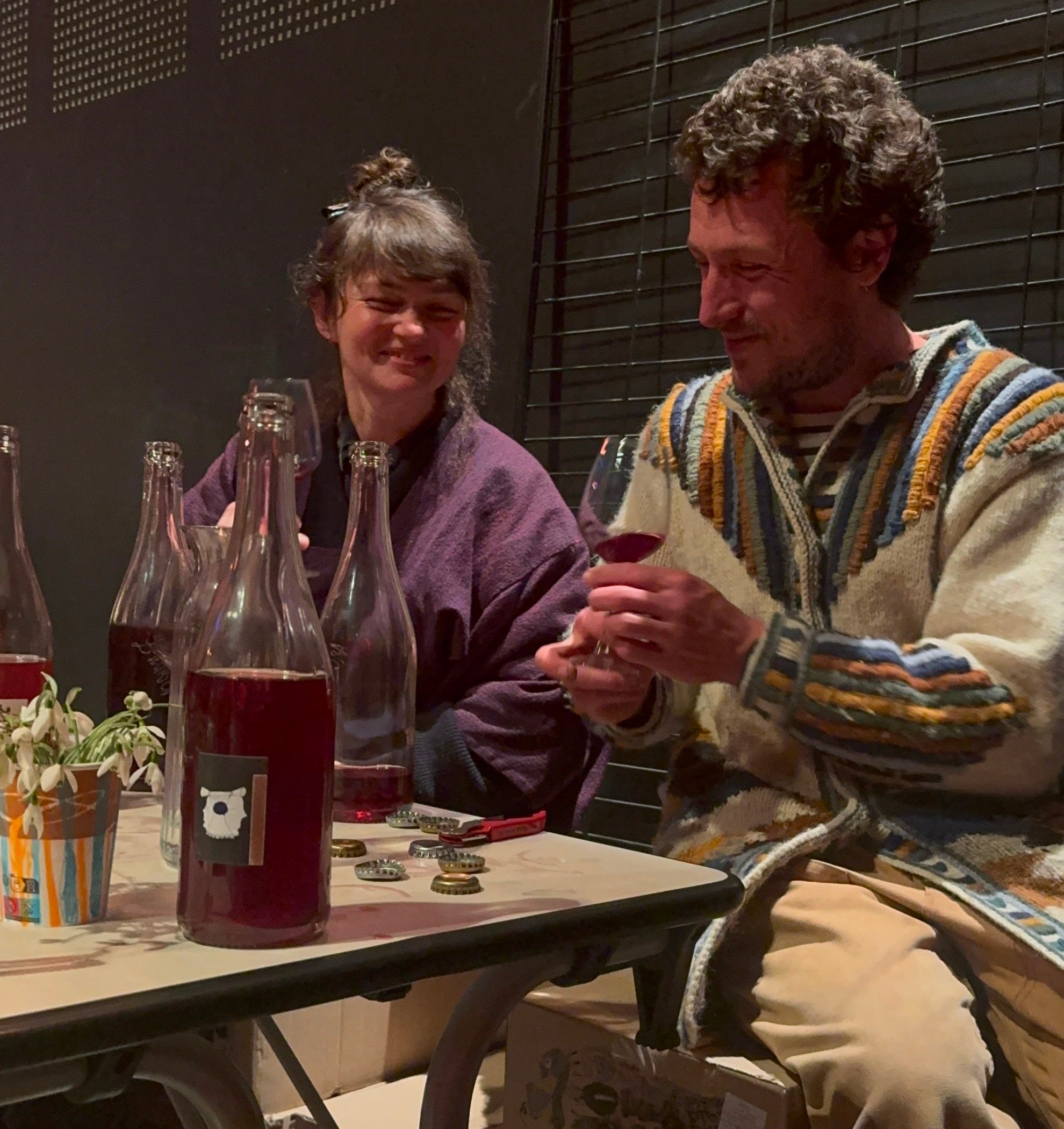
In the afternoon, the team briefly split because of time constraints and an abundance of places to be. Dick, Job and Olivier visited another fair to meet staples like Gut Oggau and Meinklang, as well as see Méli of Ktima Ligas, who showed incredible orange and red wines. Whilst Dick, Job and Olivier were at this fair, the rest of the team focused on the French counterpart of the Italian fair C’era Una Volta: Il Était Une Fois. This fair, now in its second year, was packed with producers we love to work with—or simply love to drink the wines of. Highlights included the exciting, idiosyncratic wines of Alice from Domaine de L’Octavin, the always excellent wines of Franz & Simon Strohmeier, and the new releases from 2Naturkinder, including the very affordable Vater & Sohn, the orange Wilde Meute, and the brilliant red Fledermaus—in our opinion, hors catégorie within Germany. We also tasted with legends such as Anthony Tortul (La Sorga), Jérôme Guichard (Sauveterre), and Gianmarco & Clementine of Le Coste, just for good measure…
Sunday, February 1 & Monday, February 2
Sunday and Monday were dedicated to the classics: Les Anonymes and La Dive Bouteille. Sunday morning at Les Anonymes felt like a who’s who of nice people making bang-for-buck wines. We met and/or tasted the wines of, among others, Alison & Léo Dirringer (best from Alsace…), Benoît Camus (modestly priced old-school Beaujolais), Romuald Valot (high-level permaculture Beaujolais), and a strong lineup of producers we enjoy, including Patrick Meyer, Didier Chaffardon, the Ginglingers, our Dutch friend Bertjan Mol, and Ardèche hero Sylvain Bock.
After visiting Les Anonymes, we went on to see winemaker Thomas Batardière in Rablay-sur-Layon, whose 2024 Chenin Blancs were razor-sharp and bursting with energy. Clean, precise, mineral and packed with what you might call real ‘drive’. Les Cocus and Les Noëls de Montbenault, both from the 2024 vintage, were clear favourites.
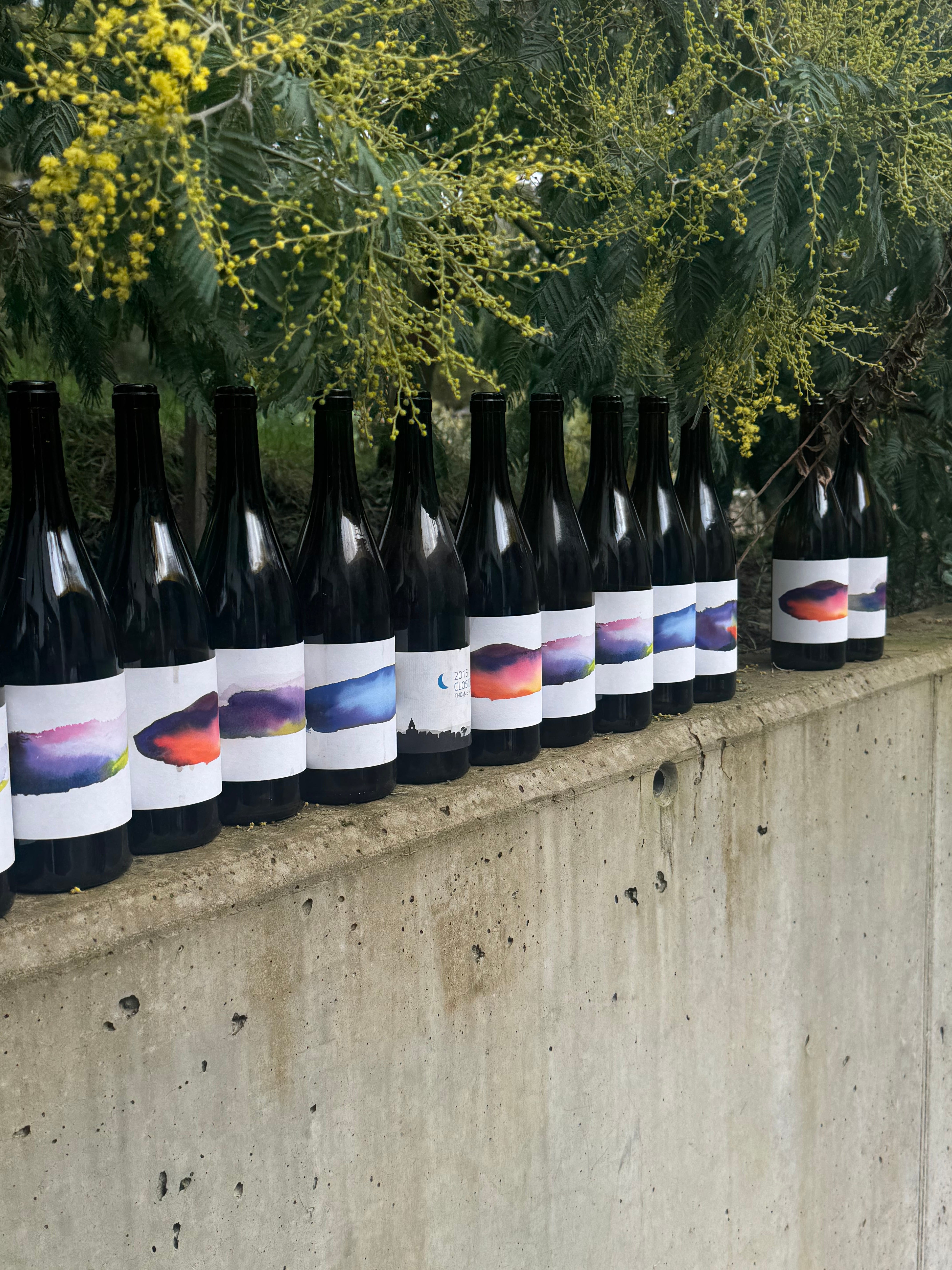
Following our brief visit with Thomas, we were unexpectedly invited by monsieur Olivier Cousin, who has decided that 2025 will be his final vintage before setting off to sail around the world. As Olivier still has some wine available — both bottled (2023 and part of 2024) and in barrel (2024 and 2025) — we were invited to join him at the lunch table to taste through everything, listen to his wonderful stories, and leaf through his collection of harvest photo books (going all the way back to 1980!).
The 2023 Le Franc aged in barrique and the Le Franc made in qvevri were fan-tas-tic, and helped carry us through the weekend. We’ll be bringing these wines to the Netherlands very soon, so we can share the joy without delay.
An added bonus was that in Olivier’s kitchen we also met Ludovic Joly, who worked for five vintages at Les Jardins de la Martinière and will now be taking over Olivier’s vineyards. Together with him we tasted one of the Martinière négociant wines he made with Kaya in 2024, in which we could clearly recognise his own style. We’re confident the future of the vineyards is in very good hands, and we’ll make sure to update you when we know more about the arrival of the new Martinière’s as well as Ludovic’s wines made from the Cousin-vines.


Sunday we arrived late to La Dive to quickly start tasting with the first few of the winemakers we work with, but luckily we were able to devote all of Monday to La Dive, where we tasted with more than 25 Zuiver producers. We reviewed the new vintages from our Steiermark friends of Weingut Werlitsch and the Musters (including Elias’ new vintage), whilst in the Jura, Julien Mareschal of Domaine de la Borde showed us his new red and white vintages, including the majestic Gelées de Novembre 2020. Jurriaan from Fruita Analògica and Vinyes Tortuga was also present, presenting the fresh white Little Fluffy Clouds 2025, as well as a new orange wine we will receive both in bottles and KeyKeg. He also brought the Doolittle Oxy Rosé 2023, one of the most exciting Catalan wines around: directly pressed Barbera from biodynamic vineyards, aged oxidatively in 500-liter barrels—a wine full of tension and depth. On top of that, there will also be a new affordable red domaine wine from their own vines available very soon too…
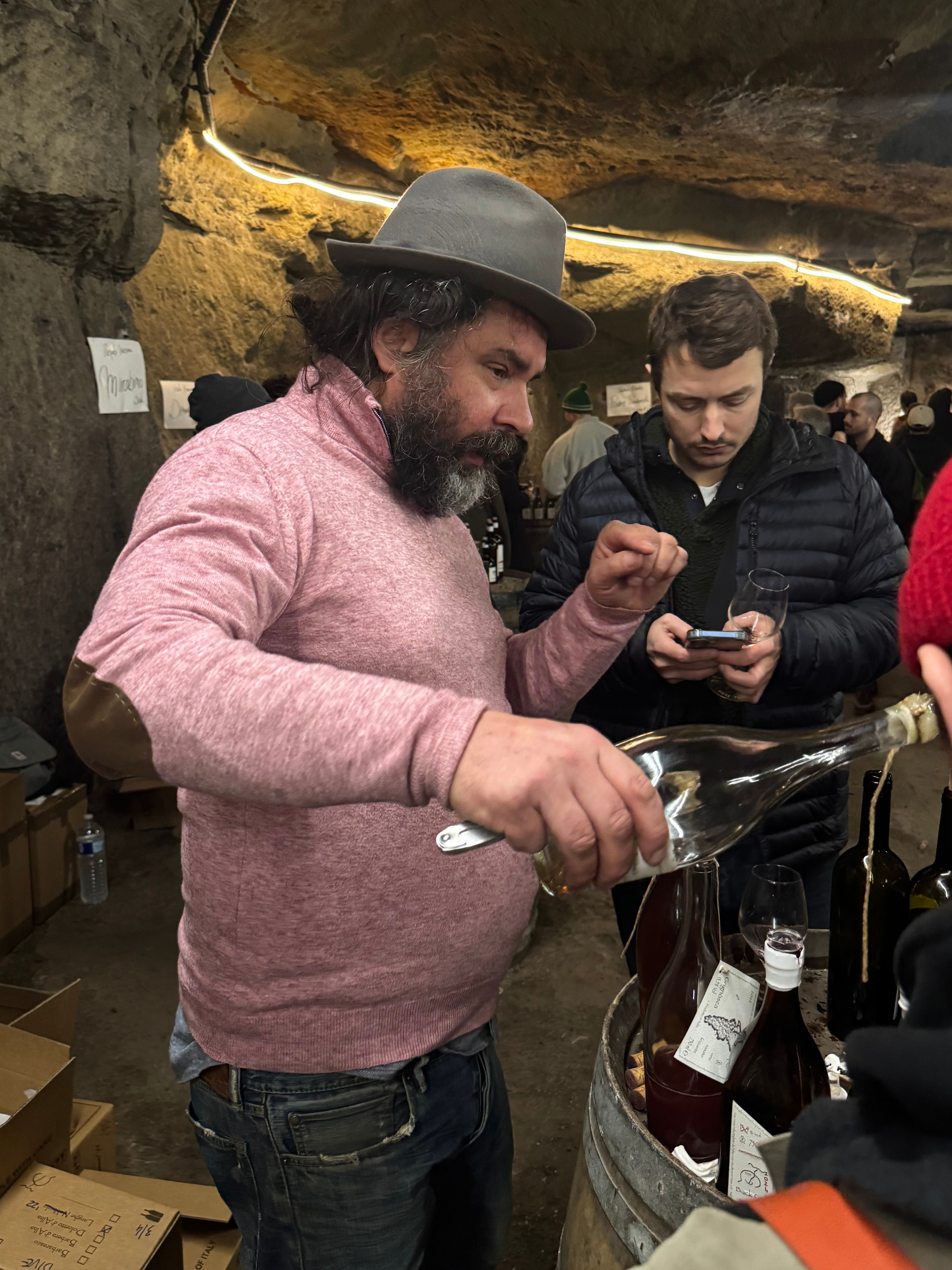
The Italian delegation was also strongly represented at La Dive. From Fabio Gea with new vintages of dizzying cuvées like DNAss 2024 and Langhe Nebbiolo 2021, to Giulio Armani of Denavolo and La Stoppa (whom we visited in November—see below for the new wines), and Irene from Altura with their intense and complex yet radiant island wines from Isola del Giglio. As always, it was also fun tasting and laughing with Claudia & Alberto from Podere Pradarolo, who brought their whole range, with the grappa being the only exception. Highlights were the pink Velius 2020, and the new sparkling orange Vej.
We also spoke with many more Zuiver producers, everywhere from on parking lots to dinner tables, and every encounter was very valuable. Overall, producers are happy with the 2025 harvest, and a positive, hopeful mood surrounds the natural wine market. We, for one, can’t wait to receive all the newly tasted wines and vintages— and of course, we’ll share them with you as soon as possible.
MICRO DOMAINE FROM JURA: CABARET DES OISEAUX
From the micro-domain Cabaret des Oiseaux in Saint-Lothain, near Poligny in the central Jura, we received a small shipment last summer with around ten cases of white, orange, and red wine. Since 2017, Lucile & Jude Spaety have been making wines on a microscopic scale from two hectares of vineyards, worked by horse, which are never sprayed with copper or sulfur to combat fungal diseases. Like with the Lijsternest-vineyards in Belgium, this is a major exception in the naturally wet Jura. Instead of copper or sulfur, they only use (fermented) herbal infusions to protect the grapes from mildew.
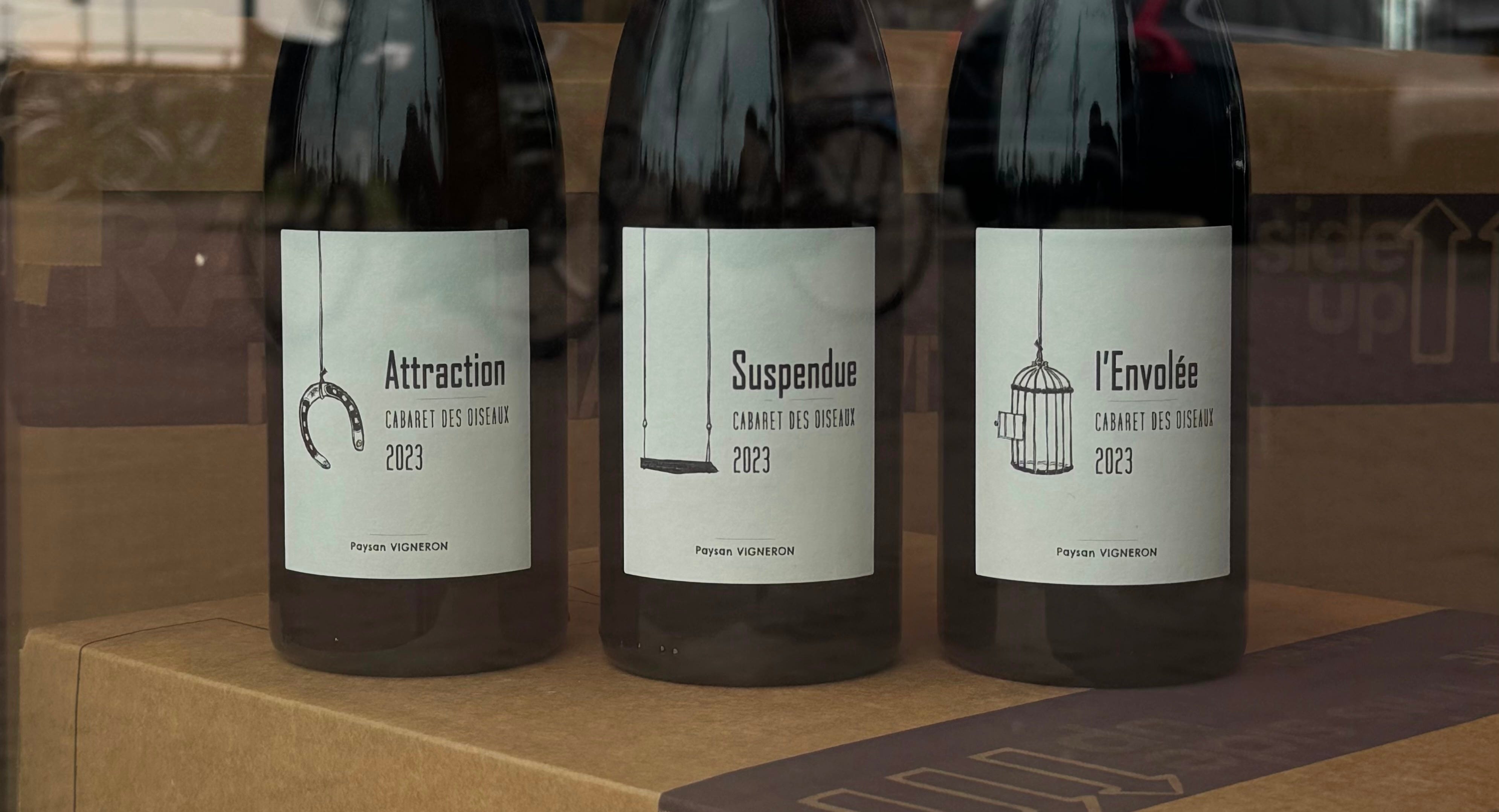
As mentioned, we received a small batch from the 2023 vintage. This includes the white cuvée Attraction 2023, made from Chardonnay, which after 18 months in 500L barrels expresses a full-bodied, creamy Jura style with Comté-like notes, salinity, and lively acidity. We also received just 21 (!) bottles of the orange Savagnin Suspendue 2023, which, like Attraction, sees about 18 months of barrel aging. Savagnin has naturally tropical notes, which are accentuated through maceration, giving a nose of nuttiness, a bouquet of spices, and again, a well-balanced acidity.
Finally, there are no more than around twenty bottles of the red L’Envolée 2023, made primarily from Pinot Noir, with a small addition of historically ‘forbidden’ Jura hybrid varieties, which add extra floral character to the soft Pinot fruit. Like the whites, this wine is barrel-aged, resulting in a relatively gentle structure that is approachable even for traditional Jura drinkers.
Please let us know if you are interested, and we will ensure that everyone receives a set of three to six bottles. For lovers of niche‑within‑niche‑within‑niche…
GUT OGGAU: NON-ALCOHOLIC BLISS & MASKERADES
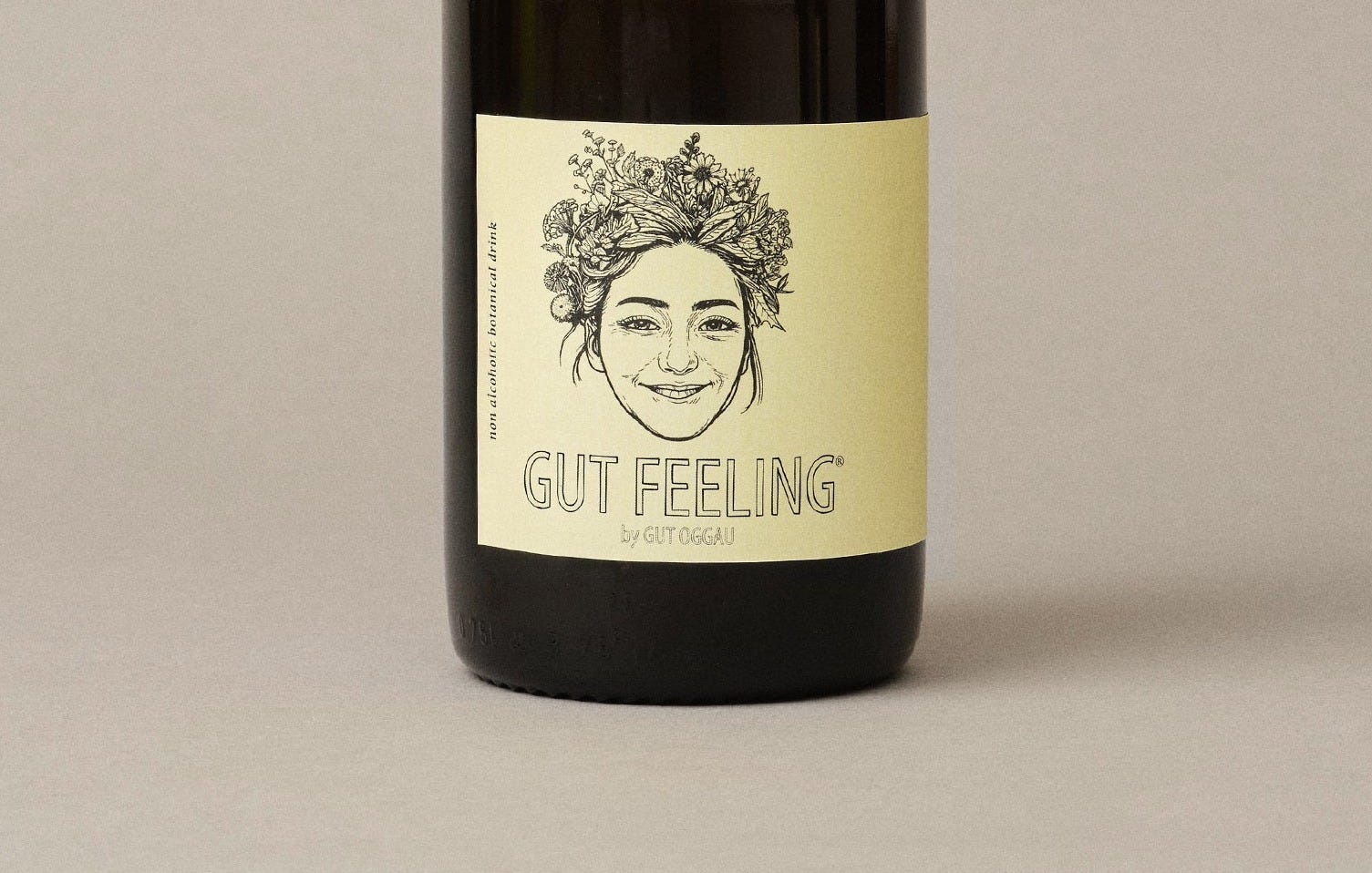
In November, during our portfolio tasting, Stephanie & Eduard of Gut Oggau told us that a a number of new drinks were in the works, including the return of the well-priced Maskerade cuvées and a non-alcoholic beverage (!) made using ingredients for their biodynamic fields in Burgenland.
The new Maskerade cuvées are one white and one deep pink blend of white and red grapes, showcasing Oggau’s signature limestone minerality, precise aromatics, and lively acidity (and all bottled under crown cap to preserve the freshness), which sounds like the recipe for the perfect spring wine. It will be well-priced, and will be somewhat more affordable than the more serious Theodora, Winifred and Atanasius, making it easy to pour a little extra Oggau.
Besides new wines, Stephanie & Eduard made a non-alcoholic beverage, which we were eagerly waiting for since the portfolio tasting in November. Eduard brought a sample of the new cuvée called Gut Feeling last November, which is a fermented, non-alcoholic herbal infusion, which they bottled and labeled this winter. Gut Feeling is made from aromatic herbs grown in the vineyards and uses the estate’s own flower honey for bottle fermentation. Herbs such as chamomile, yarrow, dandelion, wormwood, and nettle are infused, while the honey drives the (non-alcoholic) fermentation. The result is a refreshing, lightly sparkling, aromatic, and complex non-alcoholic beverage — perfect as an aperitif or a non-alcoholic alternative that isn’t overly sweet.
EMILIA-ROMAGNA 1/2: DENAVOLO
In November, Dick, Figo, Job and Olivier were in Italy on a three-day tour, visiting Claudia & Alberto of Podere Pradarolo, Camillo Donati, Erika & Shun Minowa and Giulio Armani of Denavolo in Emilia-Romagna, as well as Valli Unite in Piedmont.
Every stop on the trip was remarkable in its own way — from the warm, generous welcome at Podere Pradarolo, complete with older vintages of Vej and Velius and a beautiful meal, to wandering through the idyllic, mist-shrouded vineyards of the Donati family, to the spontaneous post-dinner ‘sjoel’ tournament at Valli Unite. But the visit to Giulio Armani of Denavolo carried a particularly special weight.
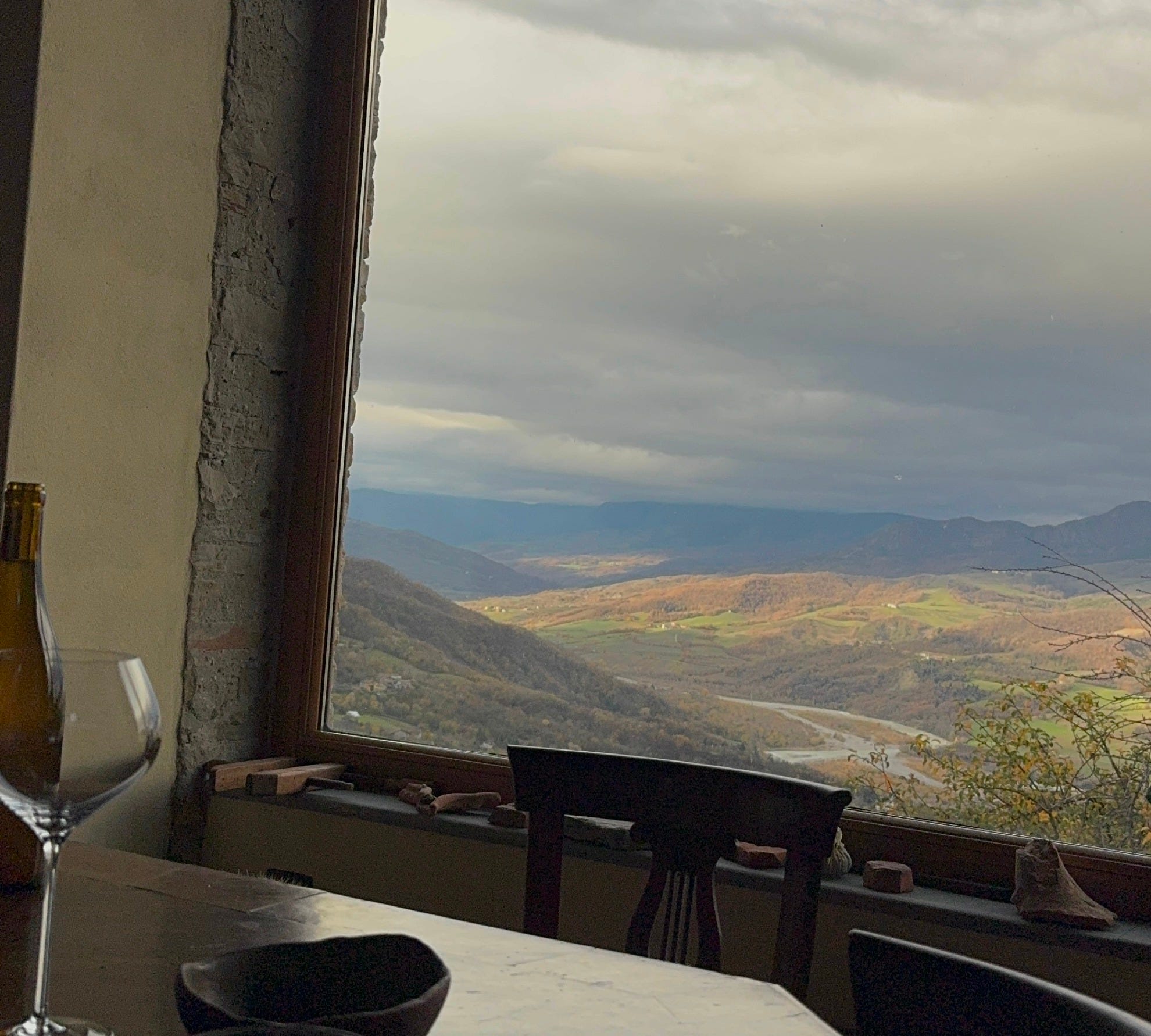
Giulio has been making unsulfured wines since the 1980s, working more-than-organic vineyards in the Colli Piacentini along the Trebbia River near Piacenza. Besides being the winemaker at the cult estate La Stoppa and running his own Denavolo project since 2005, he is a mentor to many in the region, young and old alike. We were familiar with Giulio’s reputation, but the combination of his striking presence and quiet composure, together with the panoramic view over the Val Trebbia from his living room, immediately put us at ease — as if we were visiting a sage.


Giulio, who says say more with a single glance than with a paragraph of words, calmly poured us his new wines. First we tasted the soft, peach-toned Catavela 2024, then the heady Dinavolino 2022, followed by the savoury-fruited Mansano 2021 and the tropical Mansano 2022, finishing with the towering Dinavolo 2022. Even though we’ve worked with Giulio’s wines over many vintages and have happily drunk them for years, the wines showed completely differently from how we thought we knew them. Each one seemed to glow in the glass, and tasted that way too: crystal-clear in aroma and flavor, with precise, unmistakable taste- and smell-notes, from passionfruit and melon to orange blossom, jasmine and yuzu.
The fact that Giulio’s vineyards are extremely high for the Colli Piacentini, reaching up to 700 meters above sea level and planted on limestone-rich soils, gives the wines an enormous freshness and drinkability, especially compared to other wines from the lower parts of these hills. Their textures were also less ‘big’ or ‘grippy’ than we often mentally associate with Giulio’s wines. During this attentive, tranquil tasting we understood that Giulio is making wines at the highest level — wines from which we still have much to learn. The more you learn, the less you know…
After lunch we tasted another twenty or so of Giulio’s wines, with which he — without many words — flexed his Denavolo muscles and confirmed just how beautifully his wines age. We tasted Catavela vertically back to 2013, tasted a Dinavolino 2018 (!), Dinavolo 2016 and 2009, and we also tried his new wines Ciliega 2024 (100% Ortrugo) and Mièga 2023 (100% Marsanne), each more delicious than the last, full and complex, savory yet fruity, but all highly digestible. As the final cherry on top, Giulio poured us the 2023 of his Dinavolo Rosso, which for us became the wine of the entire trip. Dinavolo Rosso is made of orange Pinot Gris blended with direct-pressed Barbera in this vintage — a brilliant wine with devilish drinkability thanks to its pleasant cranberry fruit, Barbera acidity, blood-orange bitters, tomato-like savoriness, a punch of volatile lift, and tremendous length. We left in silence; Giulio smiled.
EMILIA-ROMAGNA 2/2: NEW VINTAGE SHUN MINOWA
Between our visits to Denavolo and Valli Unite, we also stopped by Erika, Shun Minowa’s partner, on the opposite side of the Trebbia River in the same valley as Giulio. There, a small shipment of the new Jai Guru Deva 2023 destined for the Netherlands was already waiting — and the wines have now finally arrived here.
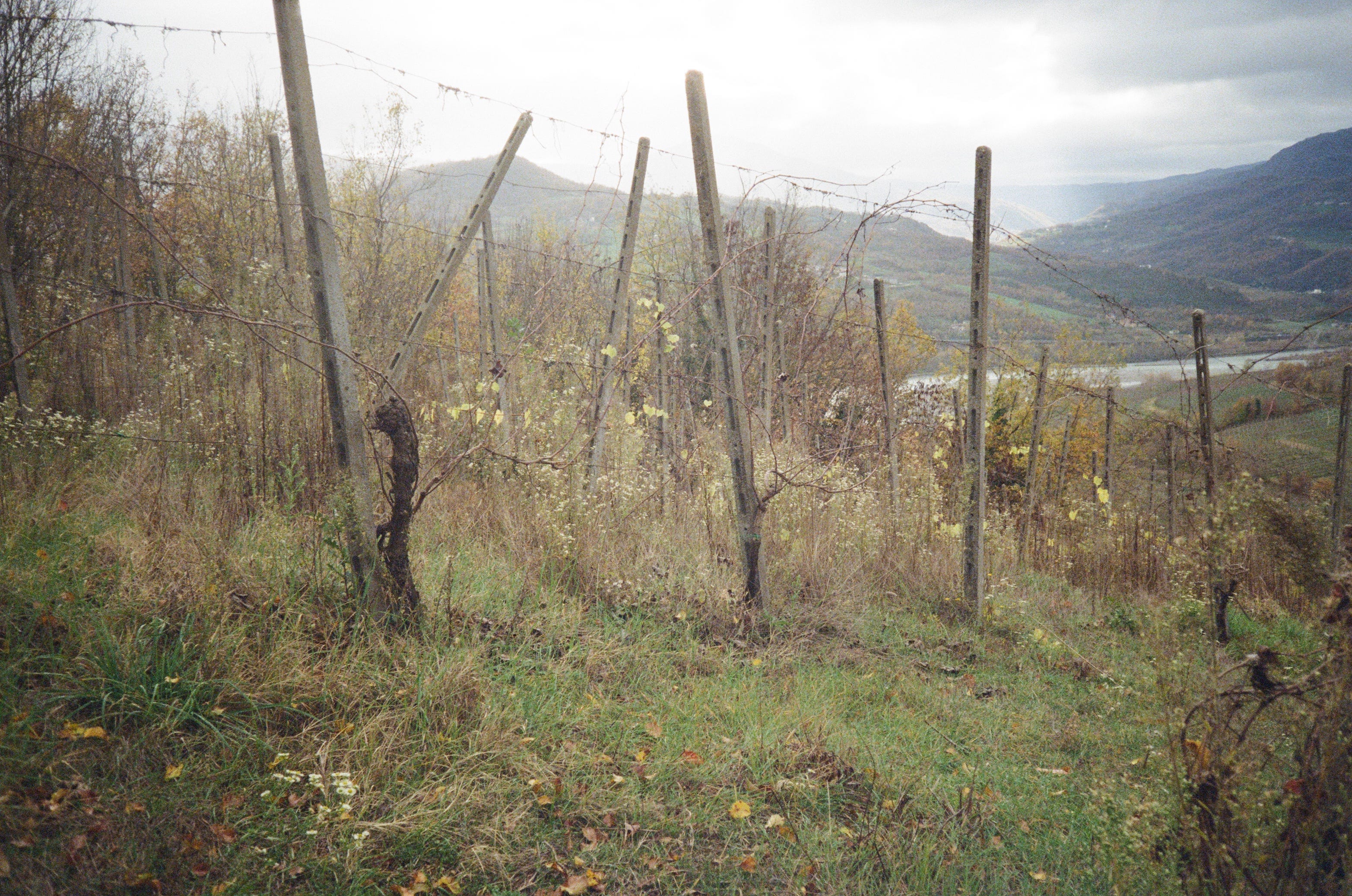
Shun learned winemaking at La Stoppa, Vino del Poggio, and Denavolo, and, like his mentors and fellow local winemakers, he focuses on producing long-macerated, long-élevage orange wines from a broad blend of grape varieties grown in his Trebbia Valley vineyards. Jai Guru Deva 2023 is made from a similar blend of grapes that Shun’s mentor Giulio Armani also uses at La Stoppa and Denavolo. Varieties including Ortrugo, Malvasia di Candia Aromatica, Marsanne, and Trebbiano from a single vineyard undergo extended skin contact and are then aged in glass demijohns, a concrete cuve, stainless steel tanks, an acacia foudre, and old oak barrels — until the wine reaches Shun-san’s ideal expression.
Shun’s wines are savory and slightly more rugged than Denavolo’s, yet they still clearly recall the style of his mentors’ orange wines.
Get in touch if you’re interested; we’re happy to provide more details and will aim for a fair allocation.
QUIRKY JAPANESE BUBBLES BY HITOMI WINERY
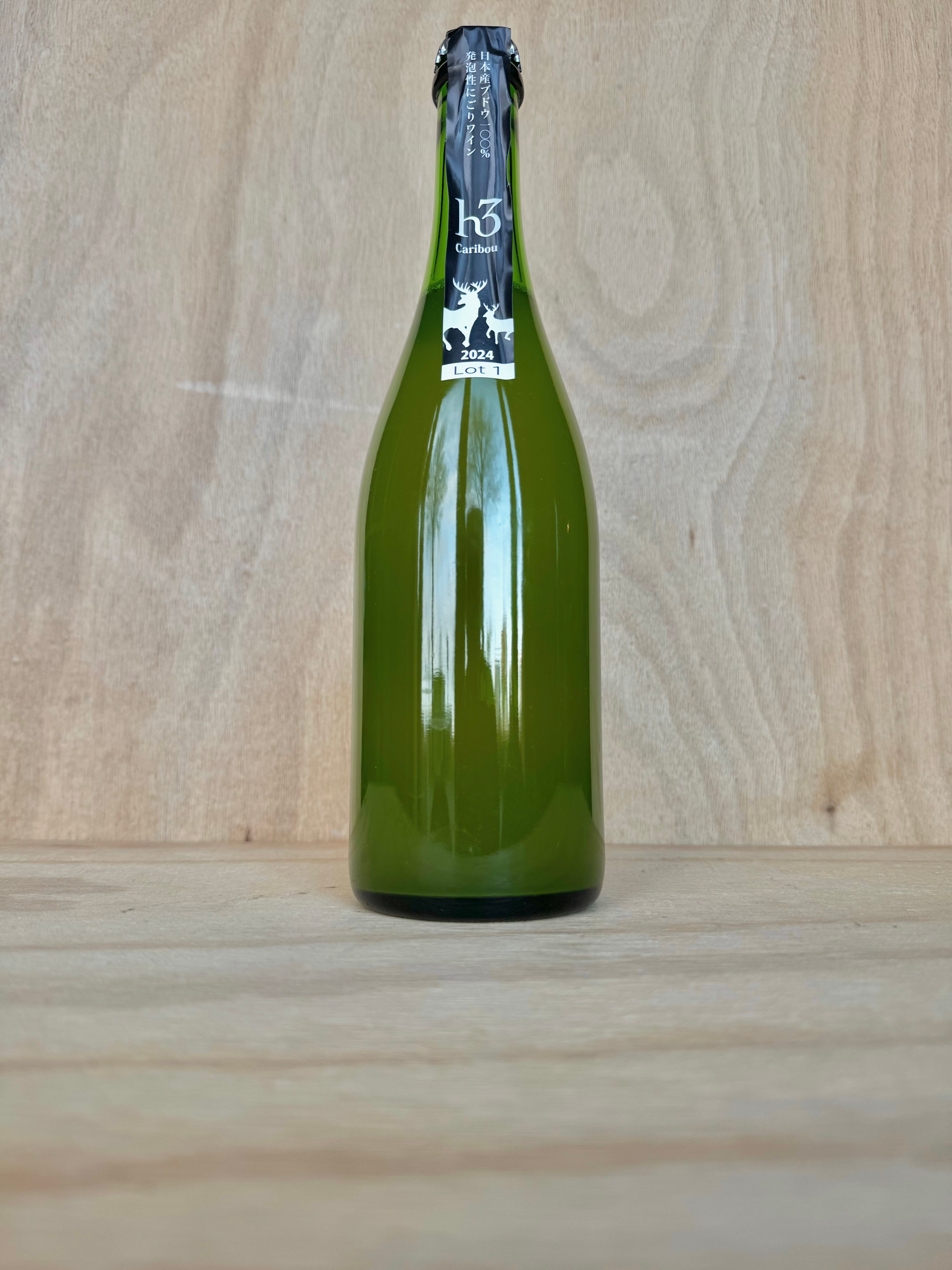
From a Japanese winemaker in Italy, we now move to Japan itself and visit Hitomi Winery. Located on the east shore of Biwako, one of Japan’s largest lakes, Hitomi has been producing natural wines in very limited quantities for over twenty years. Previously, we stocked white and orange wines made from Delaware variety — one of Japan’s most common grape varieties — and in November we received a small shipment of their new sparkling wine, Caribou 2024, transported in a container by our sister company Yoigokochi.
Caribou 2024 is made from 100% Delaware. Masahiko Senda of Hitomi deliberately harvested the grapes slightly earlier than usual to preserve the grape’s fresh, apple-like acidity and limit color extraction. The juice was pressed immediately and bottled during fermentation, creating a delicate bubble. Delaware naturally carries sweet and tropical aromas reminiscent of melon, pear, apricot, and blossom. We opened a bottle in mid-December and were completely blown away because of the lively tastes and flavors rarely encountered in European wines. Moreover, the wine is more affordable than it would normally be, thanks to a favorable exchange rate between the euro and the (underperforming) yen. Great reason reason to stock up on some Japanese bubbles…
DOMAINE OTTER’S PET NAT BLANC RETURNING SOON
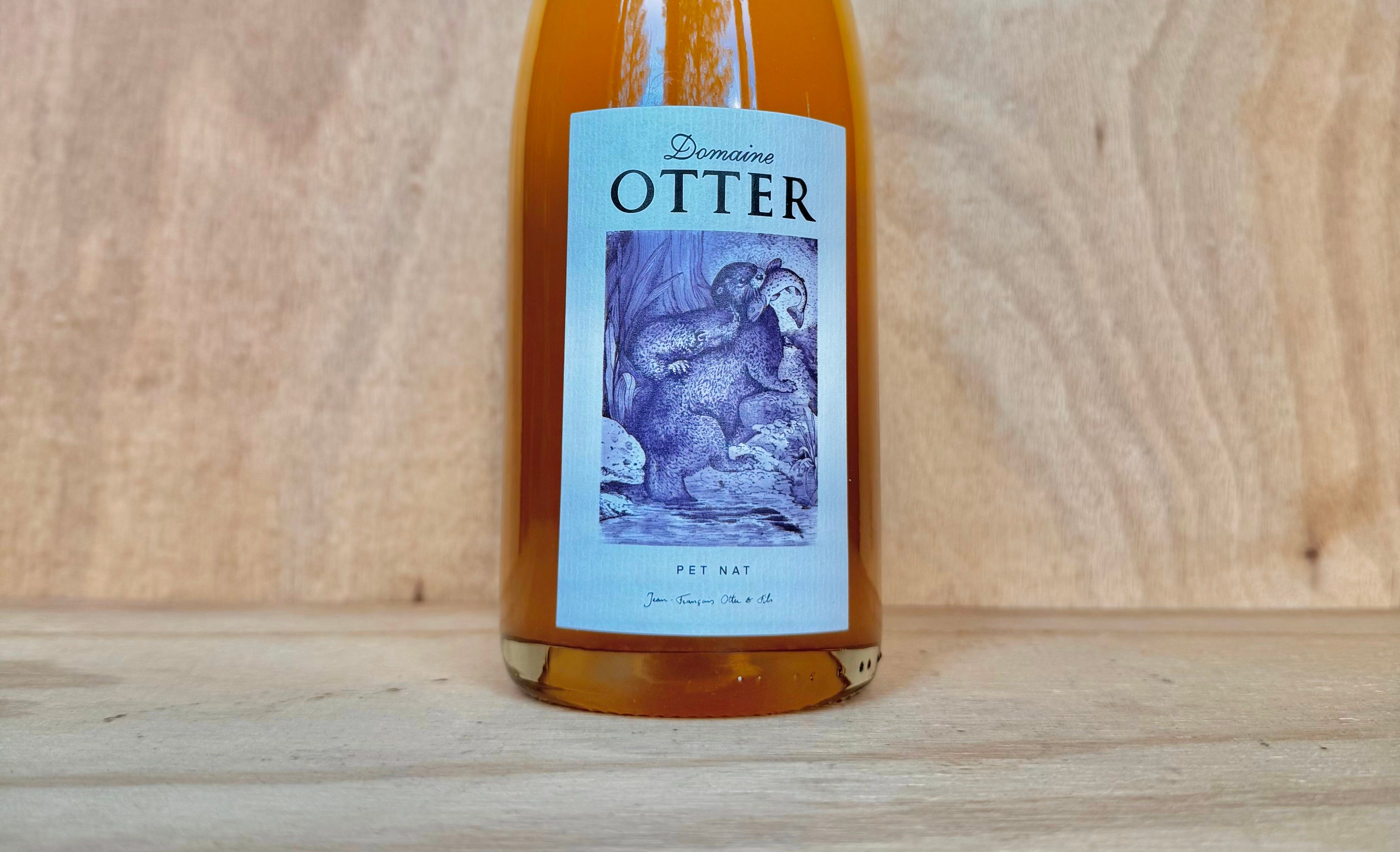
More good news in the sparkling category: Domaine Otter’s Pet Nat Blanc 2022 is on its way again! After our November tasting, the bottles flew off the shelves, but from mid-month we’ll be able to distribute this fantastic wine widely again. Otter’s Pet Nat is made from Muscat, Pinot Blanc, Riesling, and Gewurztraminer, making it perfumed and delicious. Moreover, it’s also stable and affordable enough to serve by the glass, so we are expecting lots of glass action the coming months.
We’re back in the Netherlands (and Job has returned from Brazil!), full of inspiration and energy after meeting all the amazing people we work with, and we can’t wait to share everything with you. We’re also looking forward to seeing you at the annual Georgia tasting on 16 February, which is a perfect opportunity to taste together and catch up.
In the meantime, we wish everyone an energetic and enjoyable February, and, as always, we’re here for you throughout the month. Don’t hesitate to get in touch with any questions, tasting or pairing requests, or interest in specific wines. See you soon!
Warm regards,
Zuiver Wijnen


