An Island Special: Tanca Nica (Pantelleria), Altura (Giglio), Panevino (Sardinia), new Robinot, fresh Portinari, Robinot, Steiermark visit, Zuiver Bar and more!
It has been anything but a quiet month on the Zuiver side of things. Despite the summer lull (cucumber time?!), we have been busy bringing in new shipments, tasting through new arrivals, visiting producers in Austria, and hosting some wonderful evenings at Zuiver Bar — including a masterclass with Franz Strohmeier and a dinner evening with Milan from Restaurant Lux in Rotterdam, with wines from Bencze Birtok. Lots of good wine, good company, and plenty of laughs.
Meanwhile, the summer of 2026 is writing its own chapter in the history books. Drought has had most of Europe in its grip for weeks — France alone has seen its third heatwave of the season, with temperatures above forty degrees and barely any meaningful rainfall well into July. Wildfires caused serious damage in the south: in the Pyrénées-Orientales alone, close to five thousand hectares were lost, and the Loire département was also hit by fires in early July. The reports coming from our producers are mixed, but most are holding up — and those who farm (more than) organically, biodynamically or beyond, are finding their vines more resilient than most in the face of these extreme conditions.
For this August newsletter, we wanted to tune into the summer holiday vibes, and have put together what we are calling an Island Special — the newest releases from three of our favourite Italian islands. From the volcanic micro-world of Pantelleria, the extraordinary terraced island of Isola del Giglio, and the wild, untamed interior of Sardinia, we have new arrivals from Tanca Nica, Altura, and Panevino. Alongside the Island Special, there are new bottles from Jean-Pierre Robinot — restocks of the beloved 2023s plus a few new vintages — and fresh deliveries from Daniele Portinari in Veneto, including a new vintage of his even more delicious and seriously well-priced Pietrobianco.
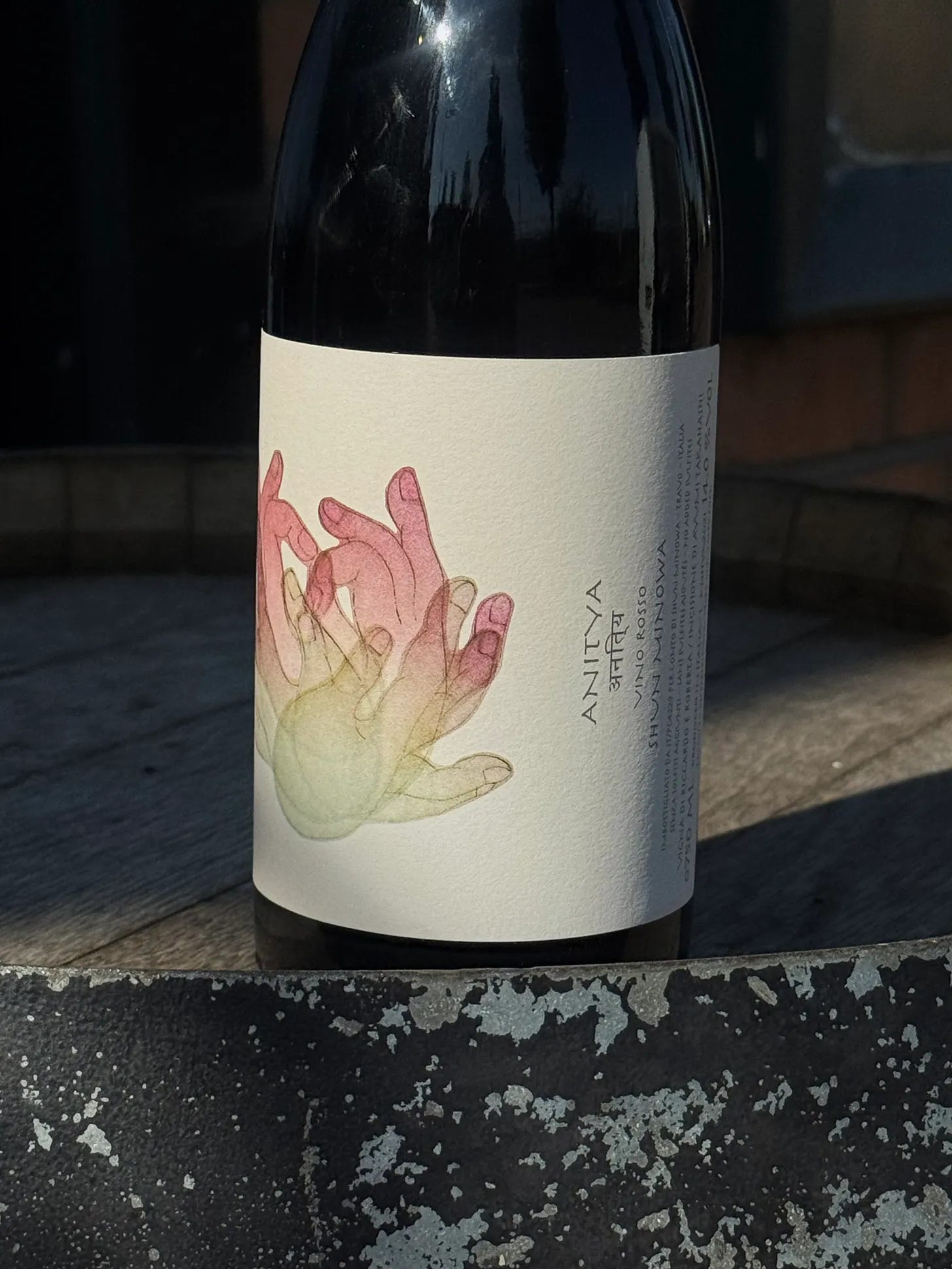
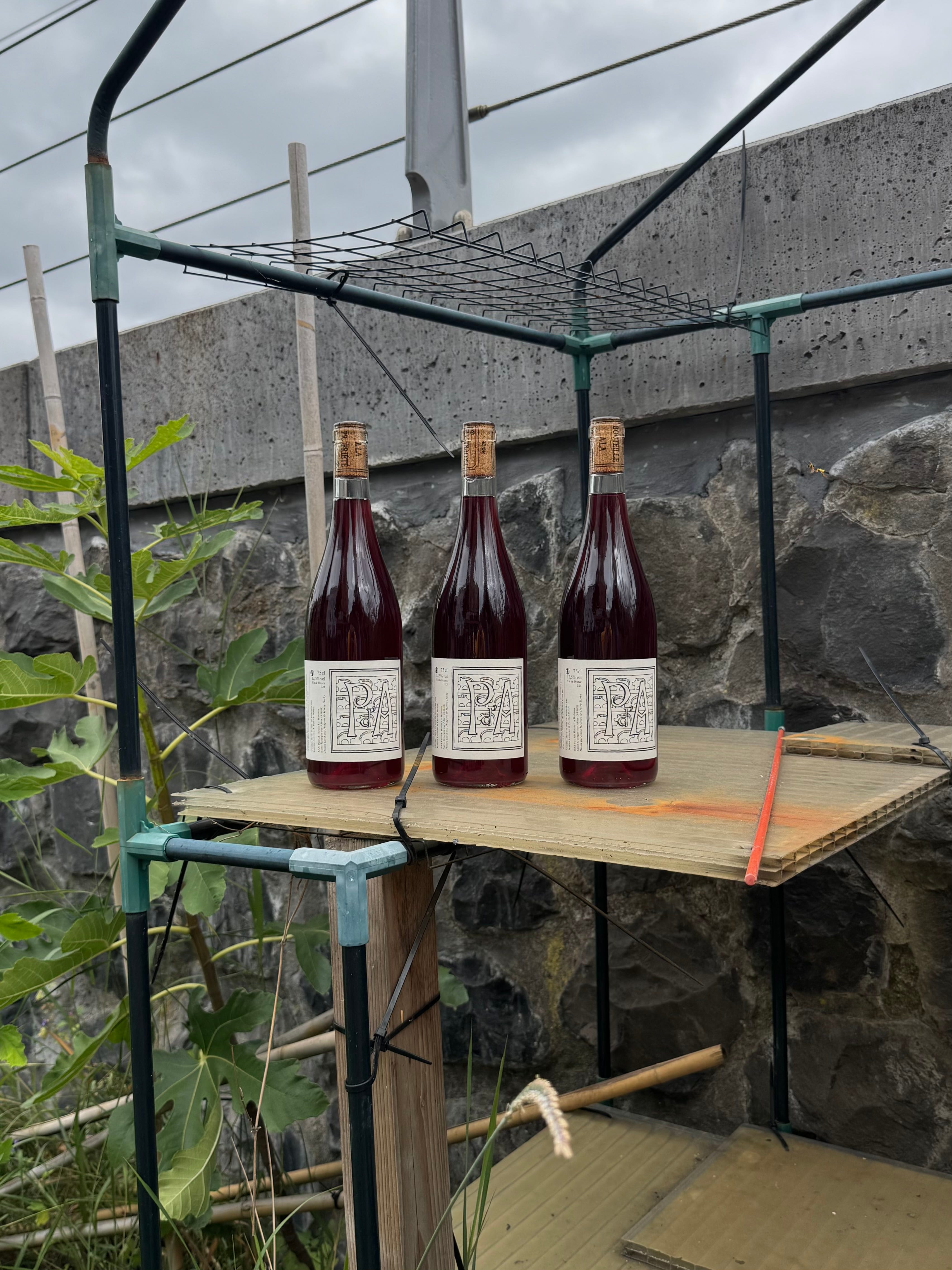
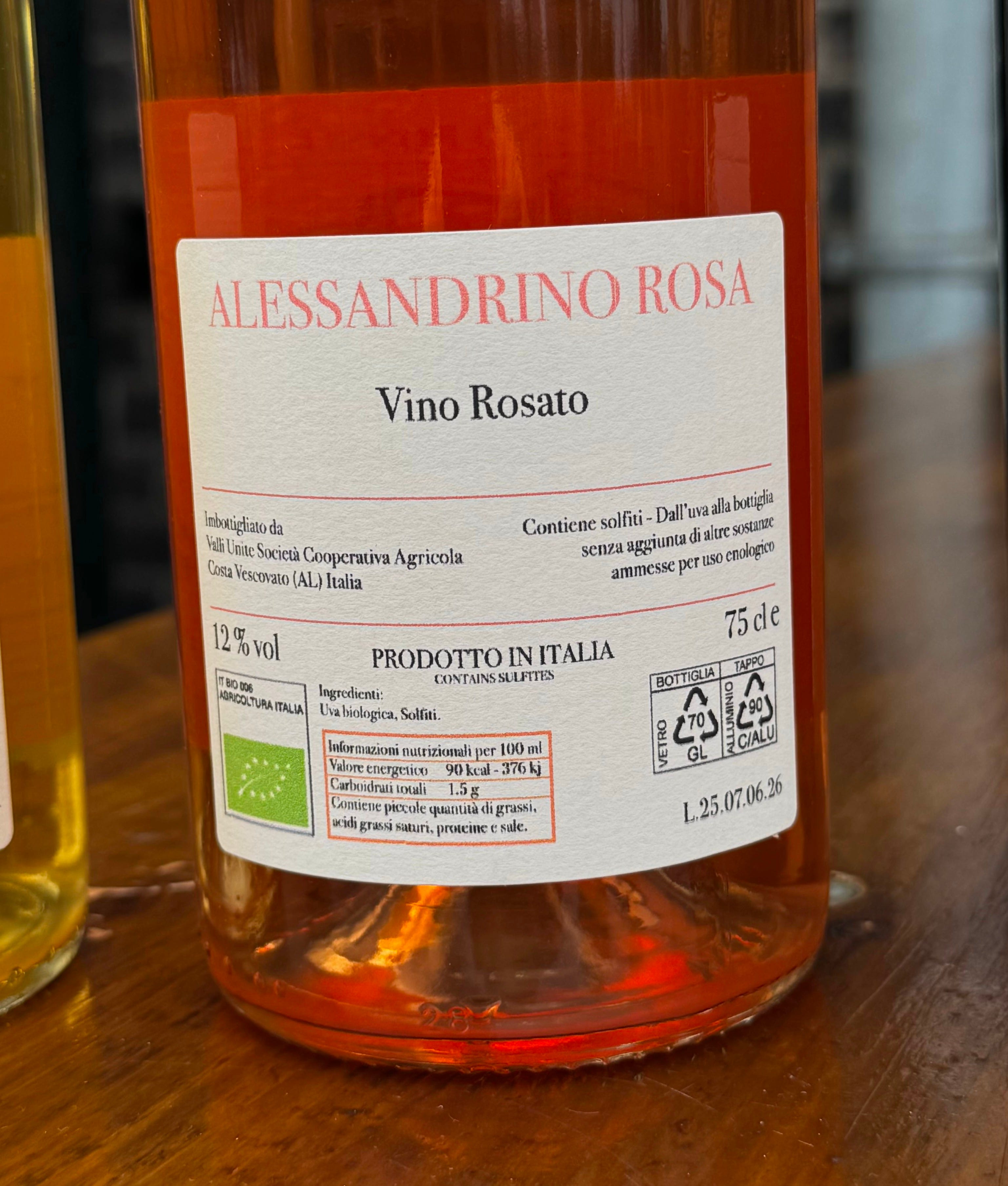
Regarding the short news section: we received a red blend from Japanese winemaker Shun Minowa in Emilia-Romagna for the first time in Zuiver history, wanted to highlight the wicked Pineau d’Aunis from La Bohème, and have the bang-for-buck Alessandrino Rosato from Valli Unite in stock, all in generous quantities. We also share a small photo-report from our recent trip to Steiermark, and have some Zuiver Bar news to share about what is coming up in August.
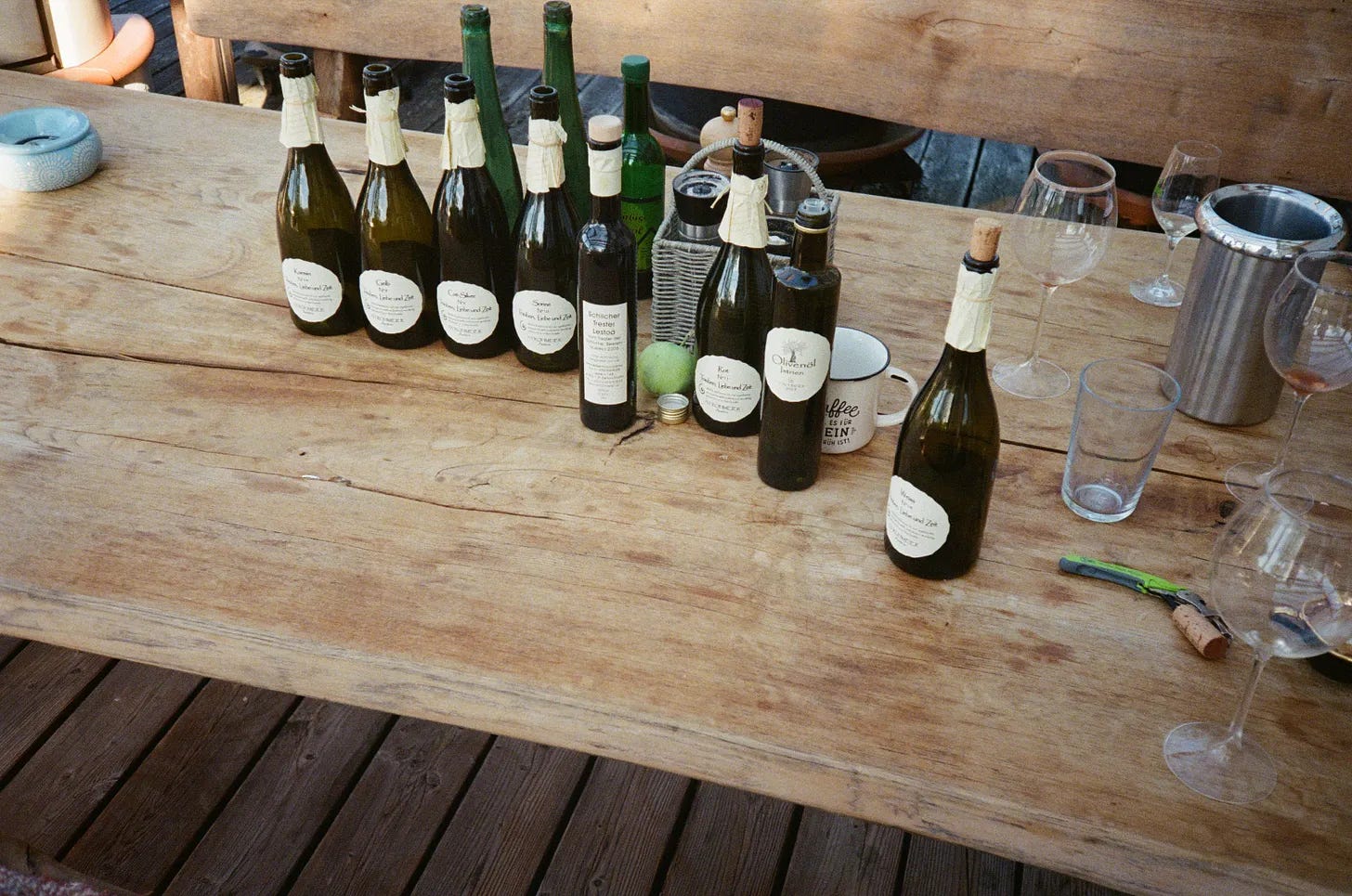
Read on for all the news after the picture down below!
Island wines have always held a special place in our hearts at Zuiver, and especially the volcanic ones. They combine the depth that comes from sun-drenched hillside vines, the freshness of cool nights beside the sea, and a salinity that you simply cannot replicate anywhere else. This month, we are releasing wines from three Italian islands at once, which is a (well-timed) coincidence that felt worth celebrating in the form of a proper Island Special!
We begin on Pantelleria, a tiny volcanic island that is technically Sicilian but geographically much closer to Tunisia than to Palermo. That geographical fact determines everything: the heat, the wind, the volcanic soil, and the extraordinarily old vines that grow as low alberello bushes rather than on wires or posts. Francesco and Nicoletta run Tanca Nica with the conviction that Pantelleria speaks its own entirely distinct wine language — one written in Zibibbo, Catarratto, Pignatello, and a handful of rare indigenous varieties that exist nowhere else.
Pantelleria is known for its capers and the film A Bigger Splash (starring Tilda Swinton and Ralph Fiennes — a strong recommendation if you have not seen it), but, in the natural wine world, for the wines of enigmatic character Gabrio Bini. We love the intensity and electric tension of Bini’s wines enormously, but the wines of Francesco and Nicoletta are wines for different moments. Where Bini operates at high voltage, Tanca Nica offers calm and composure. The quality, island-terroir expression, and Zibibbo character are unimpeachable in both cases, and the contrast makes for a fascinating side-by-side tasting if you ever get the chance.
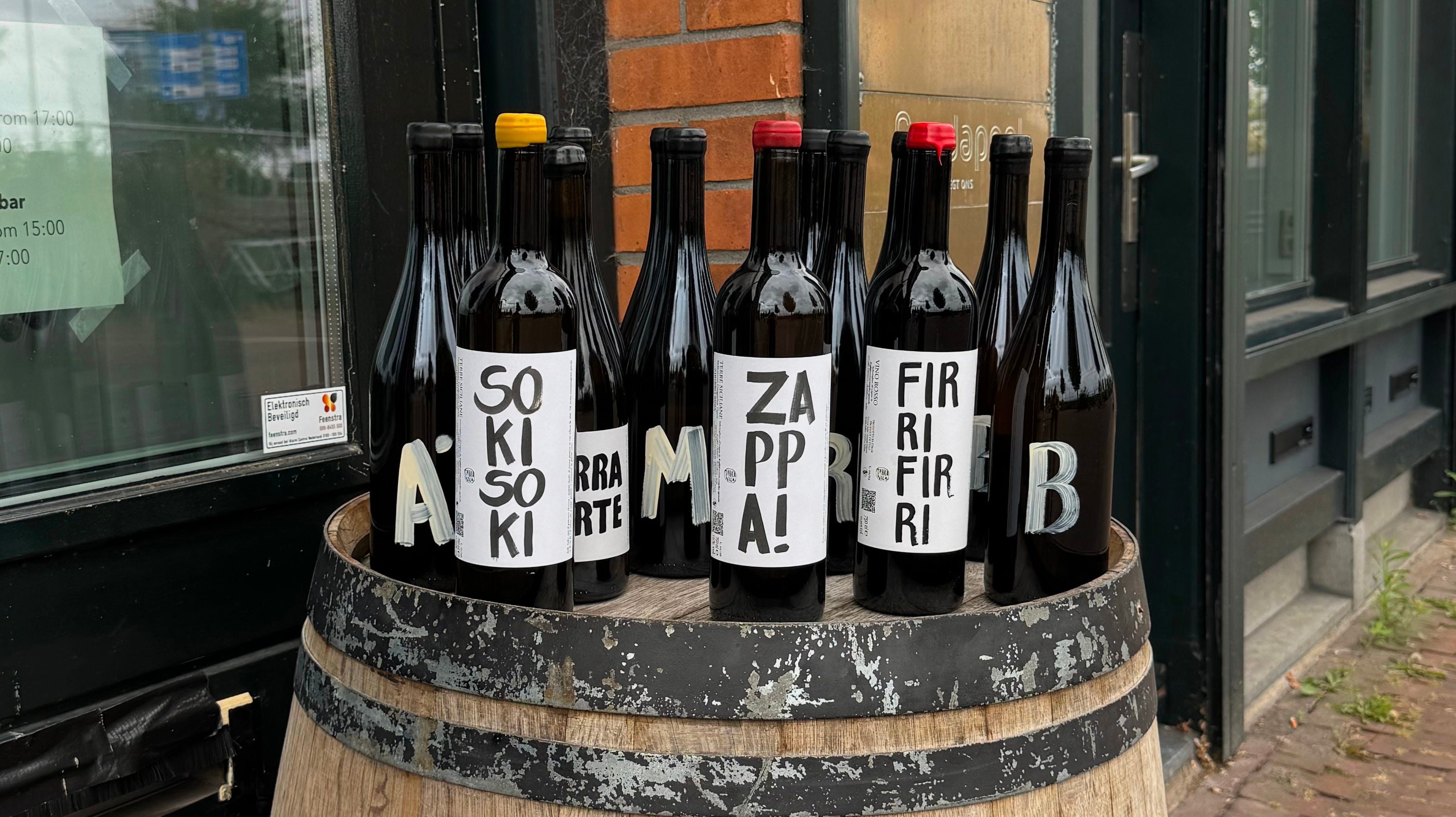
We received both a few familiar 2025s and some 2024s, which means the crowd-favourite Soki Soki 2025 is back in stock. Made from Zibibbo (Muscat d’Alexandrie) sourced from eleven micro-parcels with vines averaging eighty years of age, it always has that characteristic pale orange colour and an abundance of aromas — ripe peach, apricot, passionfruit and citrus interwoven with Mediterranean herbs and a hint of honey. It sounds fruity, but there is considerably more salt and complexity to it than that word suggests.
Soki Soki’s counterpart is the deep amber Terra Forte 2024. This is 100% Zibibbo from terraces laid out in 1931, grown on darker volcanic soils. The wine brings together all the characteristic warmth and richness of Zibibbo — exotic fruit, resin and dried apricot — in combination with a minerality and earthy depth that can only come from vines this old. Where Soki Soki is light and graceful, Terra Forte is, as the name implies, more powerful, more concentrated, and absolutely wonderful alongside food. The savoury minerality pairs beautifully with anything robust from the sea.
As far as light-red goes, we have more of Firri Firri 2024 in stock. Firri Firri is a hyper-energetic, Poulsard-coloured blend of Catarratto, Pignatello and Inzolia, with wild rosehip and sea-breeze aromatics that are entirely their own.
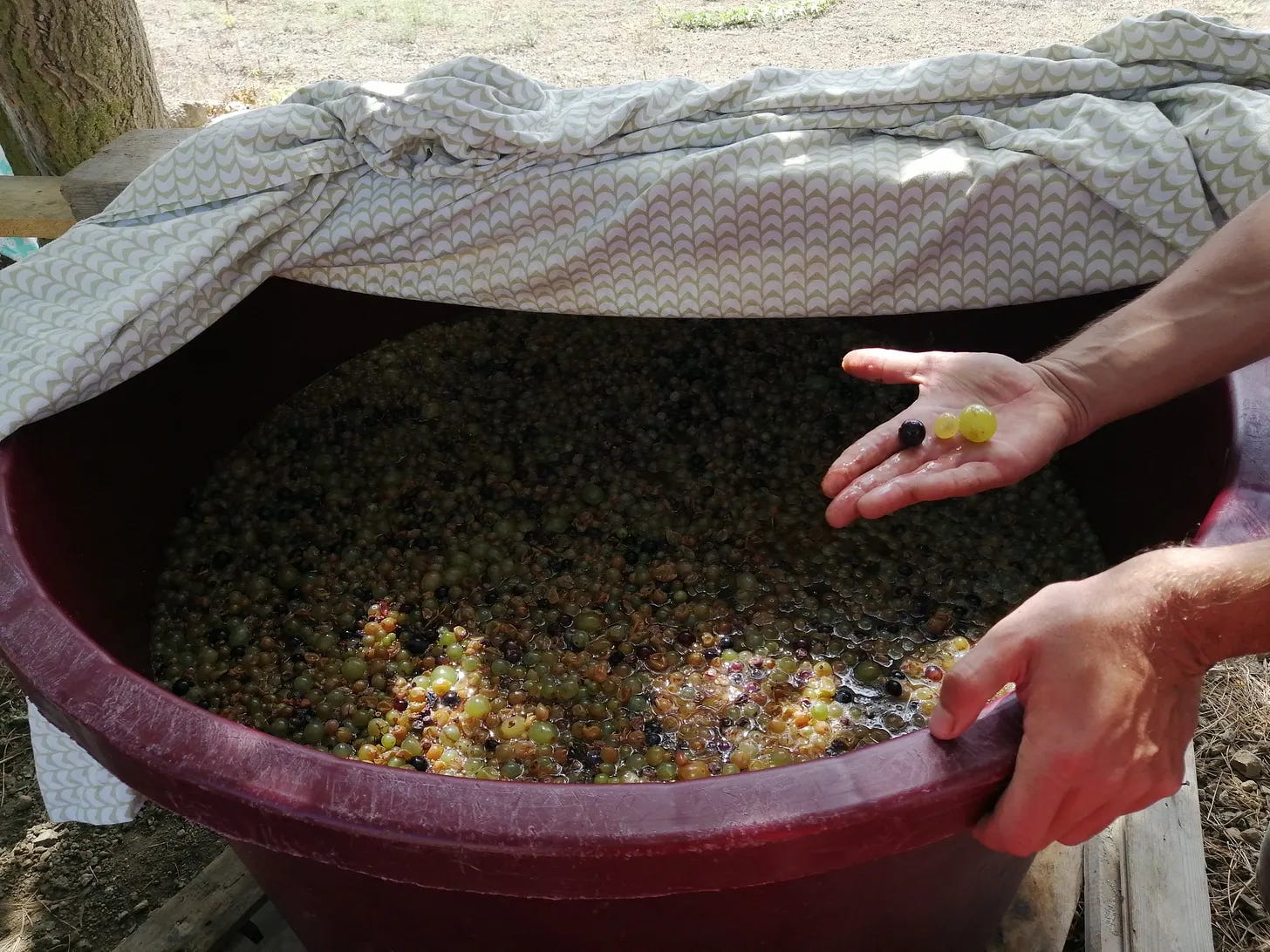
Blend of white and red grapes for Firri Firri during harvest, 2024
We also received a new vintage of Zappa! 2025, previously only available in magnum. Zappa! comes from a plot of vines over a hundred years old, fermented with twenty days of skin contact and partly aged in chestnut wood. The result is complex, savoury, and lightly nutty — the most ambitious of the wider-release cuvées and ideal for anyone who wants a little more depth alongside the fruity accessibility of Soki Soki or the direct dark minerality of Terra Forte.
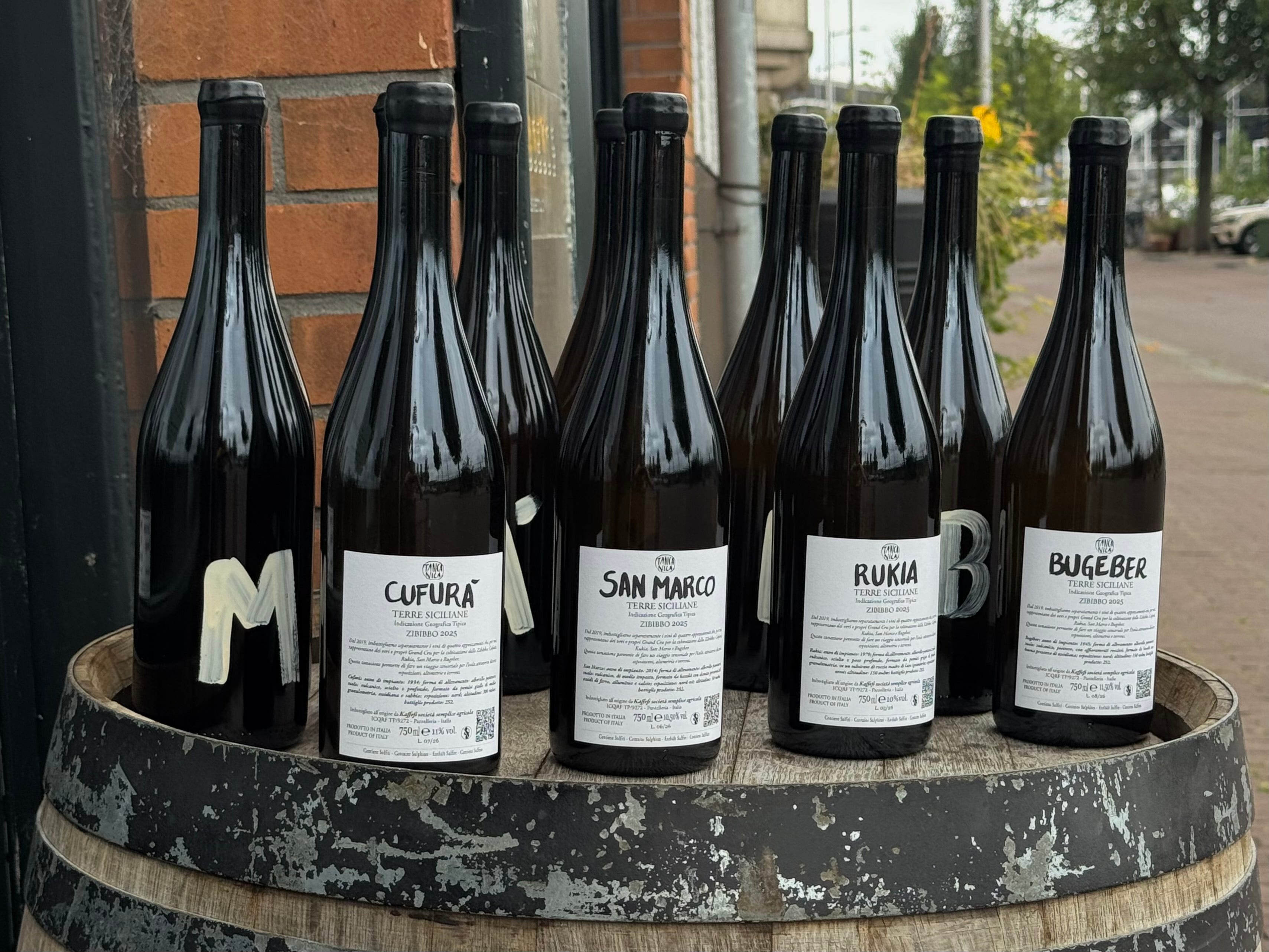
Finally, and in very small quantities, we have the four single vineyard cuvées — all 100% Zibibbo from distinct soil types, with only 252 bottles made per cuvée and just twelve available from us: Cufurà 2025 (planted in 1934, yellow pumice, obsidian and volcanic sand, 11% — fresh and taut), San Marco 2025 (younger vines on iron-rich basalt, the most maritime expression), Rukia 2025 (basalt lava and soki soki soils, the most tropical and smoky, at 10% alcohol), and Bugeber 2025 (southernmost exposure, planted in 1930, the most concentrated and deep). These are Tanca Nica’s ‘Grand Crus’ in every sense — wines made in numbers so small that we receive enquiries from Italy itself about them monthly, but we are very happy to keep them for the Dutch market.
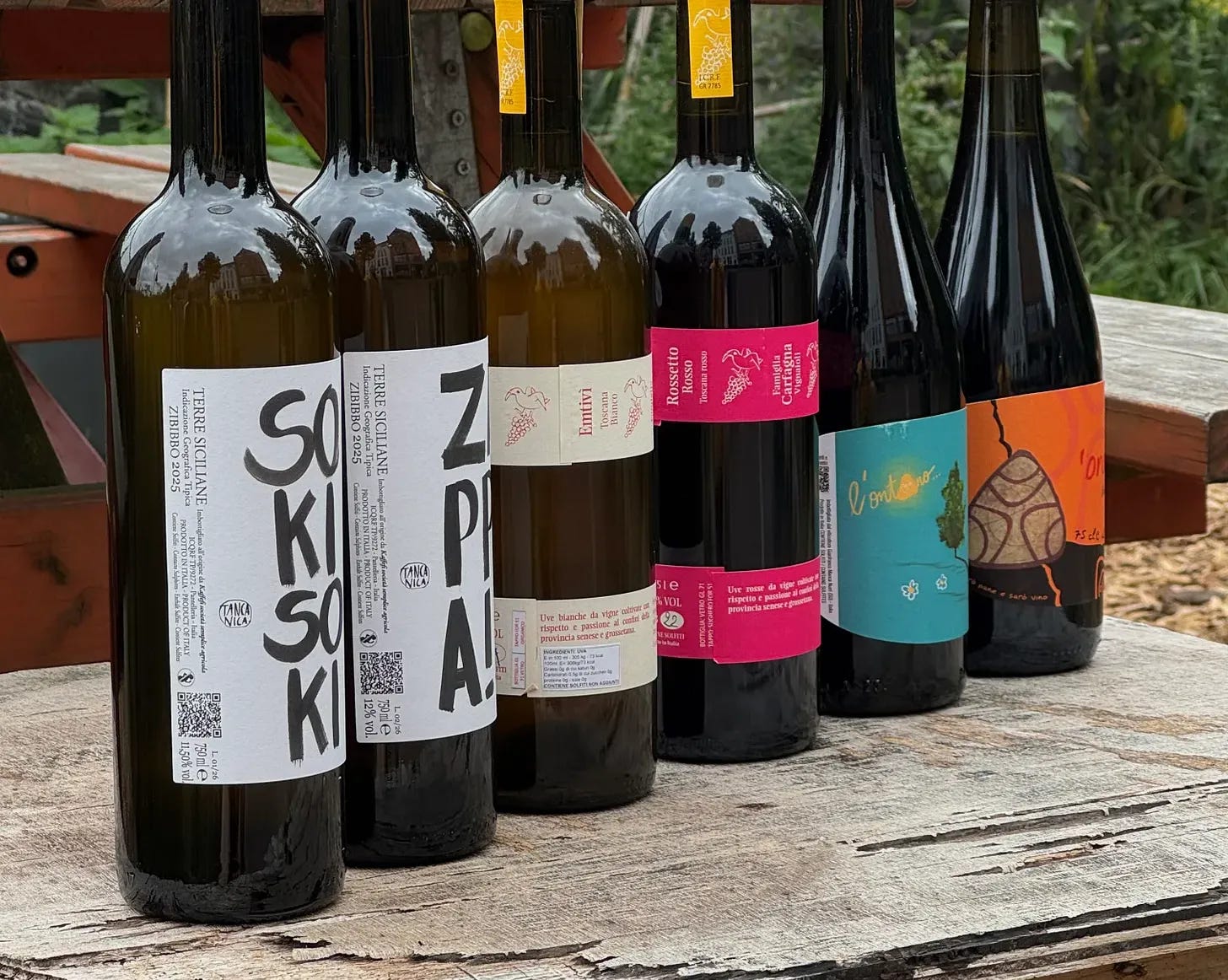
Moving north, along the Tuscan coast, Francesco and his daughter Irene Carfagna make wines of rare depth and beauty on the micro-island of Isola del Giglio, using indigenous varieties grown on steep terraces above the sea. The island is perhaps best known internationally for the Costa Concordia disaster, but we would argue that the extraordinary wines from the Carfagna family deserve the attention much more. The output of the Carfagna’s is minute, the vineyard work close to heroic, and the wines are amazingly delicious and captivating, but we don’t get to taste them ourselves so often because we (almost) never open them in tastings as we only get a handful of boxes every year. However, we are very happy to write (and hopefully soon also taste some!) of the newest release.
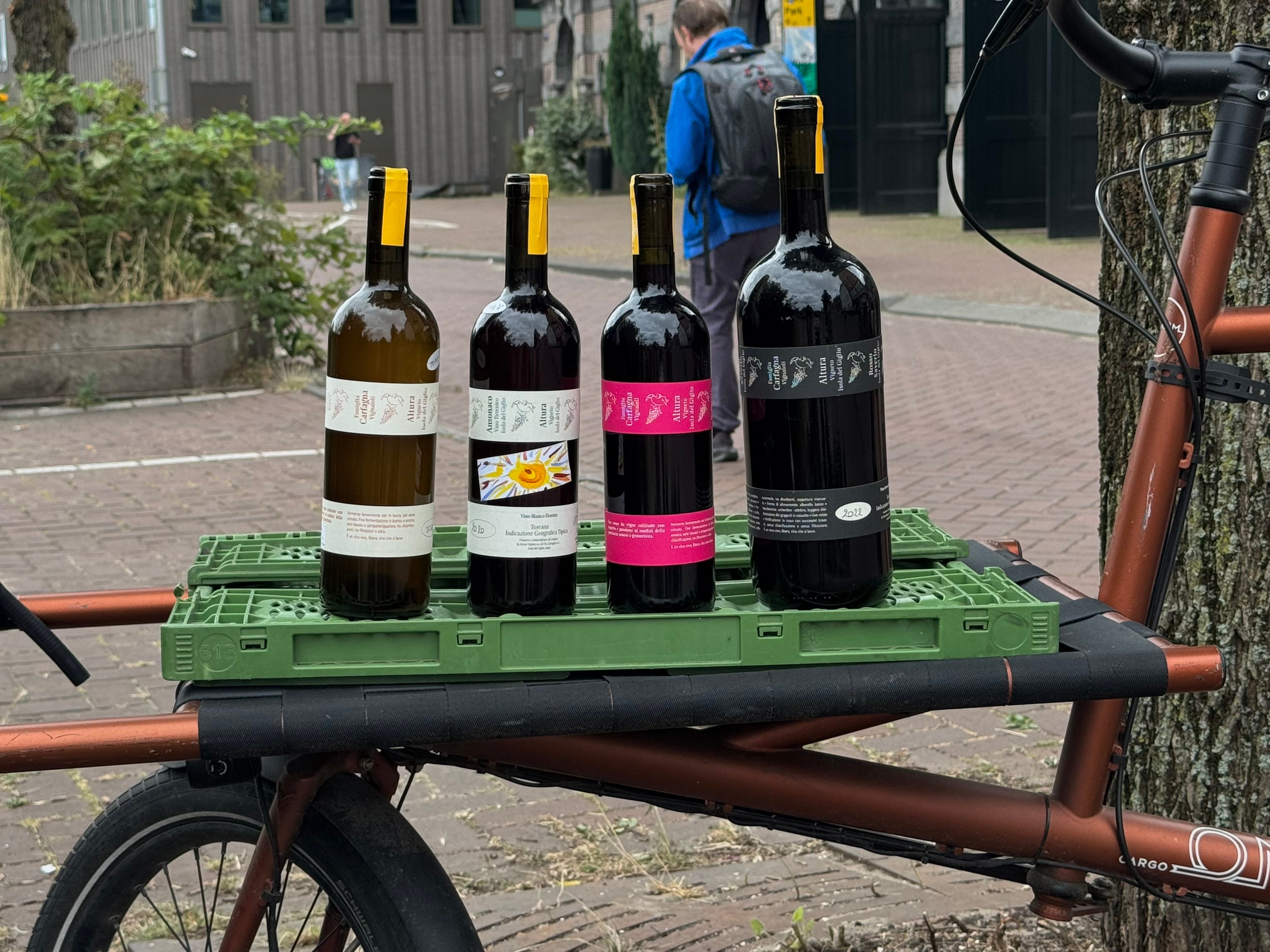
The first wine in the line-up is a relatively new addition: Emtivì 2024 used to be bottled under the name Rossetto Bianco, but now carries the phonetic pronunciation of the abbreviation for the three grape varieties Malvasia, Trebbiano and Vermentino (MTV). The Carfagnas may be nodding gently towards the television channel of the same name, but the wine is enough entertainment as far as we’re concerned. Emtivì is the most accessible and fruit-driven wine in the Altura range, with fine texture, supple tannins and a saline quality, but without the intensity of the flagship orange Ansonaco. It is warm, inviting, and an excellent starting point for those who want to gently dip a toe in the wondrous world of Altura.
Further down the orange spiral, Altura’s flagship, Ansonaco 2024, is an extraordinary orange wine made from the eponymous local grape variety that has grown on Giglio for centuries and feels completely at home nowhere else. The wine can feel almost Georgian in certain vintages, with its deep saline earthiness and dried-fruit character developed during ageing in old wooden casks. The 2024 is slightly softer and more aromatic than the previous vintage and, despite its firm structure and deep colour, considerably more approachable than comparable orange wines from Friuli or Georgia — thanks to the pure Mediterranean herbs and island character woven through it: salty and sun-drenched but also beautifully nuanced, with a savory depth balanced by bright dried fruits.
For the reds, Rossetto Rosso 2023 is a superb example of what Francesco and Irene can do with red grapes. Previously labelled as Chiaretto di Sangiovese(a Tuscan name for dark rosés made of Sangiovese), it sits slightly deeper in colour than that might suggest. However, the style remains juicy and driven by Sangiovese’s cherry-brightness. For anyone who loves natural Burgundy but wants the depth and directness of Italian natural red: this is the wine, with sour cherry acidity, a touch of spice, and just the right amount of structure to enjoy it over a long meal. The Rosso Saverio 2022 (€52.00 incl. VAT) is Altura’s ultimate expression — a super-blend from fourteen grape varieties on difficult coastal terraces, where Sangiovese contributes sharpness and dark fruit while each other variety adds its own layer to the whole. Rosso Saverio is our dear Eva’s favourite wine of all time, and we can’t blame her…
Lastly, there is Ansonaco Sole 2020, of which we received two additional cases. In 2020, climatic conditions on Giglio led Irene and Francesco to harvest late, which in turn caused the fermentation to take nearly two and a half years to complete. During this time the vats were only partially topped up, so the wine developed a light oxidative quality alongside a hint of residual sweetness. The name and label are an unmistakable tribute to the sun. This more aged, oxidative version of the Ansonaco was produced only once, in tiny quantities and is a wine whose heights of pleasure are incomparable, as it is a wine that gets you ‘high’ in all the right ways…
As Francesco sends us a mix of magnums and jeroboams every year, we always have bigger sizes of almost all cuvées in multiple vintages available on request. Please get in touch if you need more info on these incredible wines, or need help finding the right magnum!
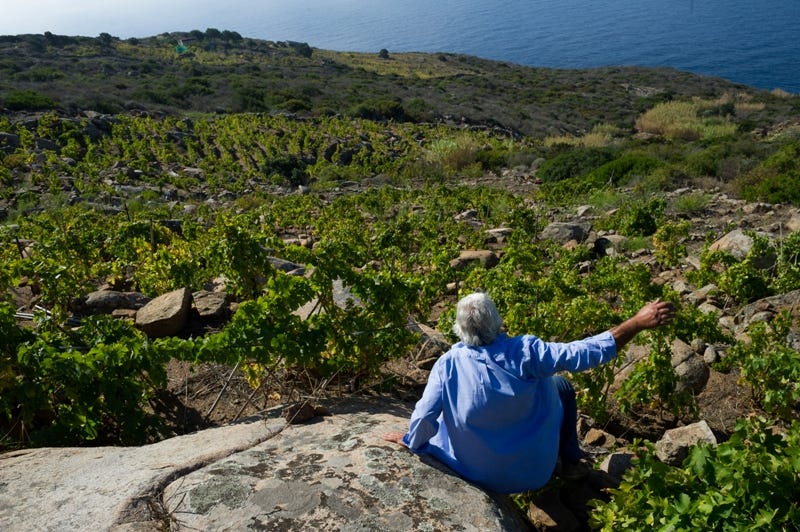
Francesco as conductor of his steep vineyards…
ISLAND SPECIAL 3/3: PANEVINO — SARDINIA
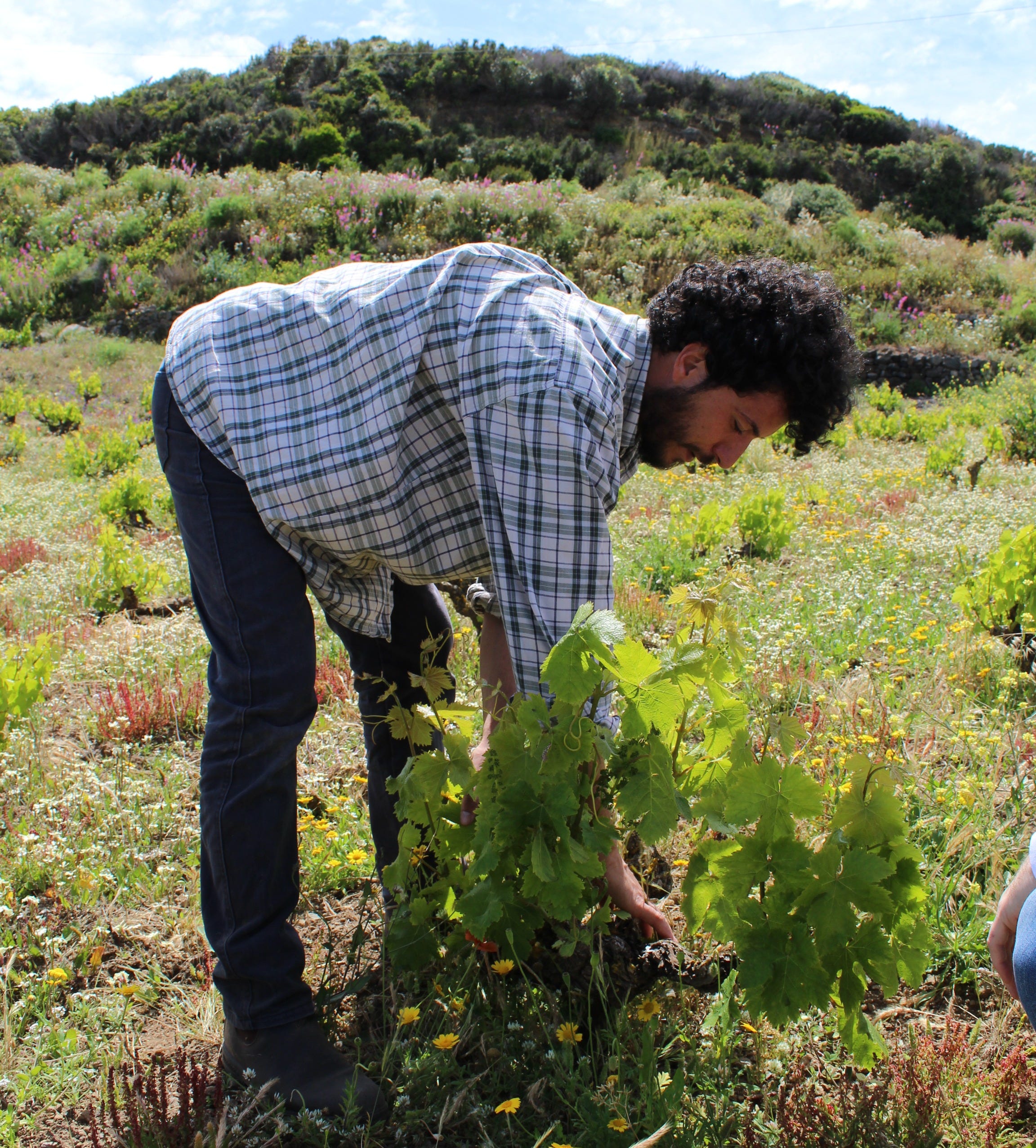
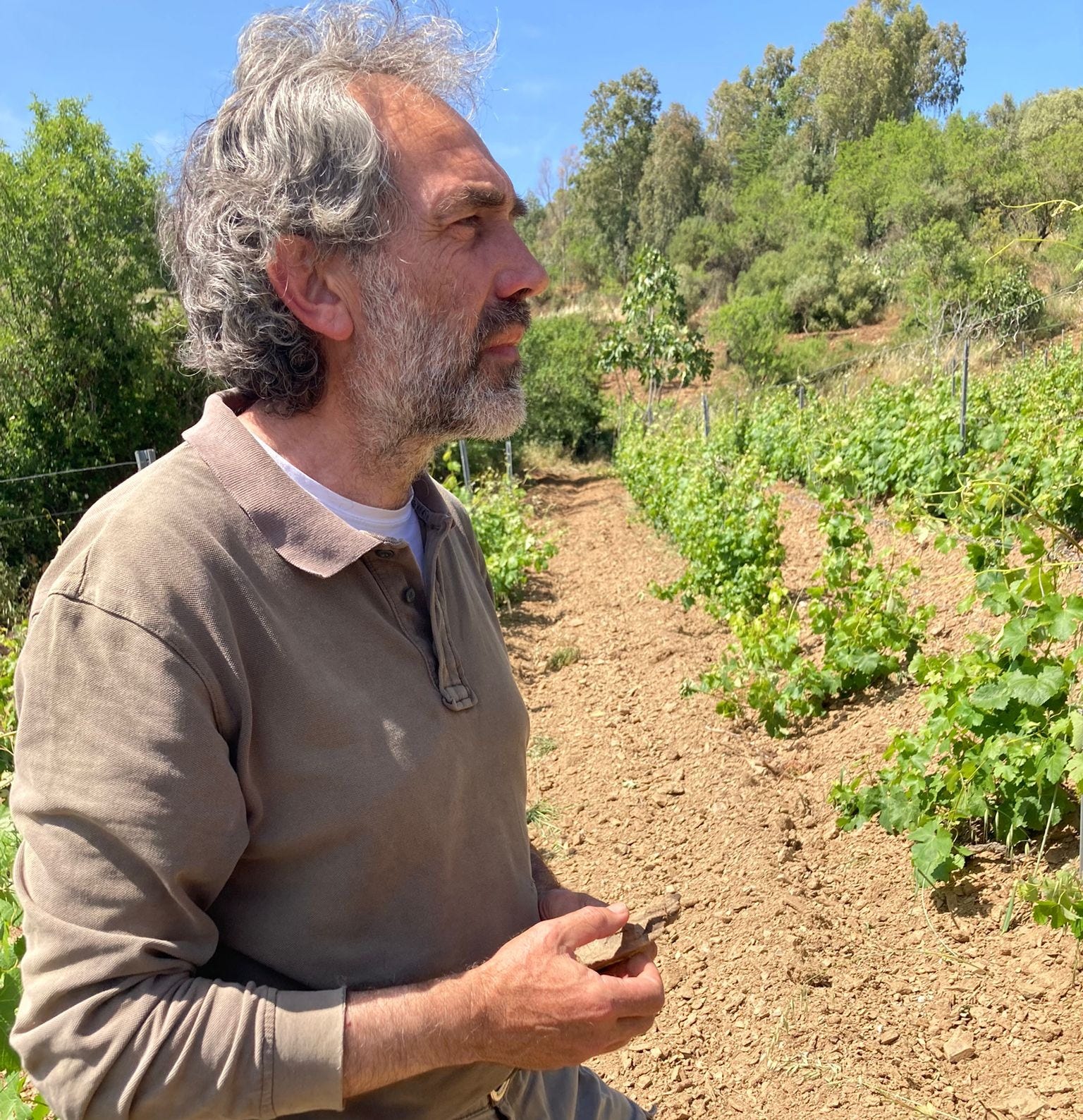
Gianfranco in one of his vineyards, summer of 2024
Gianfranco makes wine in the rugged, high-altitude interior of Sardinia, from mostly very old vines that he tends with almost no intervention. In the cellar, the approach is equally radical: everything ferments in open, conical old wooden vessels, with oxygen contact playing a deliberate role during ageing. The wines can be unpredictable and strange, but when they find their moment — which the current releases very much have — they are masterworks of momentum, tension and energy. Combined with the warmth of the Sardinian sun, these oranges, rosés and reds can stun and transcend, and can make a dreary day and the accompanying frowns be turned upside down.
Currently, we are releasing the 2024s, which actually are stunningly calm and collected in their youth, and don’t seem to need a few years to become themselves. Alongside these, we wanted to highlight the 2023s which we got in early last year, but kept aside because of their limited nature (as these were the so-called ‘Survivors’ in the disastrous 2023 vintage), but also will touch upon some of the aged 2020s, -21s, and -22s, which are showing amazing at the moment.
All the 2024s…
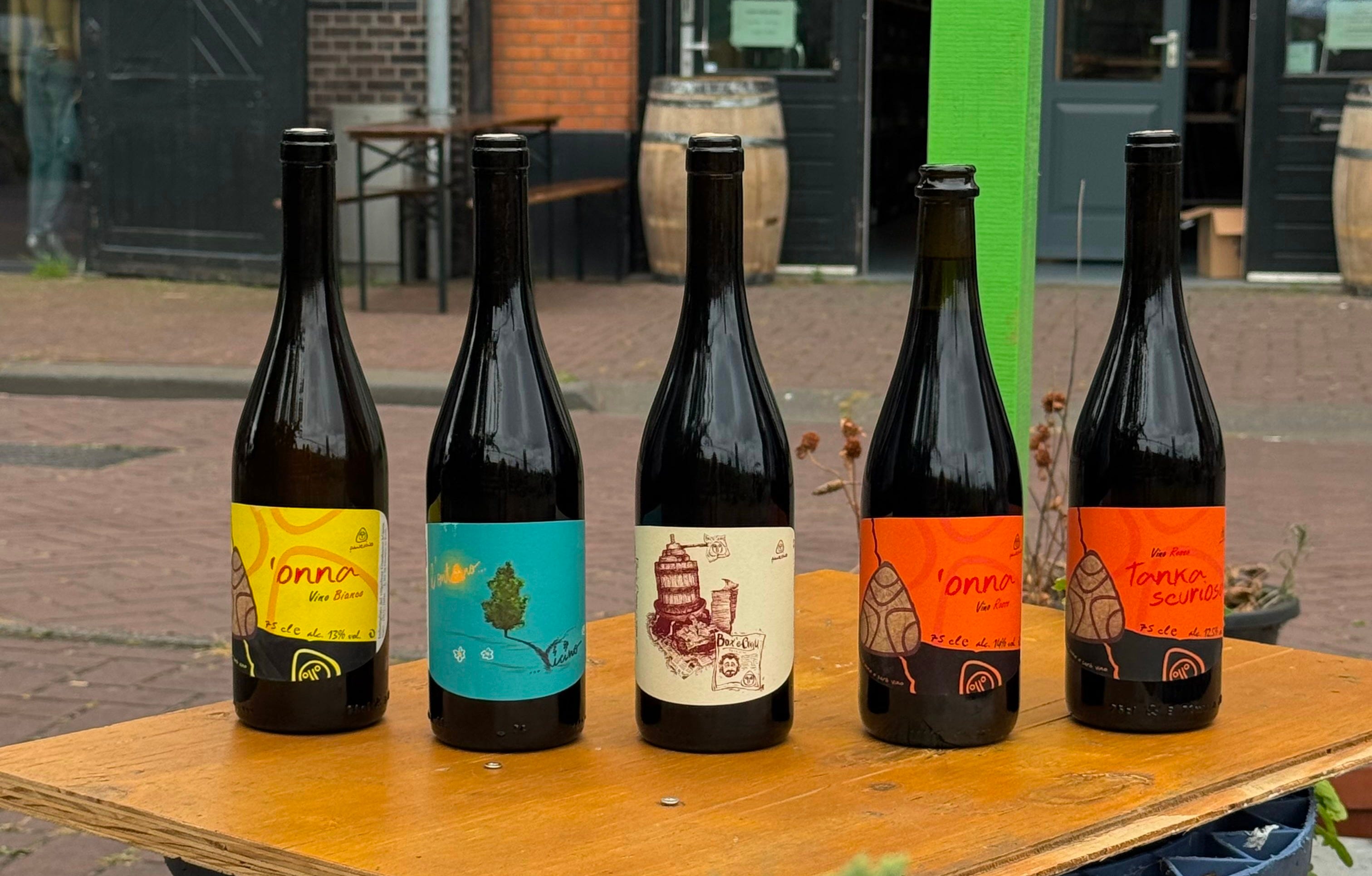
The first 2024 we opened on arrival was L’Ontano Vicino 2024, made from Muristeddu and Carignano, which surprised us with its sappy, dark Beaujolais-like energy — plum fruit, tobacco and a fine, pleasurable earthy undertone, with the kind of lively acidity that makes a bottle disappear. It immediately reminded us of the wines of Philippe Jambon bottled under his Une Tranche label. Alongside the L’Ontano, we tasted Box’e Croxiu 2024, which is is Gianfranco’s most widely available cuvée, made from the second pressings of all the vintages’ wines. This sounds like an afterthought, but is the opposite. Box’e Croxiu reveals itself as a deep, velvety, dried-fruit-forward wine with cinnamon, menthol and balsamic, that, served slightly chilled, drinks like an absolute train. Often times, we have to convince people that drinking soft Sardinian reds (by Gianfranco, of course), is nothing to be scared of. Even though the wines don’t have the fashionable crimson color, the wines are crazy drinkable and generally very good party wines…
Next to these two softer 2024s, we also have the bigger cuvée ‘Onna 2024 in stock, ready for release. ‘Onna 2024is made from Barbera, Ciliegiolo and Montepulciano, and was immediately approachable and delicious, with Barbera’s earthy earthiness combined with its bright, fresh acidity, blackberries, black cherries and dark plum. Its white counterpart, ‘Onna Bianco 2024, from the same vineyard at 450 metres altitude on schist soil (Trebbiano, Vernaccia and Vermentino), is one of those orange wines that makes very clear why we are so attached to Gianfranco’s work — tropical, focused, and profoundly drinkable, with a definite freak-edge. Lastly, Tanka Scuriosa 2024, made of Cannonau (Sardinian name for Grenache), Tintillu and Bovale, sits somewhere between the wild, raw side and the fruity, ripe-berry end of the Panevino spectrum, and has something in common with the oxidative reds of the Roussillon, like those by Fabrice Monnin of Mazière and peers. There is worse company…
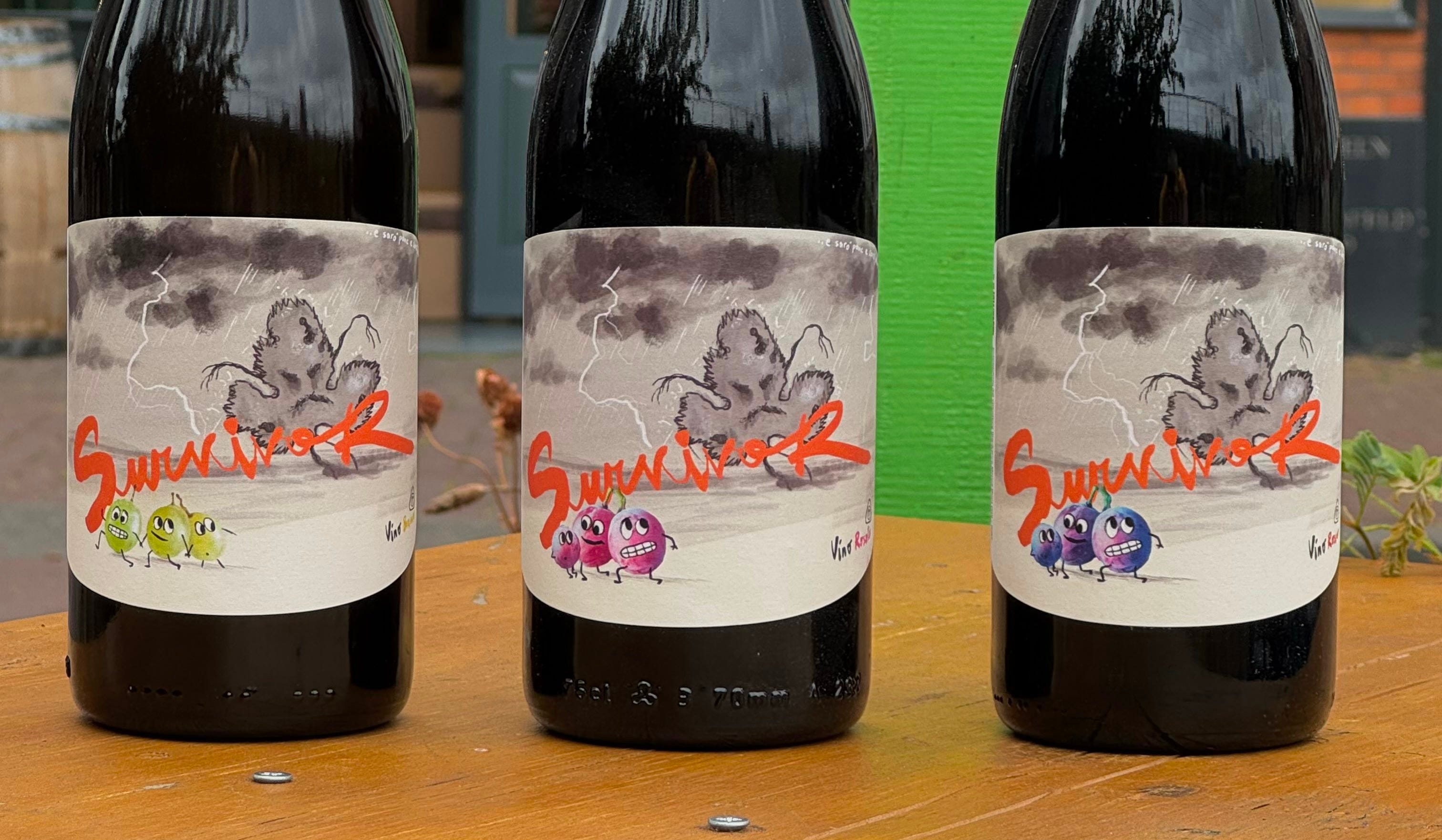
As stated above, we also never released Gianfranco’s three 2023 ‘Survivors’ — wines made from the small harvest that survived the vine fires which destroyed more than 80% of Gianfranco’s vines in 2023. Survivor Bianco 2023 is made from a mix of white varieties, macerated for four weeks and aged in acacia wood, and is concentrated salty, textural orange with lots of bright passionfruit and sea salt in the way that only low-yield vintages can be. Survivor Rosato 2023 is a delicate, beautifully elegant and approachable chiaretto-style rosé, and Survivor Rosso 2023 is a ruby-red, rose-and-bramble-filled wine that, again, is not as wild as the label might suggest. It’s a wine we would bring to our in-laws, but also definitely would take a Friday night party with friends who are into deep conversations and freaky music.
Beyond the 2023s and 2024s, we have small quantities of cuvées from the 2020, 2021, and 2022 vintages, as some of these needed a few years in bottle but are coming into their drinking window. For instance, the on paper powerful ScRock’Onna 2021 made of Barbera and Montepulciano, plus a huge field blend, is in practice gentle, floral and refined, with the kind of energy that the island wines of Tanca Nica and Altura share, but also hints at the delicateness (and hypnotic qualities) of the wines of the aforementioned L’Absurde Génie des Fleurs. Kano’ 2022, made of 100% Cannonau — was far more delicate and refined than we remembered, with violet and Cascina Tavijn-esque stone fruit coming forward with every sip. Furthermore, we have some of the orange Alvas 2021 and the magnificent oxidative dark rosé Girótondo 2021, which both probably can be aged for another 40 years, but are getting to a really great place currently.
Slowly but surely, our friends and fellow wine drinkers are beginning to realise that the level and energy of these wines is all but unmatched — though we understand that wines of this kind need context, even if we believe that, once tasted, they speak for themselves. Fortunately, a visit to Panevino in his hometown of Nurri is on our calendar before the end of August, and we will of course report back soon.
For those who want to explore Gianfranco’s wines in the meantime, we would recommend the 2024s and 2023 Survivors as the most approachable starting point, although the aged wines are delicious also…
FRESH FROM VOLCANIC VENETO: DANIELE PORTINARI
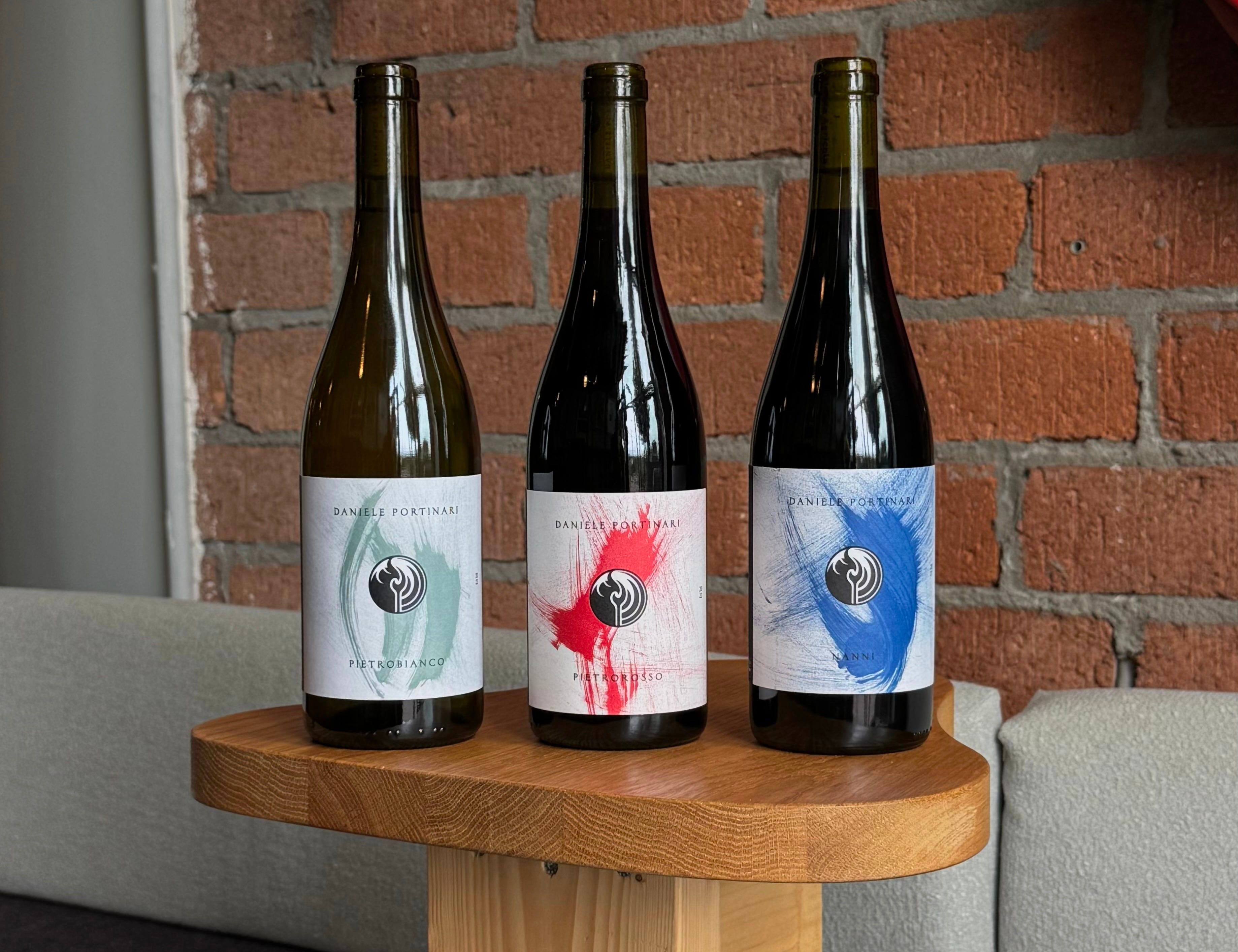
From the islands we’re moving to Italy’s mainland, where Daniele Portinari makes wines in the volcanic hills of the Colli Berici, between Verona and Vicenza in the Veneto. Daniele makes wines from a place of quiet perfectionism that ensures his wines are never overpriced and always over-deliver. We tasted the newly arrived Pietrobianco 2023 last week: alongside its characteristic volcanic gunflint quality, the 2023 overflows with bergamot, lemon and cedrat, combined with minerals and a smoky edge that sets it apart from any other Italian white we know. The 2023 is even livelier and slightly more fruit-forward than the previous vintage, and at this price it is very hard not to drink it — or serve it — all summer long.
Alongside Pietrobianco, we received the new vintage of the more structured, gastronomic Nanni 2021, which is a steel-aged Bordeaux blend that is all about showing what these grapes actually taste like, without vanilla or oak. Soft, with notes of blackcurrant, spice and a savoury-vegetal quality that makes it endlessly food-friendly and interesting.
To top it all off, we also received the new Pietrorosso, which is the red sibling of Pietrobianco. Pietrorosso is just as easy to drink, especially well-chilled, with fresh, forest-fruit character and the same unmistakable volcanic backbone that runs through the entire Portinari range.
RESTOCKS AND NEW WINES FROM THE ROBINOT FAMILY
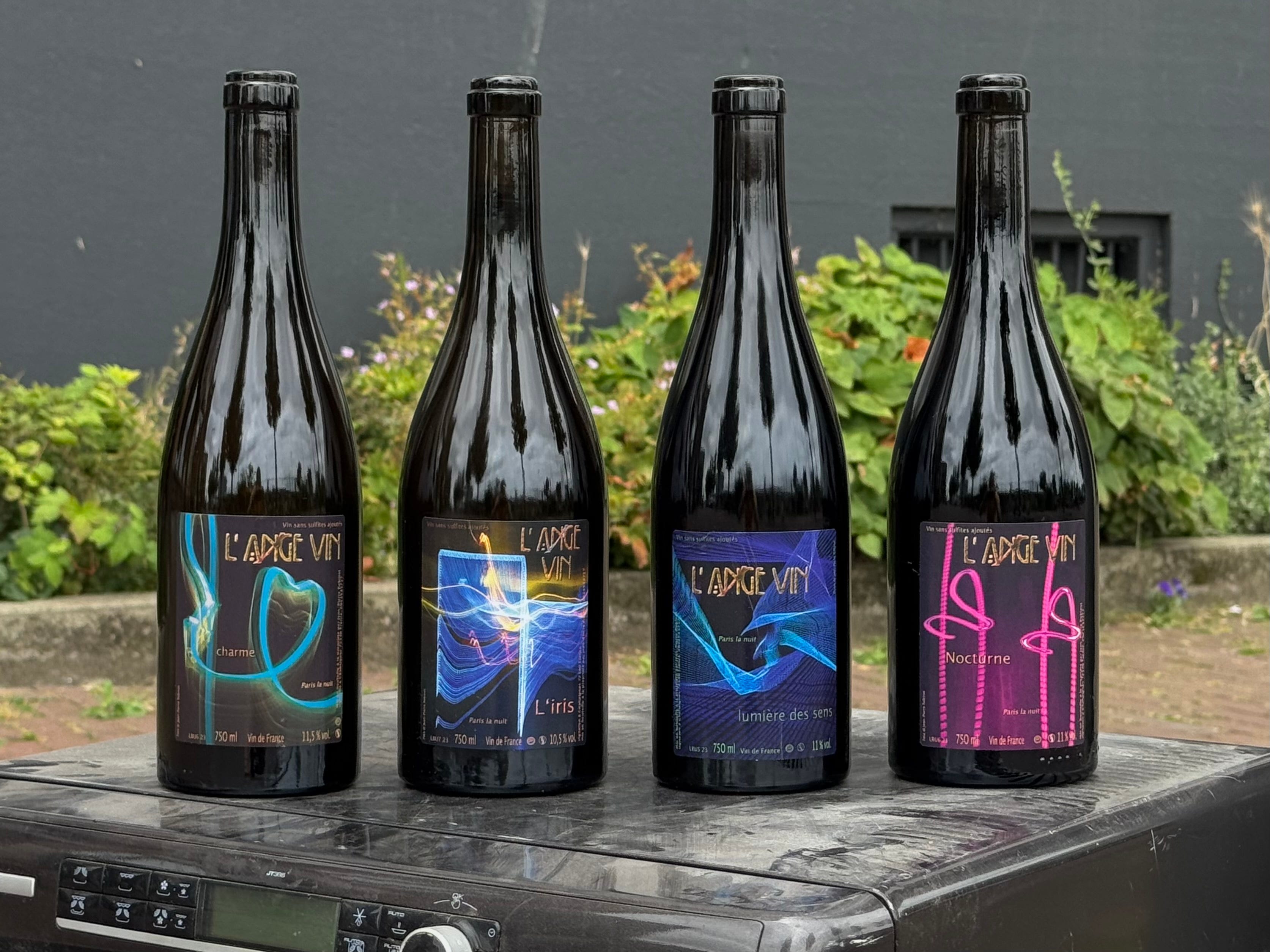
Jean-Pierre Robinot has been a genuine legend in the world of natural wine for quite some time, and still bounces around wine fairs, Parisian cafés and his own vineyards with irrepressible energy. Those who met him and his wife Noëlla at our Amsterdam tasting three years ago will remember his infectious enthusiasm, his strong opinions, and his seemingly inexhaustible supply of stories. He even designed unique labels for his 2022 vintage specially for that occasion. These days, daughter Juliette helps out across the seasons in JP’s native Coteaux-du-Loir region close to Le Mans, after having spent time in the Jura with Emmanuel Houillon and the great Monsieur Overnoy.
Generally, the Robinot wines are proof that élevage — patience above all else — is the only way to allow a wine to truly become great. Almost all are made from Chenin Blanc and Pineau d’Aunis from the Coteaux-du-Loir, and the extended ageing in old wooden casks makes them uniquely themselves.
Because of the slow fermentations of the 2022 vintage, and while we wait for the 2024 bottlings, Jean-Pierre has sent us restocks of 2023. The 2023s are elegant, wholly Robinot, and were flying off the shelves last winter. The freshness in the 2023s is striking, and all three white wines come in below 11.5% alcohol — Iris at just 10.5%. They all carry the hallmark acidity of both Robinot and Chenin Blanc, capturing the clay, limestone and flint of the Coteaux-du-Loir, but also have the rich depth of semi-oxidative ageing.
One of the highlights of this delivery is the return of Lumière de Silex 2023. This was actually the very first cuvée Robinot ever made in the early 2000s, though he chose for years to release wines under different names, and stopped making this wine for a while because he doesn’t own a Chenin parcel in the Anjou on the silex soils himself. However, JP has been making Lumière de Silex again for a number of years, with grapes from old vines in the Anjou, the ‘black’ part of the Loire. The grapes grow on soil of schist and silex (flint), which come through in both aroma and flavour, and really make the wine. The grapes are farmed biodynamically by friend Damien Bureau, while Jean-Pierre handles everything in the cellar.
Next to this big négoce-wine, we also received Charme 2023 from the Robinot’s own vines. Charme has been one of our favourites for years, and is a serious white of the highest order. Eighteen months in old barrique, from vines over forty years old, this is power Chenin, with the apples and magnificent acidity of Chenin Blanc in the foreground and depth, nuttiness and salinity unmistakably beneath. Furthermore, we have received a number of boxes of Iris 2023, which comes from one of the estate’s oldest parcels, with vines raging between sixty and ninety years old. Iris always is aged for more than two years in barriques, and receives the same treatment of the other whites, with quite some generous oxidative exposure.
For the reds, we tasted Lumière des Sens 2023 and Nocturne 2023 (from very old vines, with extra-long ageing in cask) at the Loire fair Naturall earlier this year for the first time, and we were blown away by both. These two reds of Aunis both demonstrating what seriously powerful yet endlessly drinkable wines Pineau d’Aunis can produce in the right hands. It is not fruit that makes these wines so electric; it is the pepper, cinnamon, clove, fine mineral texture and seemingly endless acidity, all working together so well that a bottle simply disappears. We would recommend Lumière for drinking now, and putting some Nocturne 2023 away as this wine is destined to be aged, although hard to resist in its youth…
Lastly, the bubbles are back too! The party bubble Fêtembulles 2023 is Jean-Pierre’s sparkling Chenin, and is light and uplifting, with great green apple-acidity, a limestone-y saline finish and just enough residual sweetness to give it body. It is a wine that sells itself to anyone who tastes it, and the best possible introduction to the world of Robinot. Alongside it, Années Folles 2024 — Jean-Pierre’s sparkling rosé, named after the roaring twenties in Paris — is back: salmon-pink, with raspberries, white pepper and a similar fine, mineral wet-stone quality.
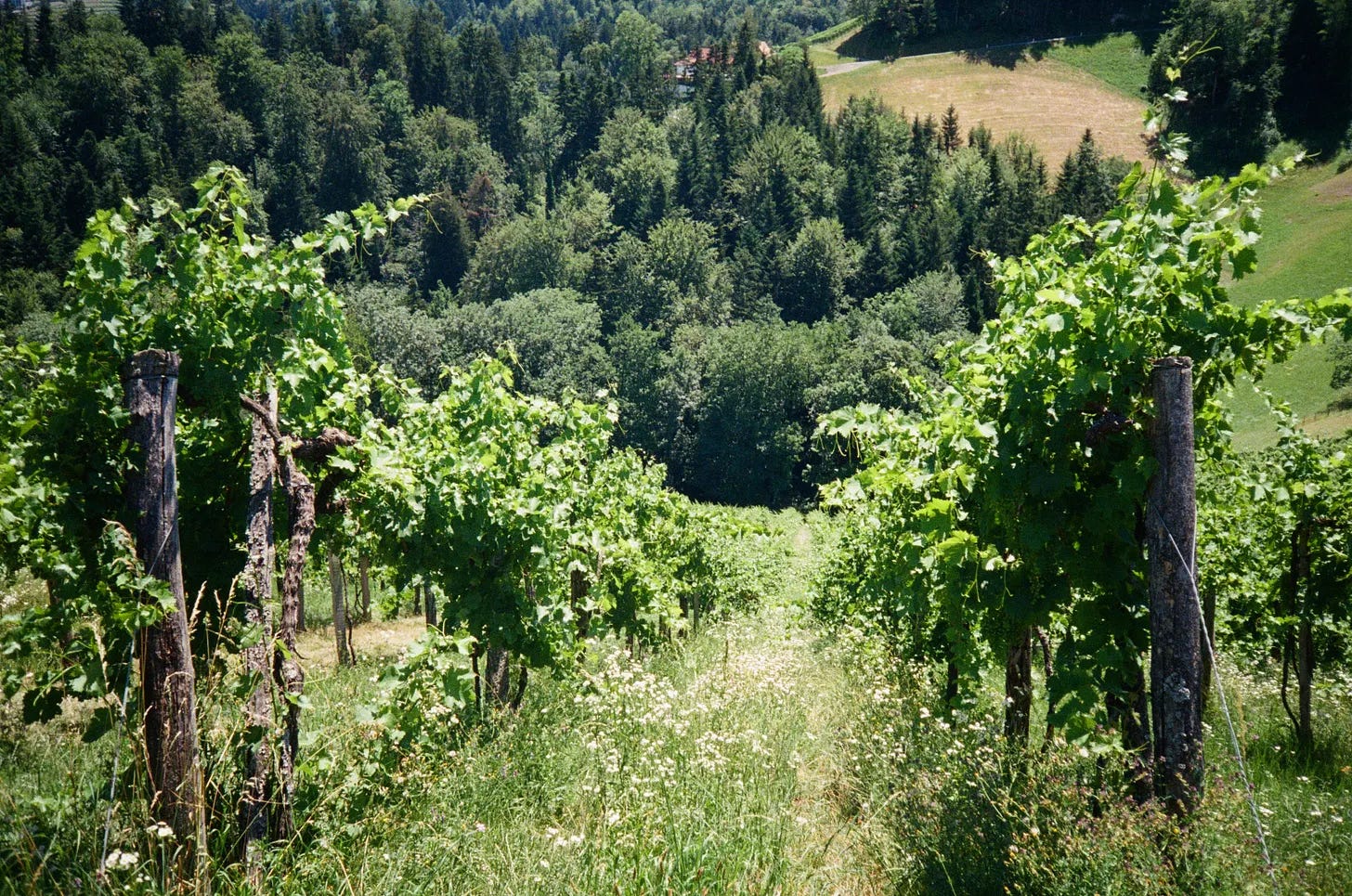
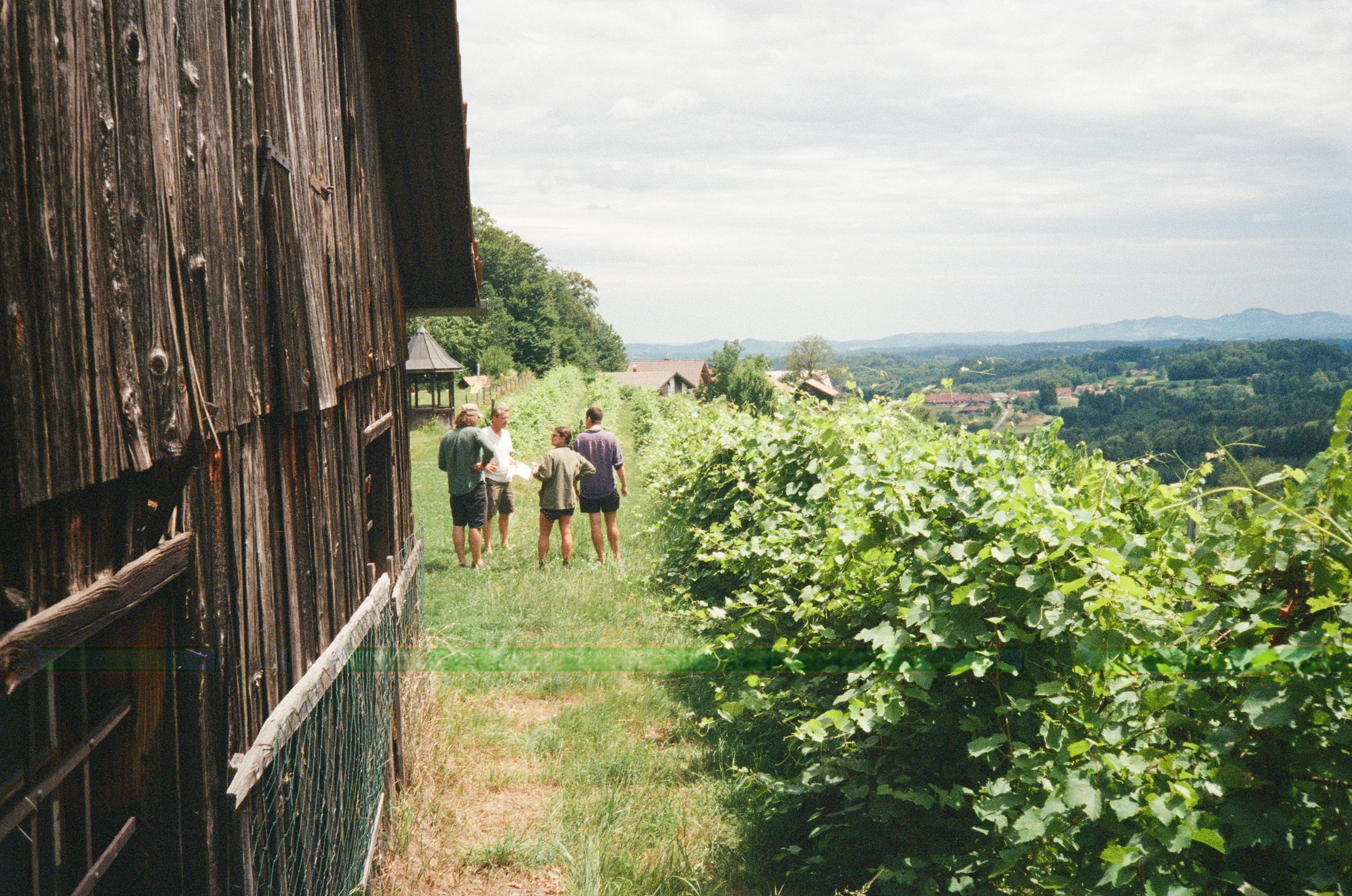
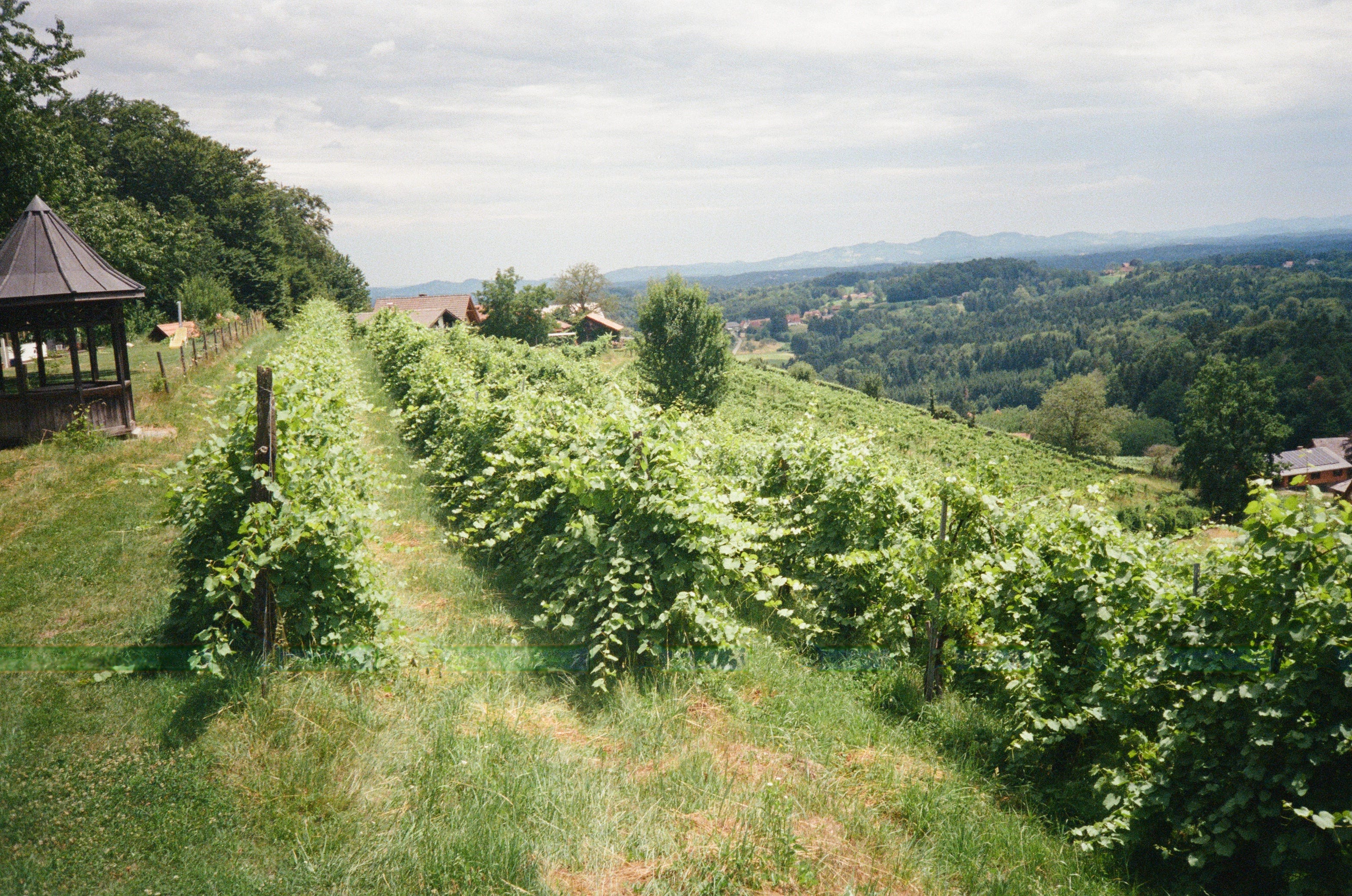
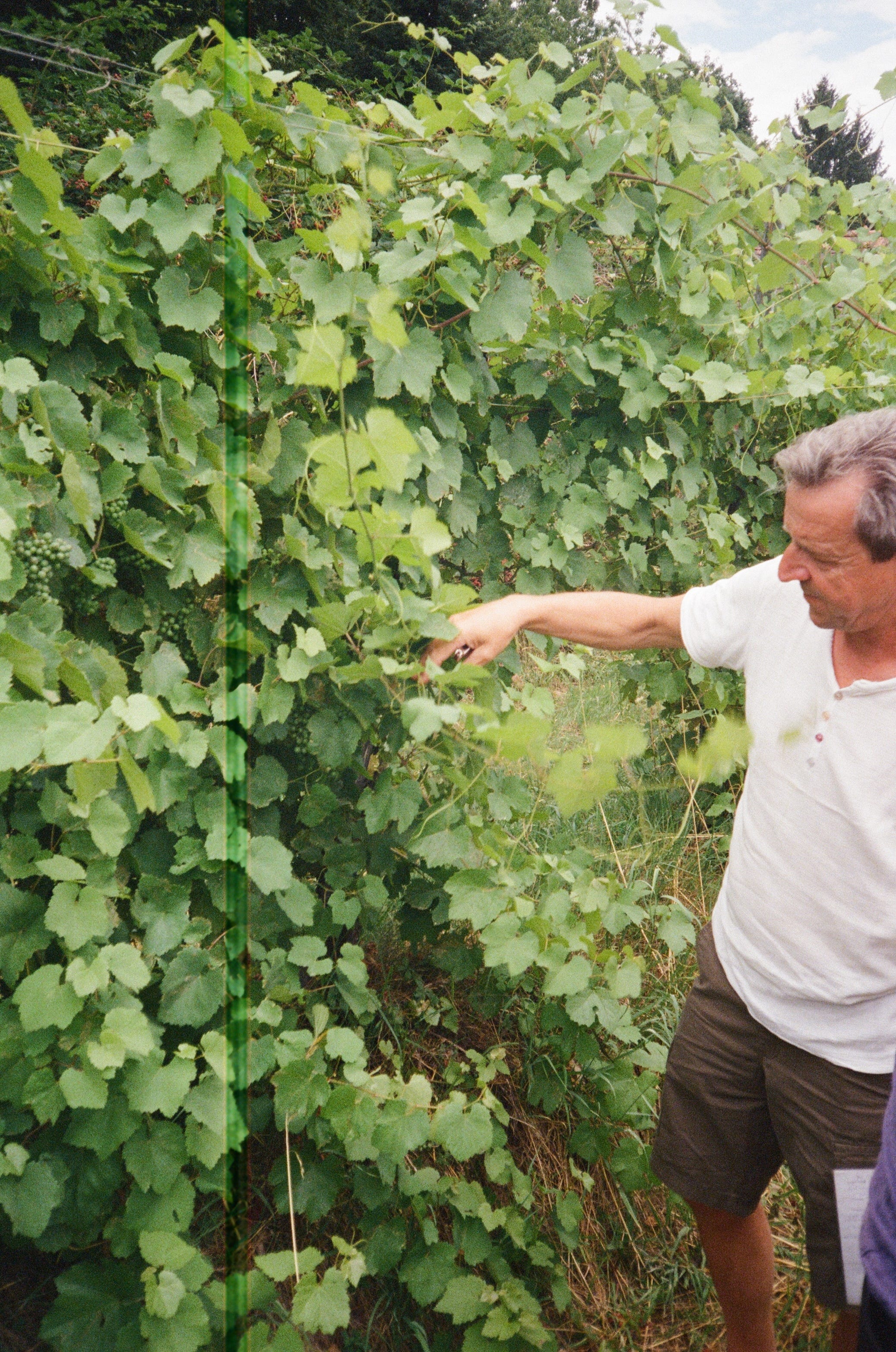
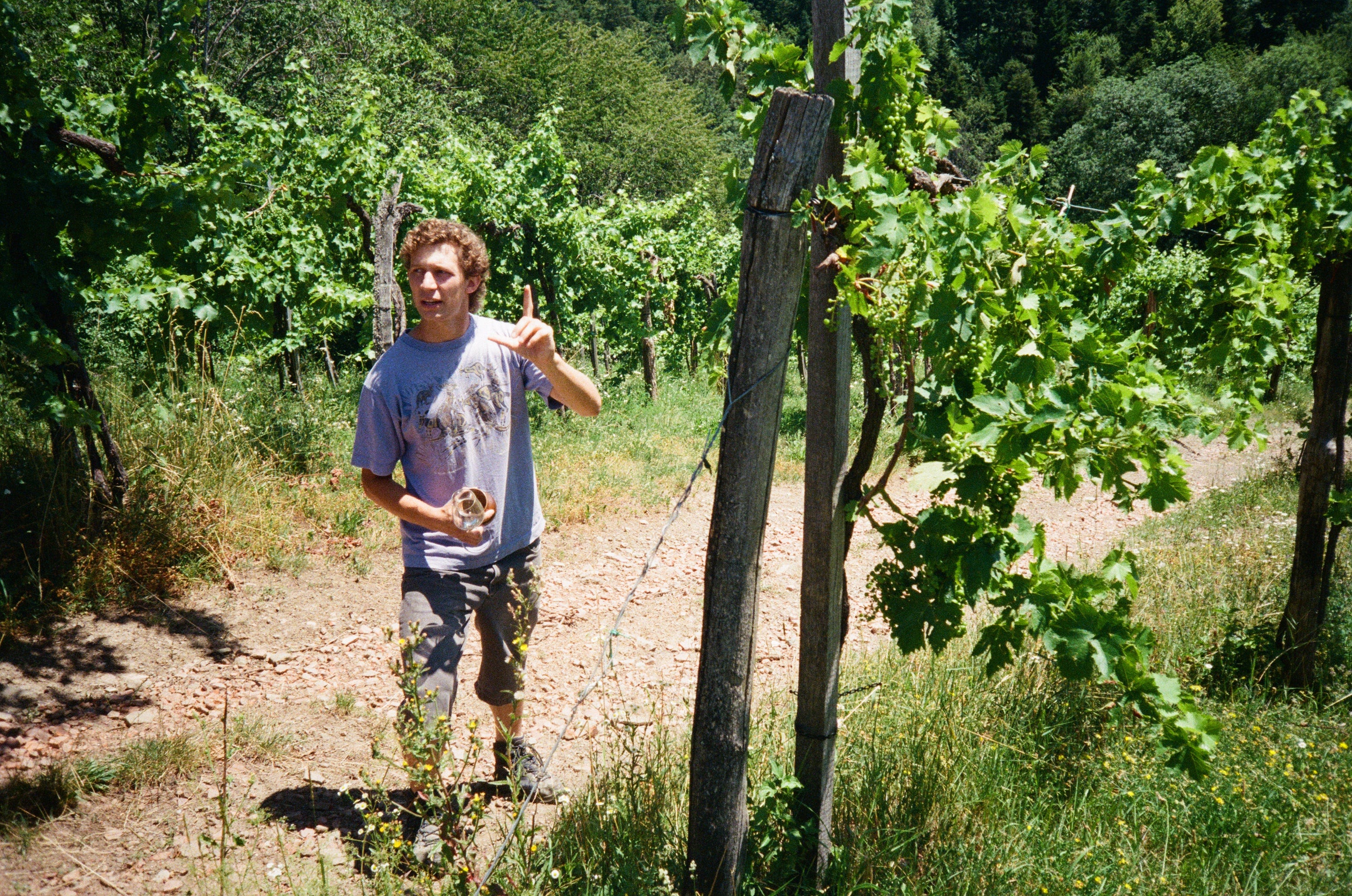
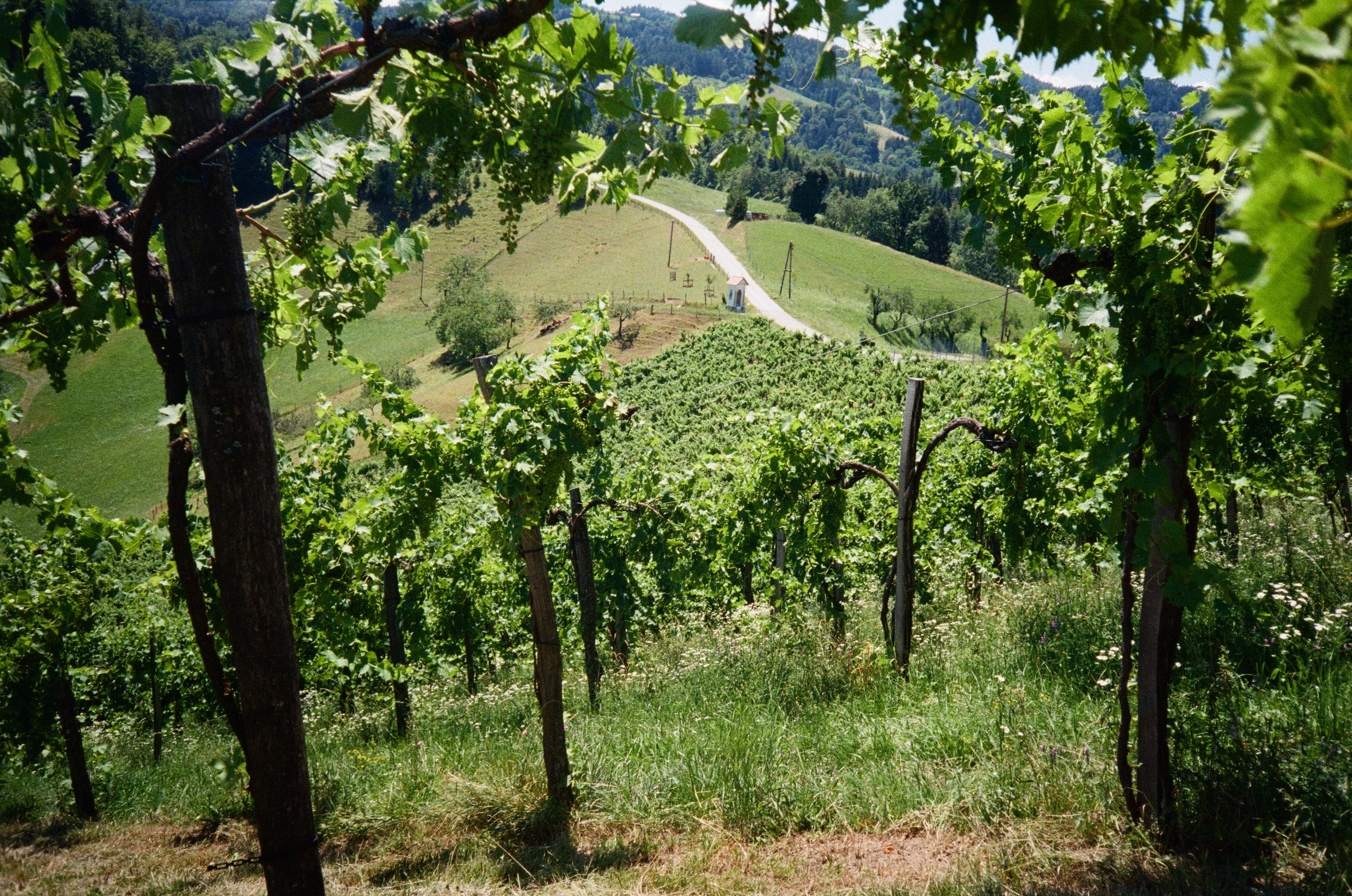
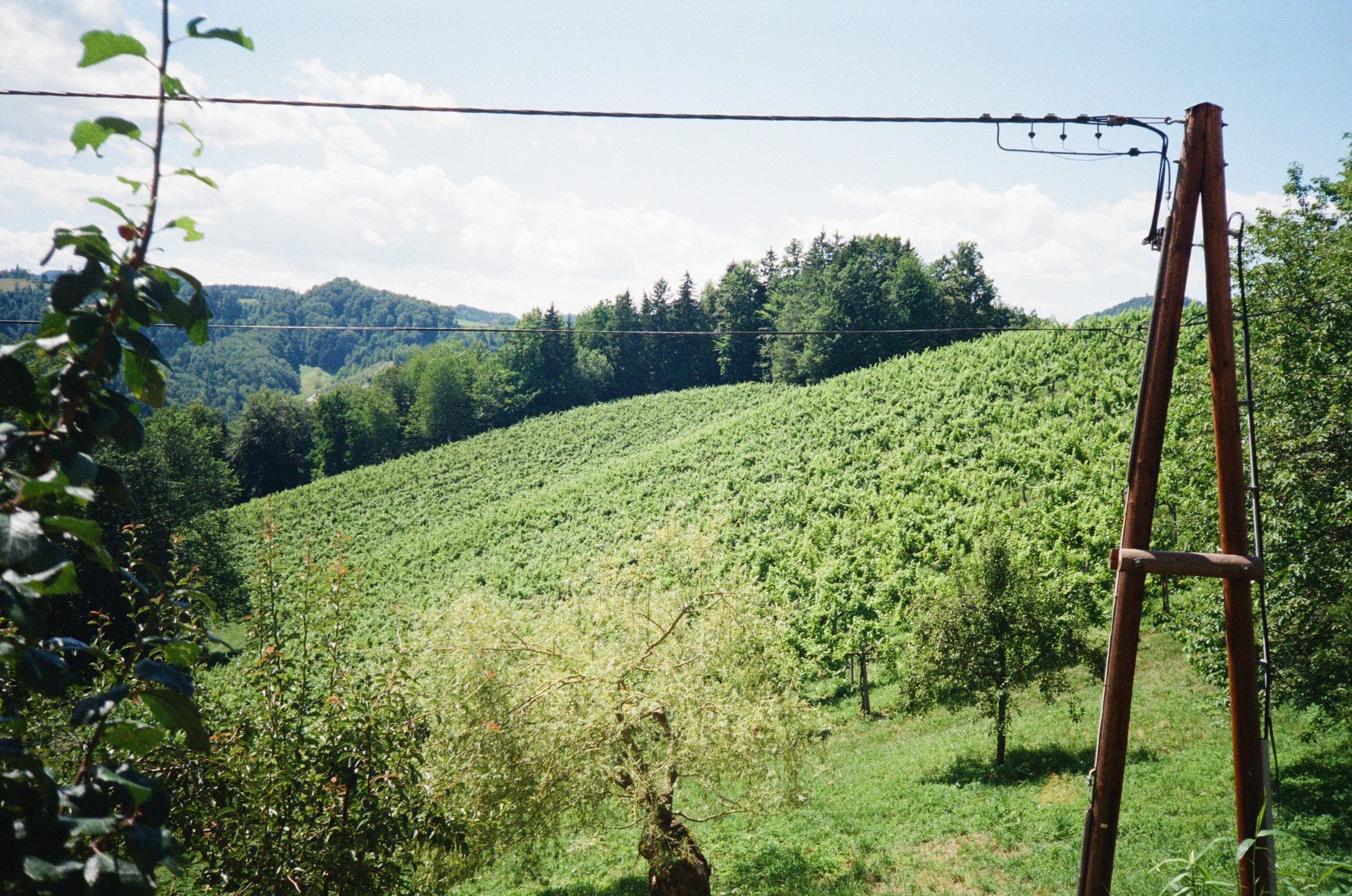
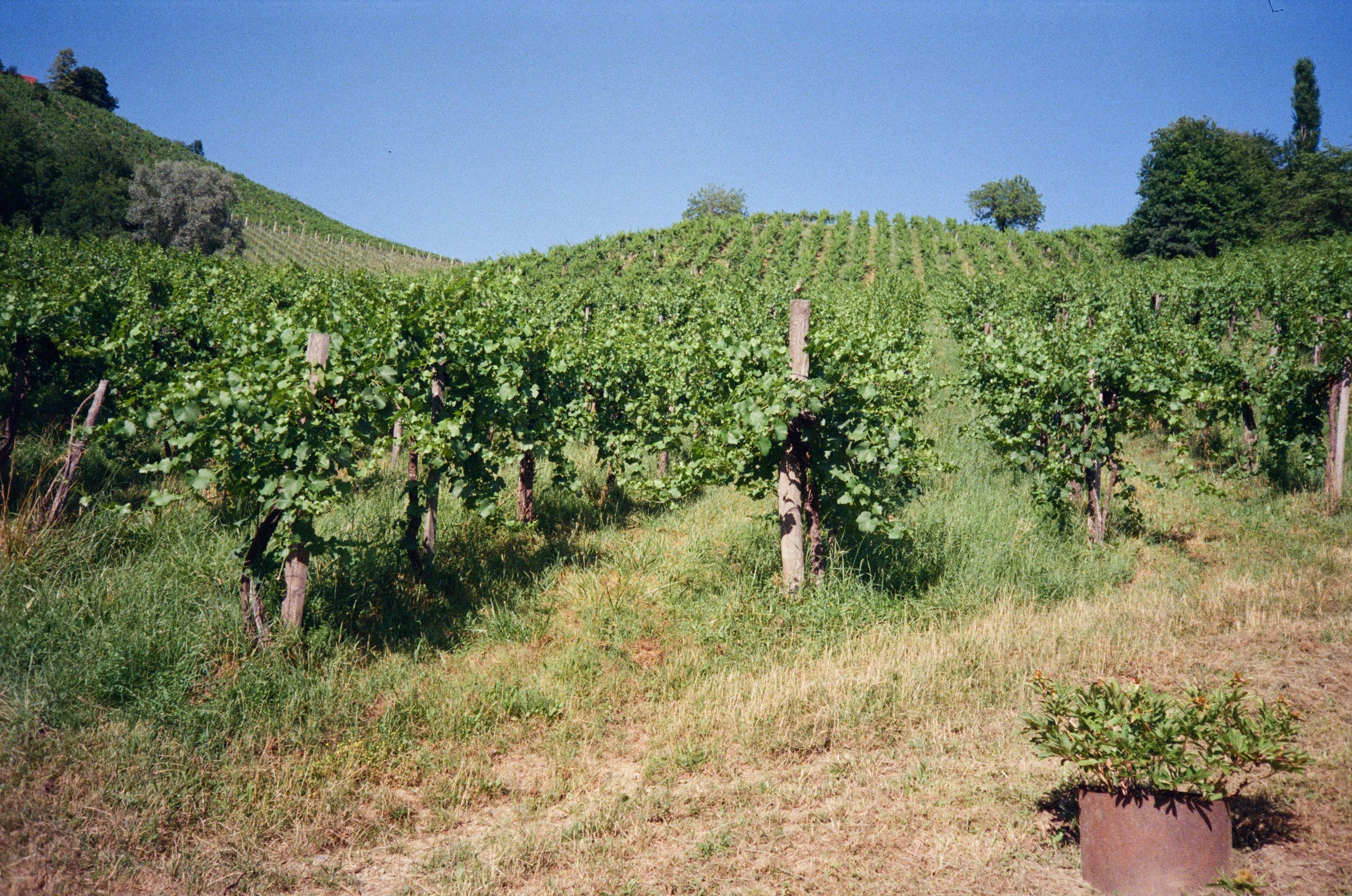
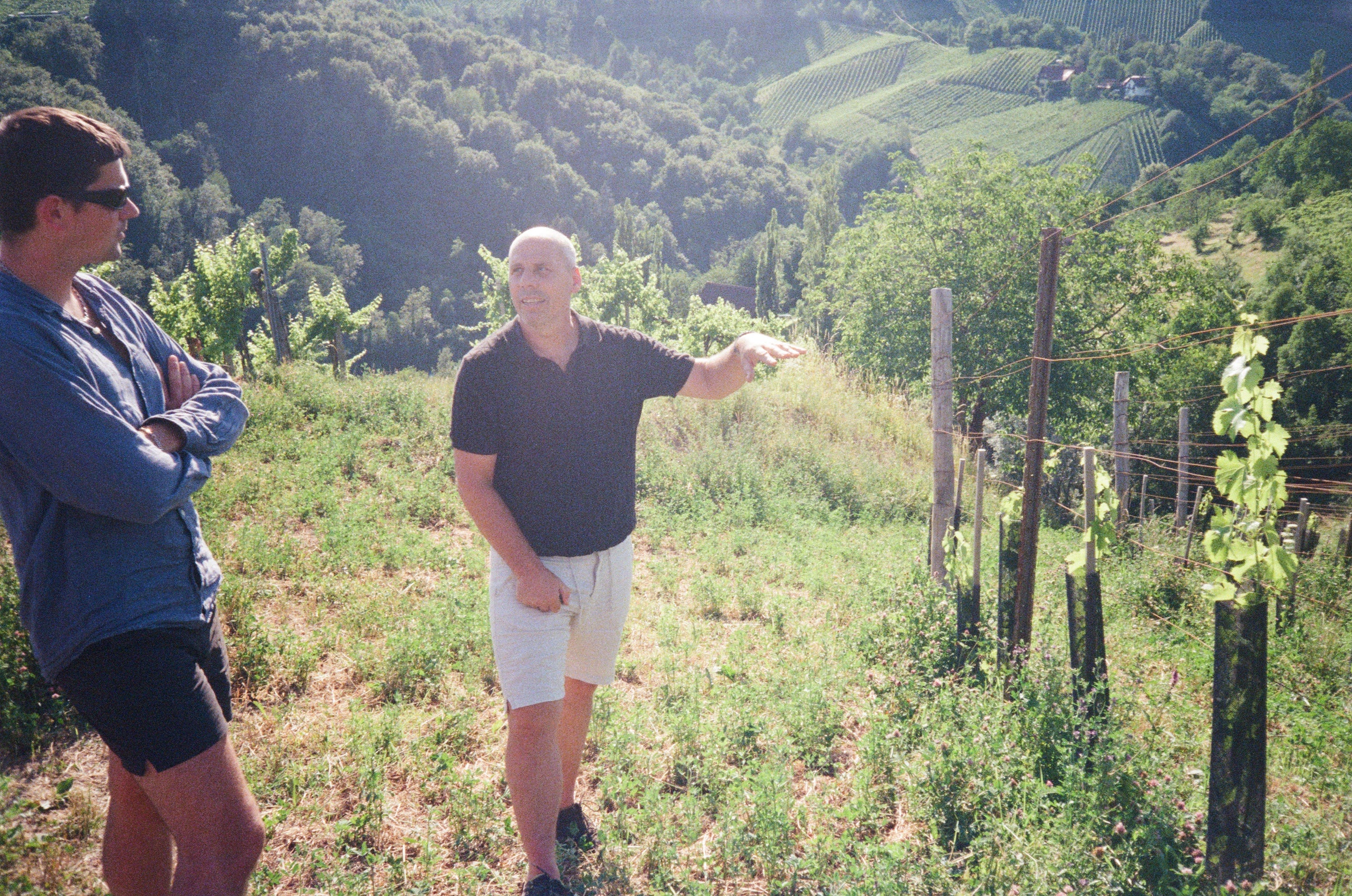
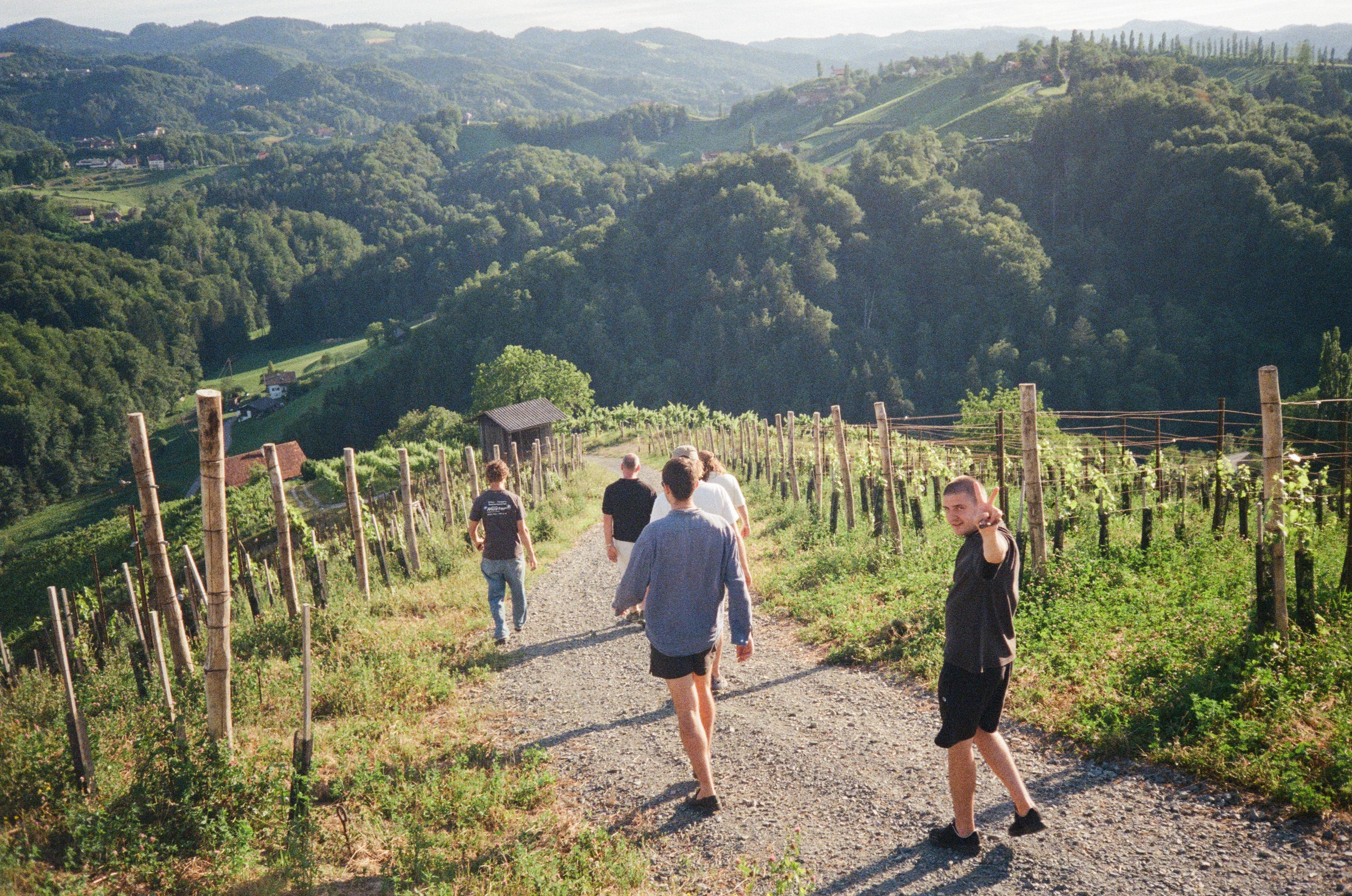
We started the day in Franz’ 3 hecate vineyard in Bad Gams, 10 minutes from his cellar in Sankt Stefan.
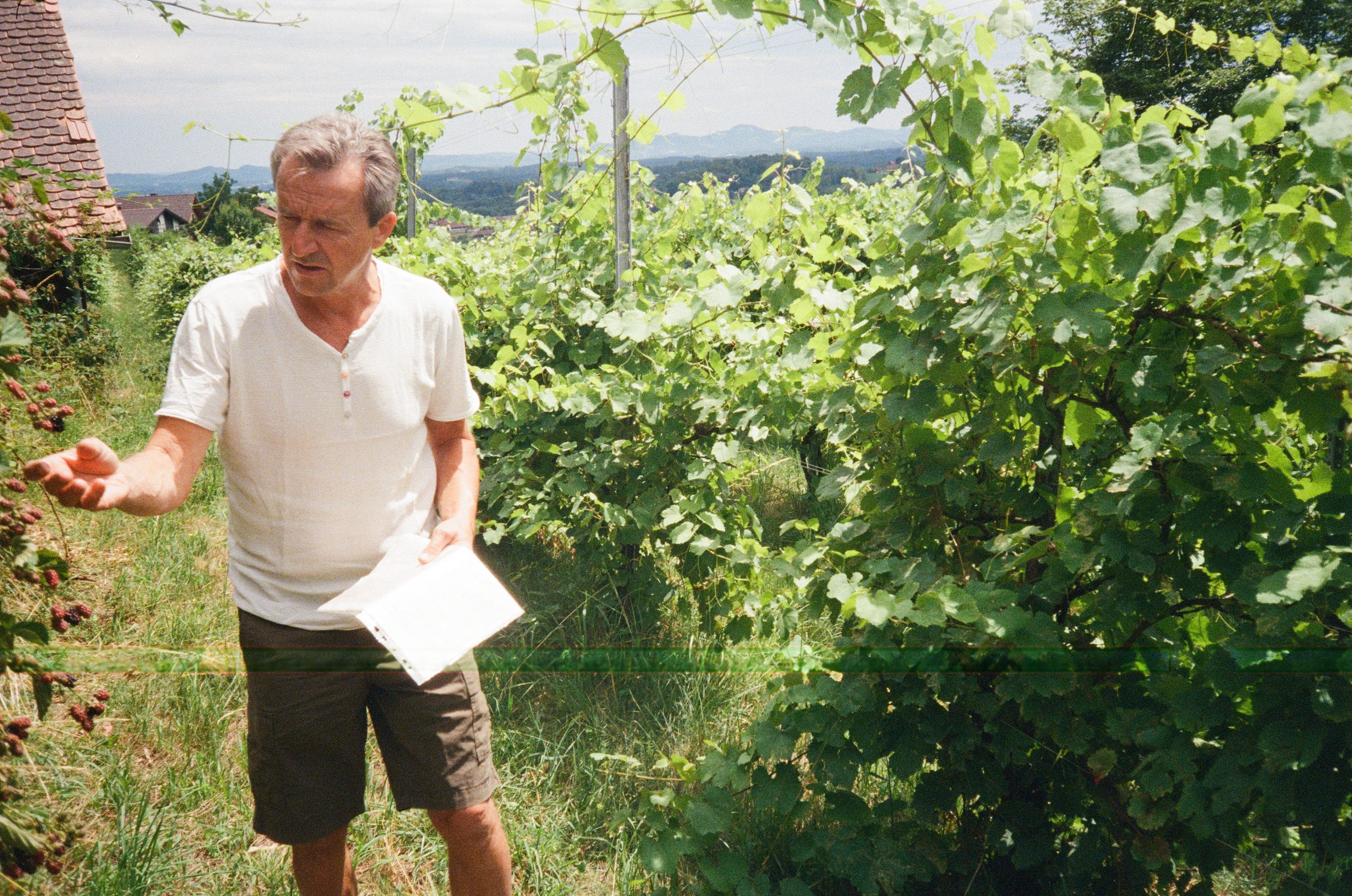
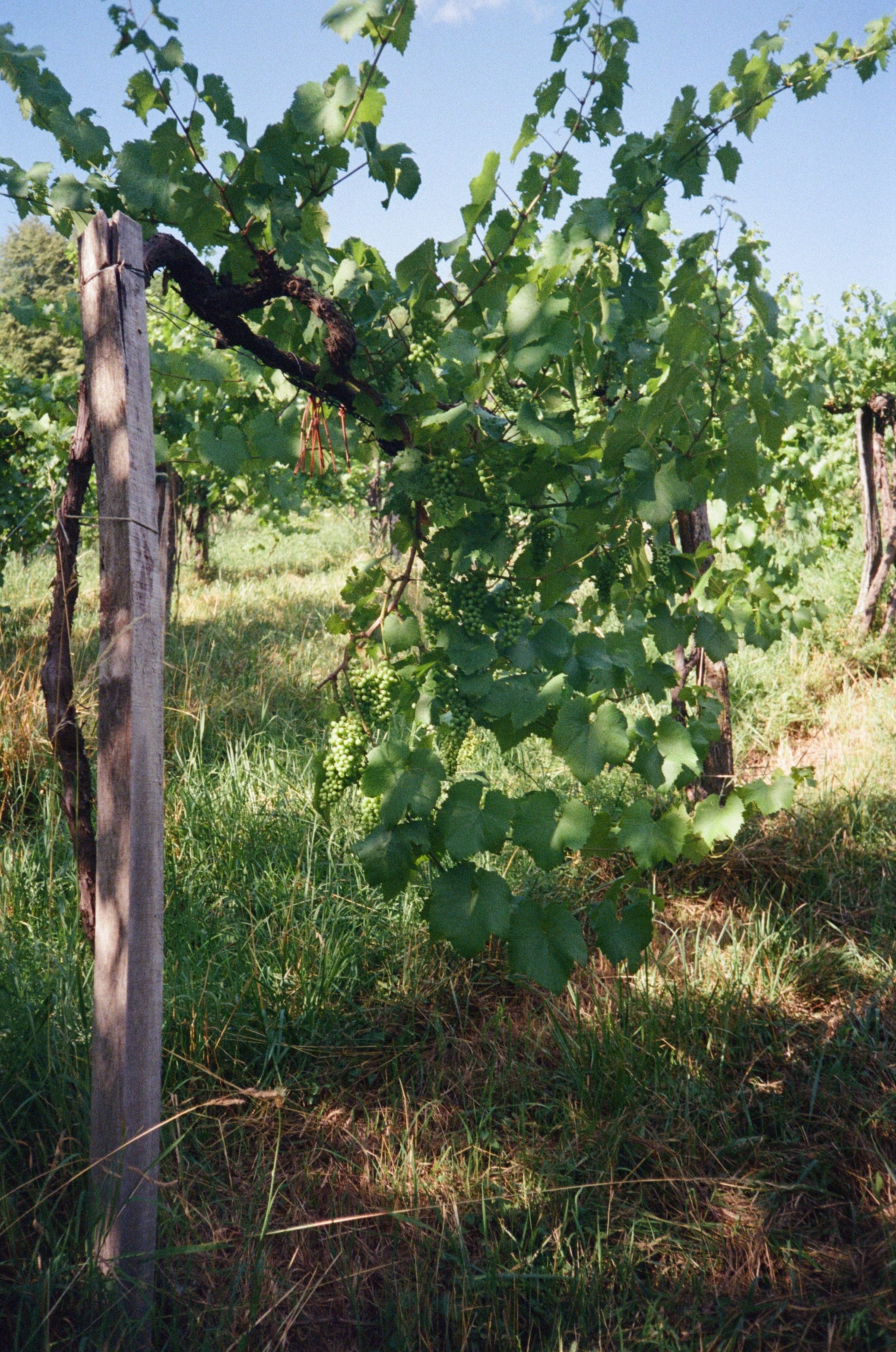
In this vineyard, Franz’ experiments with minimal pruning, in which, besides a few interferences and de-leafing when it gets too much, he lets the plants grow wild. The idea is that the vines will find their own, most natural way of being.
This pruning method diminishes the yields, but increases the concentration in the fruit — therefore, the energy and tension in the wines made using these grapes is even bigger than from grapes in neatly pruned vineyards.
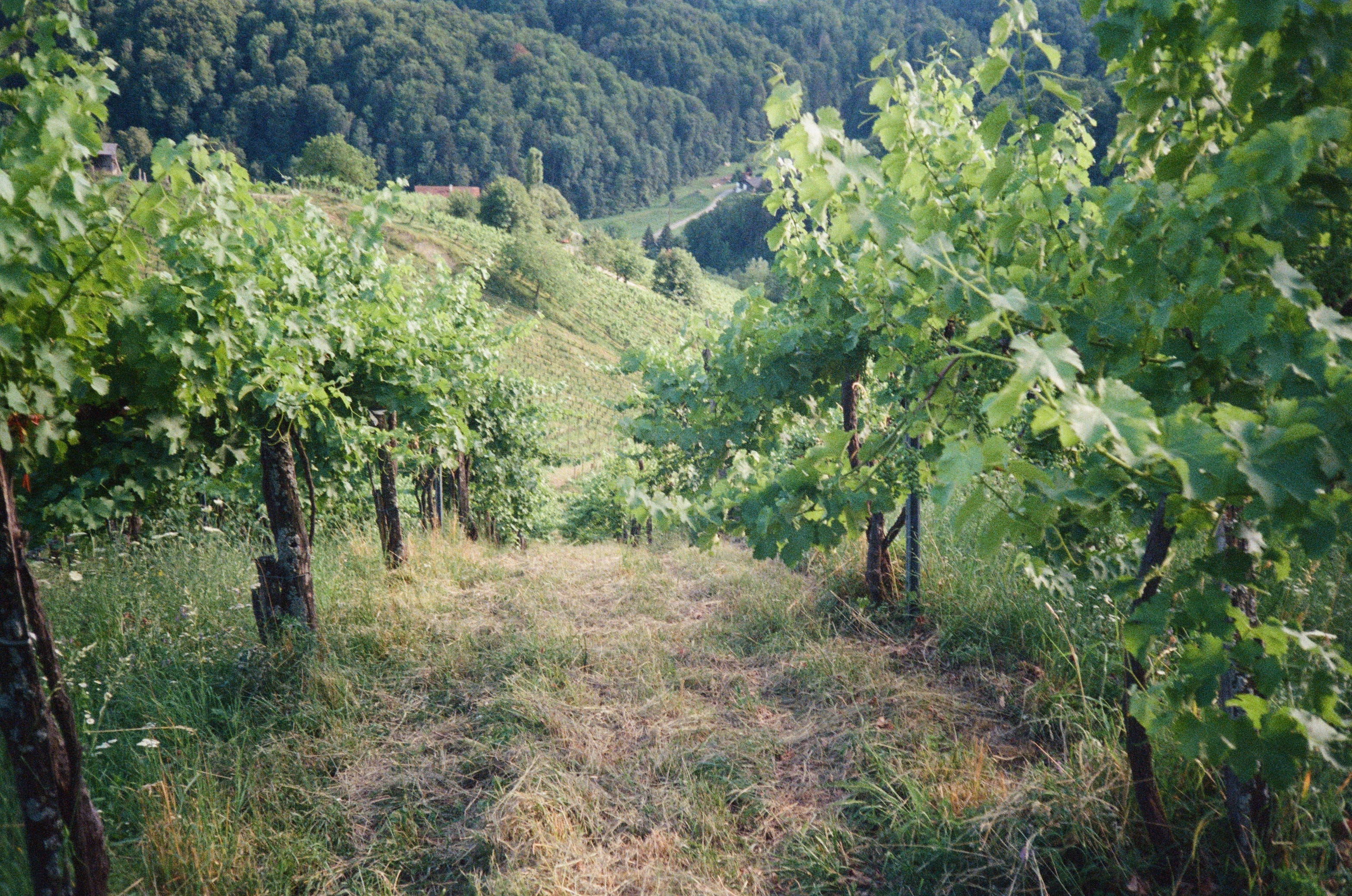
In this vineyard, the vines grow in all directions, but that’s also the whole point of the minimal pruning. The plant will find its own way, which is the ‘best’ way for nature. For those picking grapes in September, this will still pose quite a challenge…
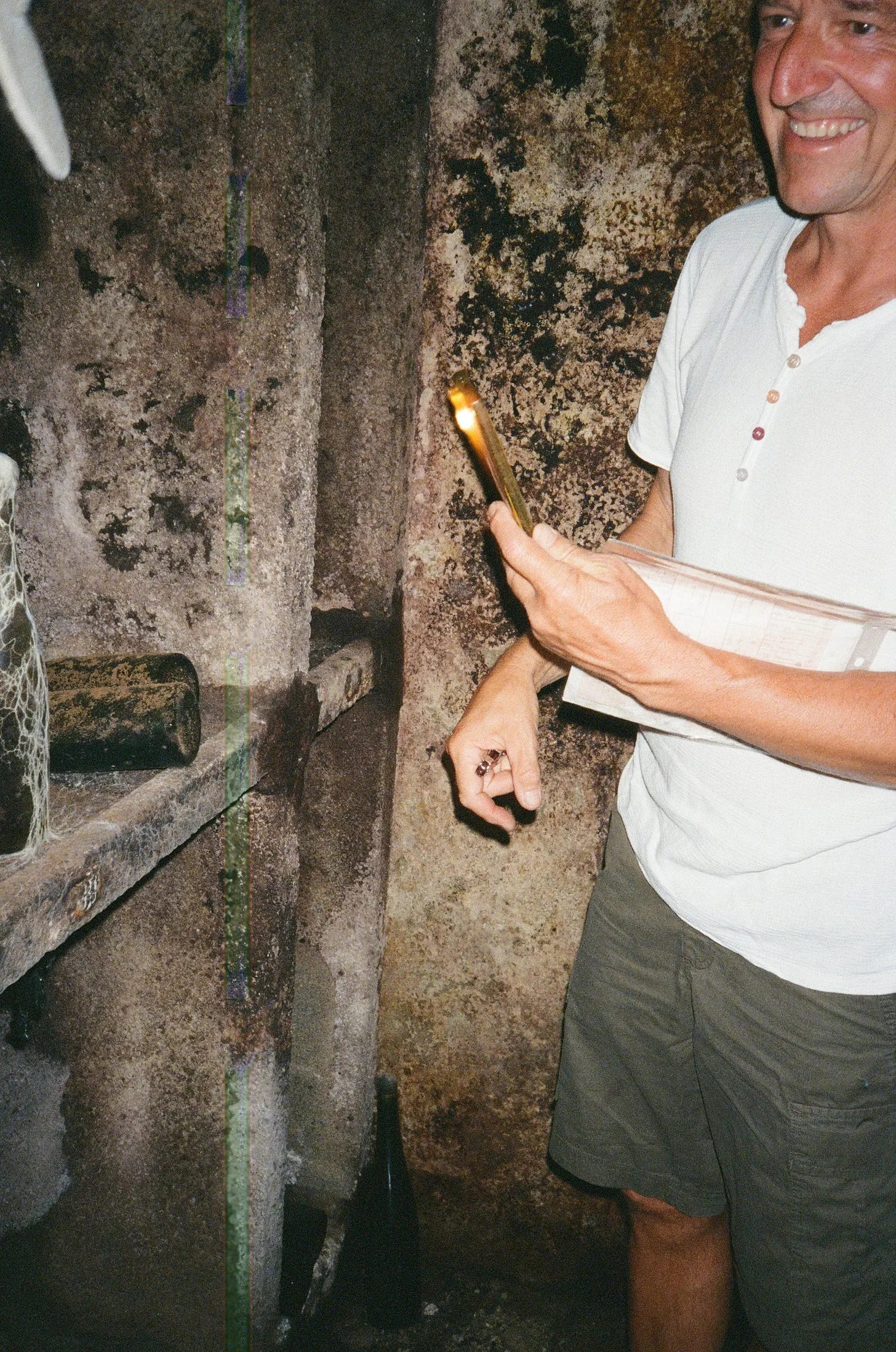
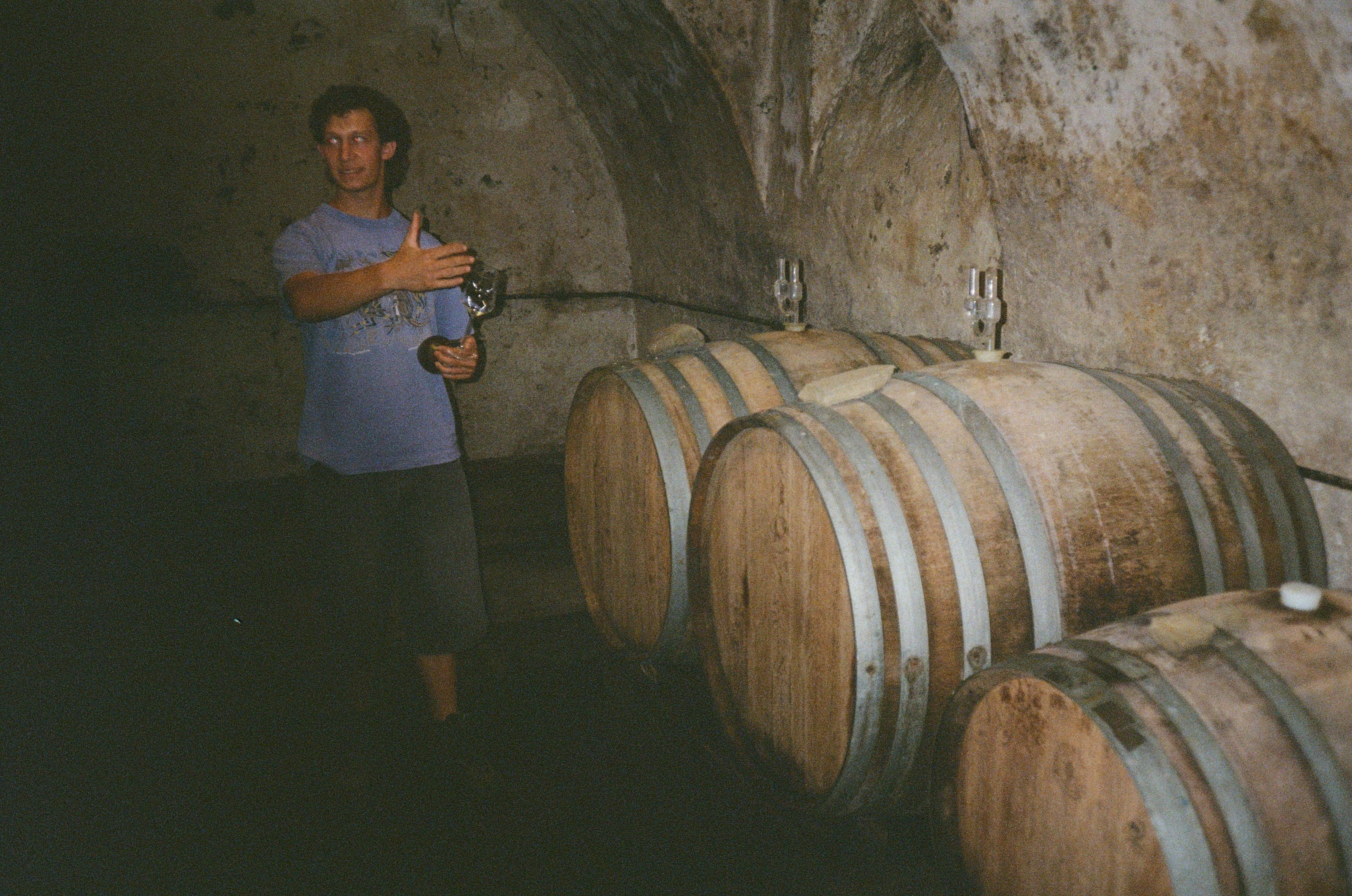
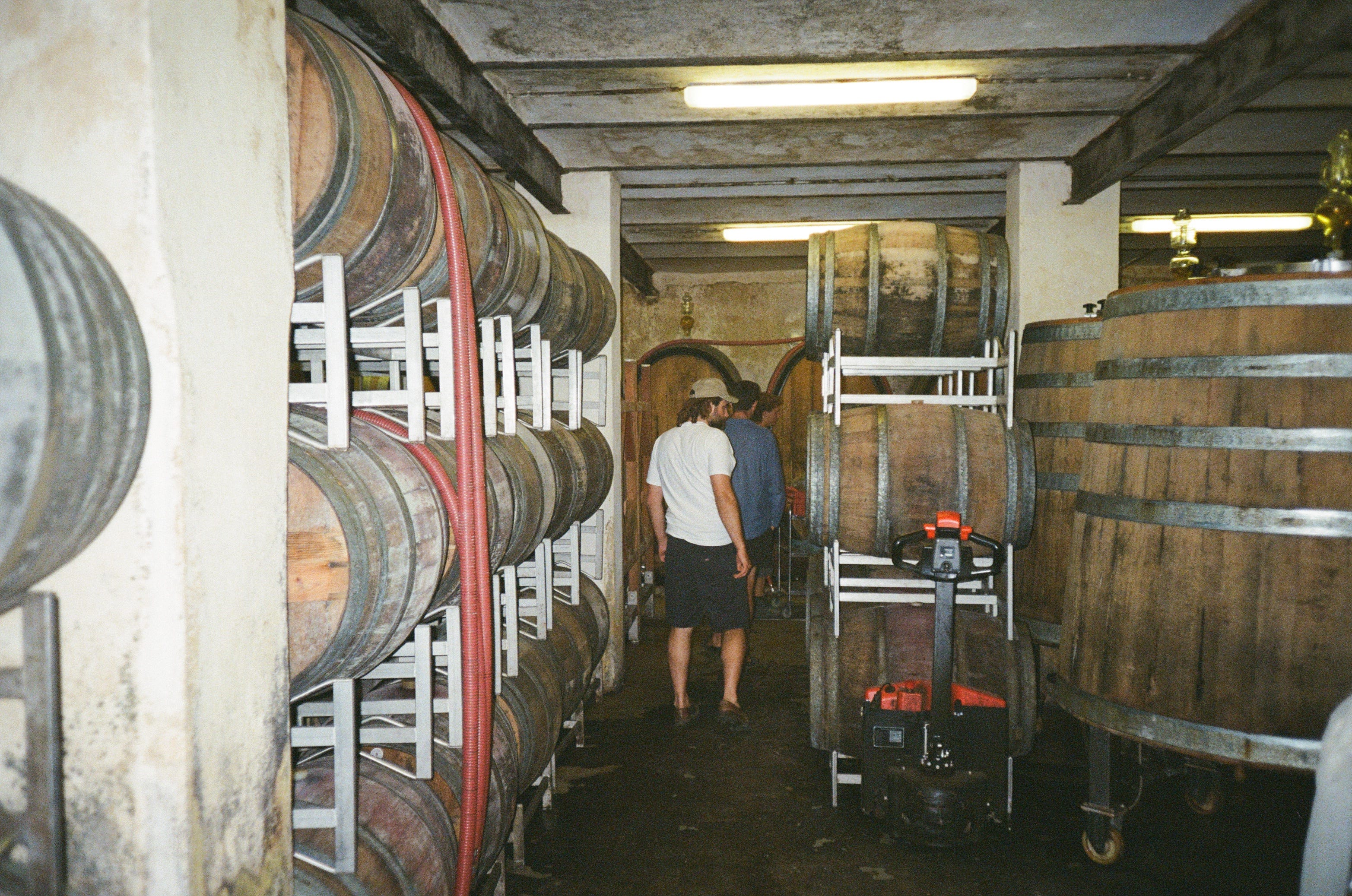
In a cellar beneath this vineyard, Franz maintains an inherited collection of Styrian treasures from the 1940s through to the 1970s — some of which, upon analysis, were found to contain as little as 22 milligrams of total sulphites per litre…
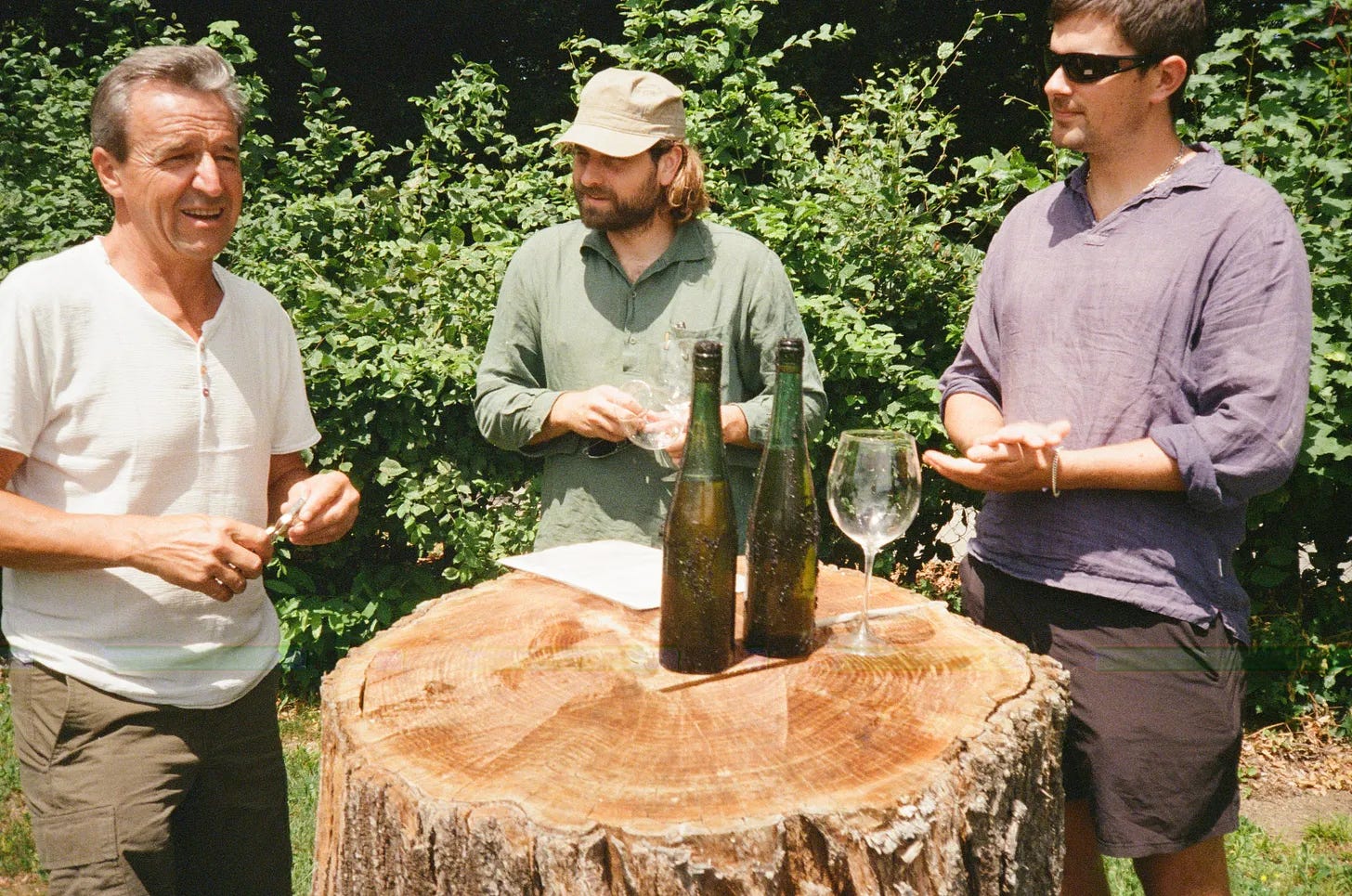
We tasted a Schiller from 1946 and a Muskateller from 1957: both extraordinary time capsules from a world long since passed. Both wines did, it has to be said, contain a touch more sulphites than we are typically used to…
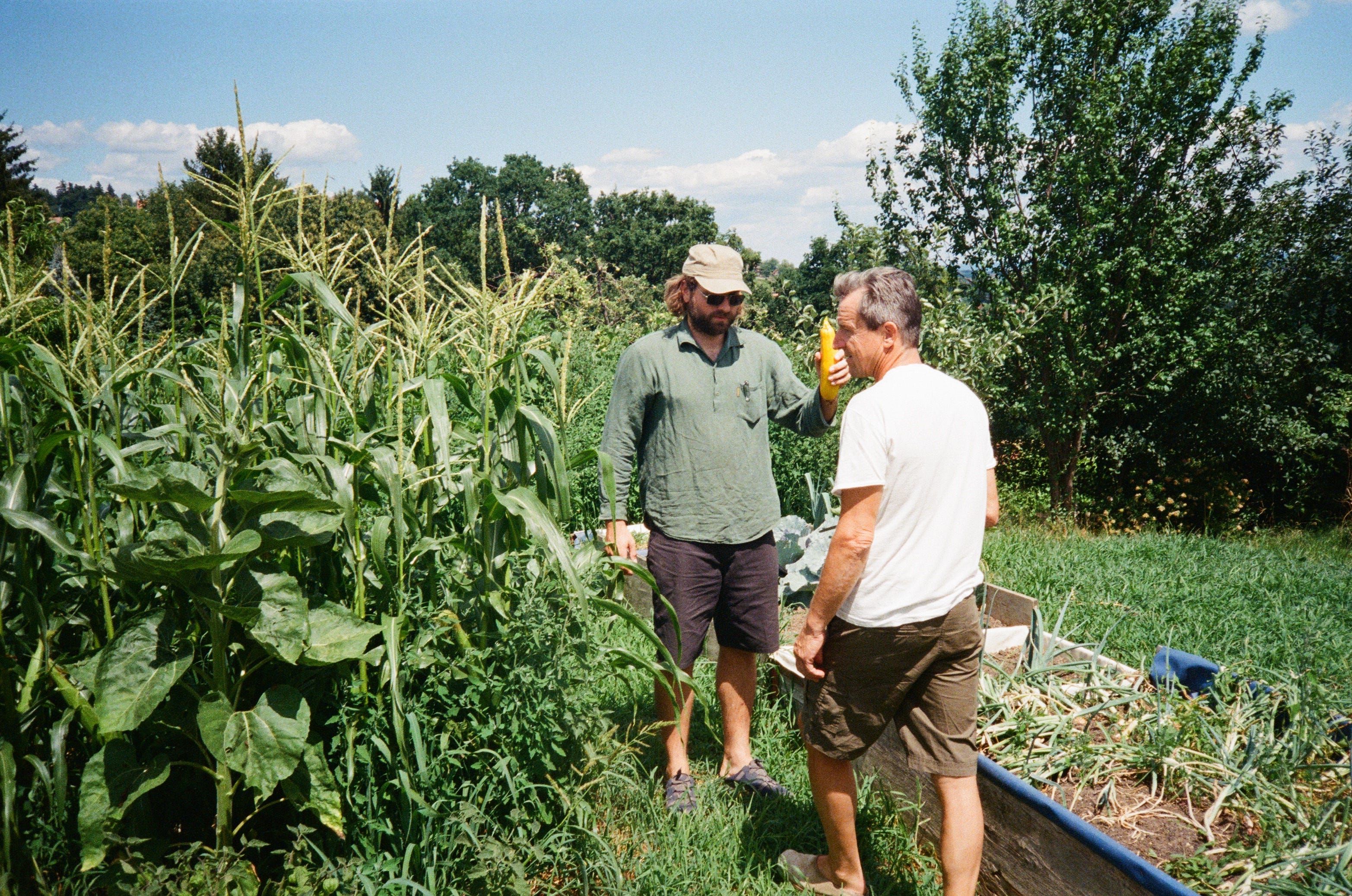
Lunch with vegetables from Franz’s own garden — courgettes in abundance!
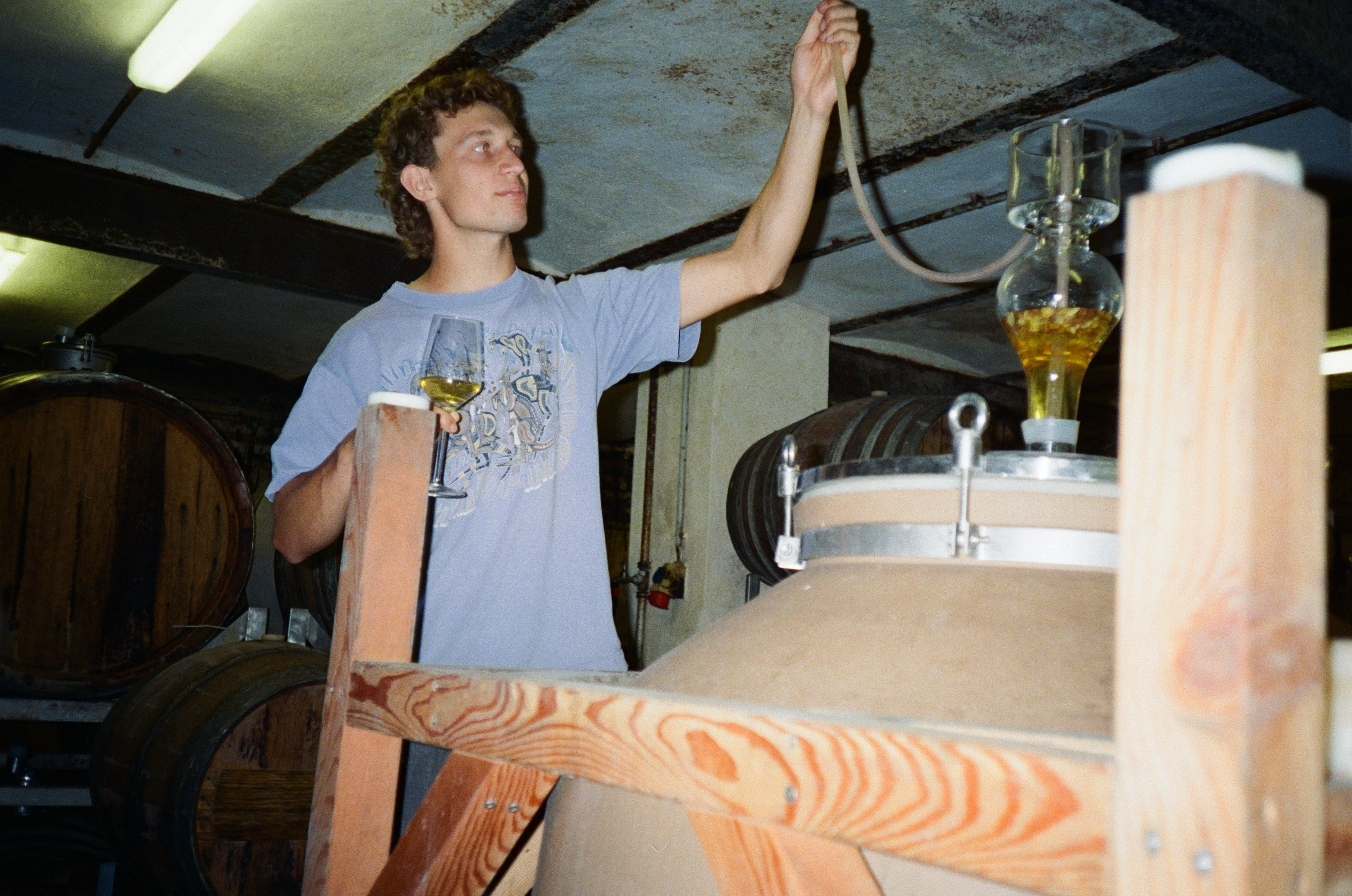
We tasted and drank our way through almost all of Franz’s wines, and were most struck by the newest TLZ Karmin 2024 and the TLZ Sonne 2017…
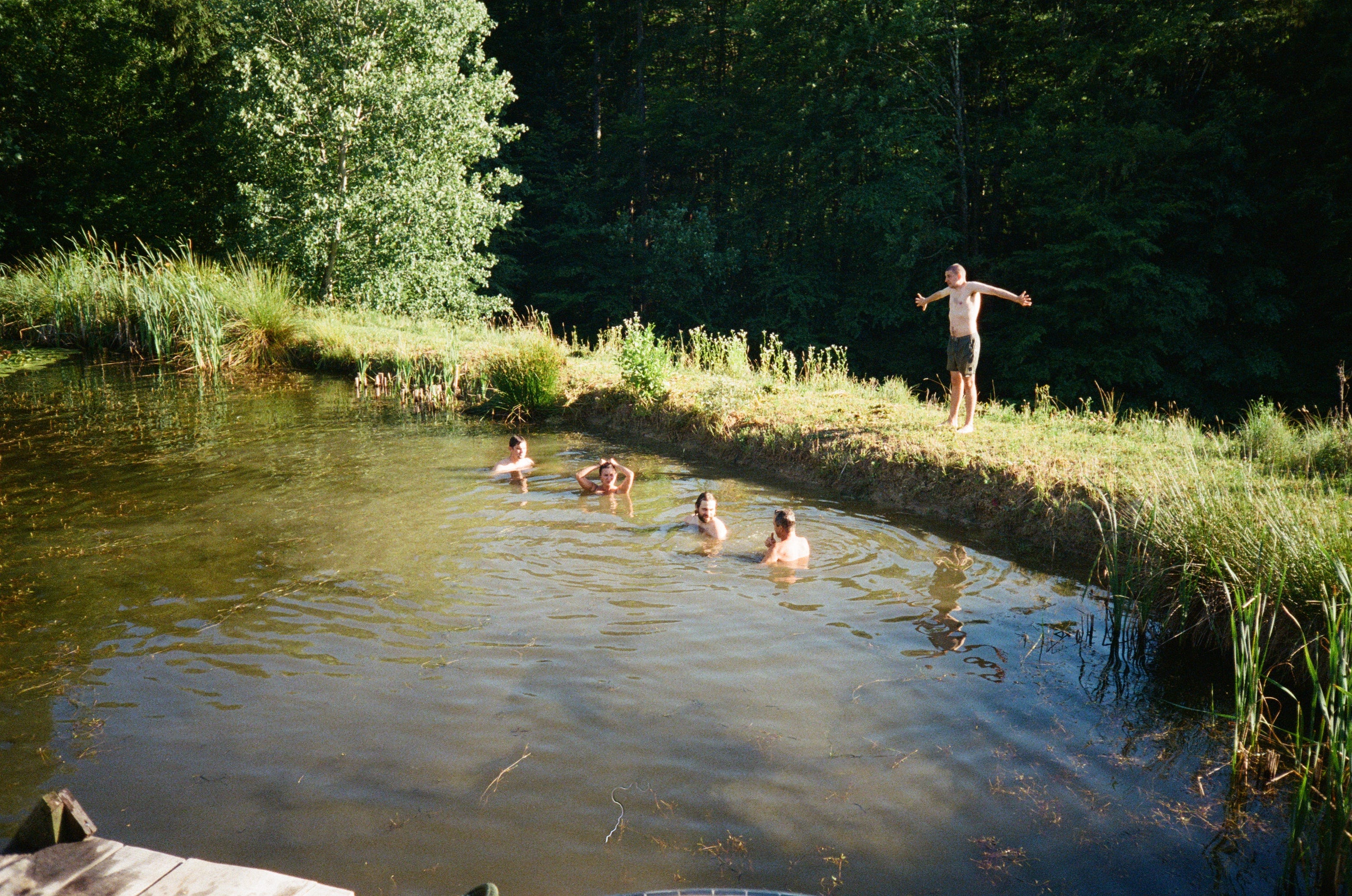
We finished the day with a swim in the pond Franz laid out at the foot of the vineyard in Sankt Stefan. Best way to spend a Friday!
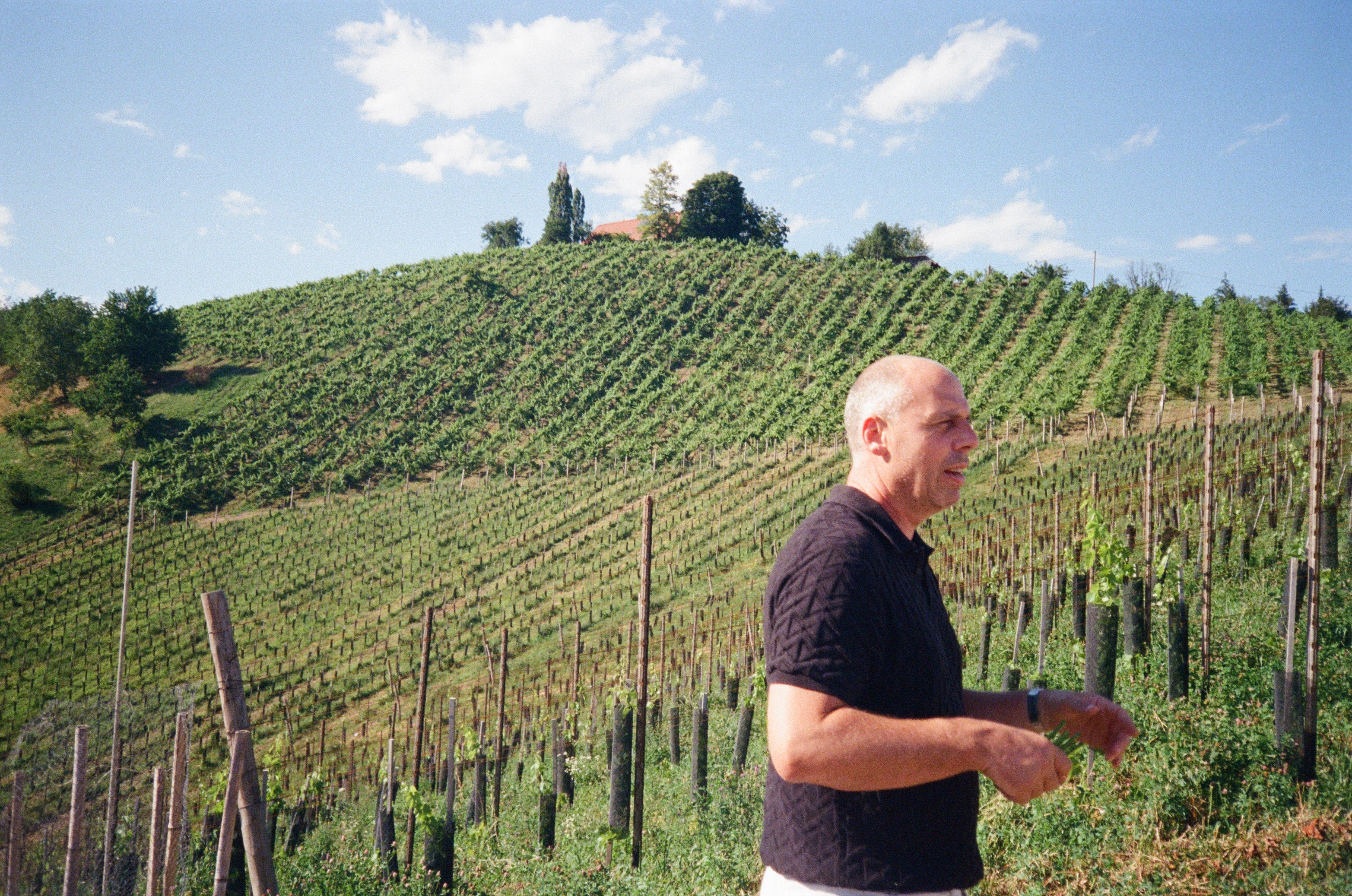
Son Elias led us through the Graf and Sgaminegg vineyards and explained how the Musters only very lightly ‘scarify’/cut the soil, and do this only every few years, which means they are not really ploughing at all. This no-till approach was new to us, but it goes a long way towards explaining the depth and breadth in their wines.
The Musters also work according to a single-wire training system, where the vines on their steep slopes are trained relatively high along a single line. This opens up the canopy and significantly reduces the pressure of disease and mildew.
With Elias, we tasted his 2025s and 2024s in his cellar — Sauvignon Blanc and Gelber Muskateller — of which a new shipment is expected later this year.
In Maria and Sepp’s cellar, we also tasted, among other things, the 2024 and 2025 Gelber Muskateller vom Opok (both fantastic) and the barrique-aged Rosé vom Opok 2025. Summer wines in every sense.
Worth mentioning too: the Erde 2025, currently already over eight months on amphora, was rather special as well…
The view over the Sgaminegg vineyard, it must be said, was not bad either…
SATURDAY 4 JULY @ BRIGITTE & EWALD OF WEINGUT WERLITSCH
After the Musters, we drove on to Ewald and Brigitte Tscheppe of Weingut Werlitsch, where we climbed the steep Ex Vero vineyard before dinner…
Ewald showed us his new plot of Chardonnay, Sauvignon Blanc and a few PIWI varieties, planted after the landslide caused by heavy rainfall in 2023.
The vines are doing their best here, and appear to be growing along quite happily. Hopefully a small harvest in two years’ time!
The Tscheppes also apply the single-wire training system, and — as with Strohmeier — allow the vines to grow relatively freely apart from some winter pruning.
The steepness of the slope is almost impossible to capture in a photograph, but this is without doubt one of the steepest vineyards (without terracing!) we have ever visited. Working here year-round is not without its hazards, but on the positive side, it’s GREAT for calf-toning.
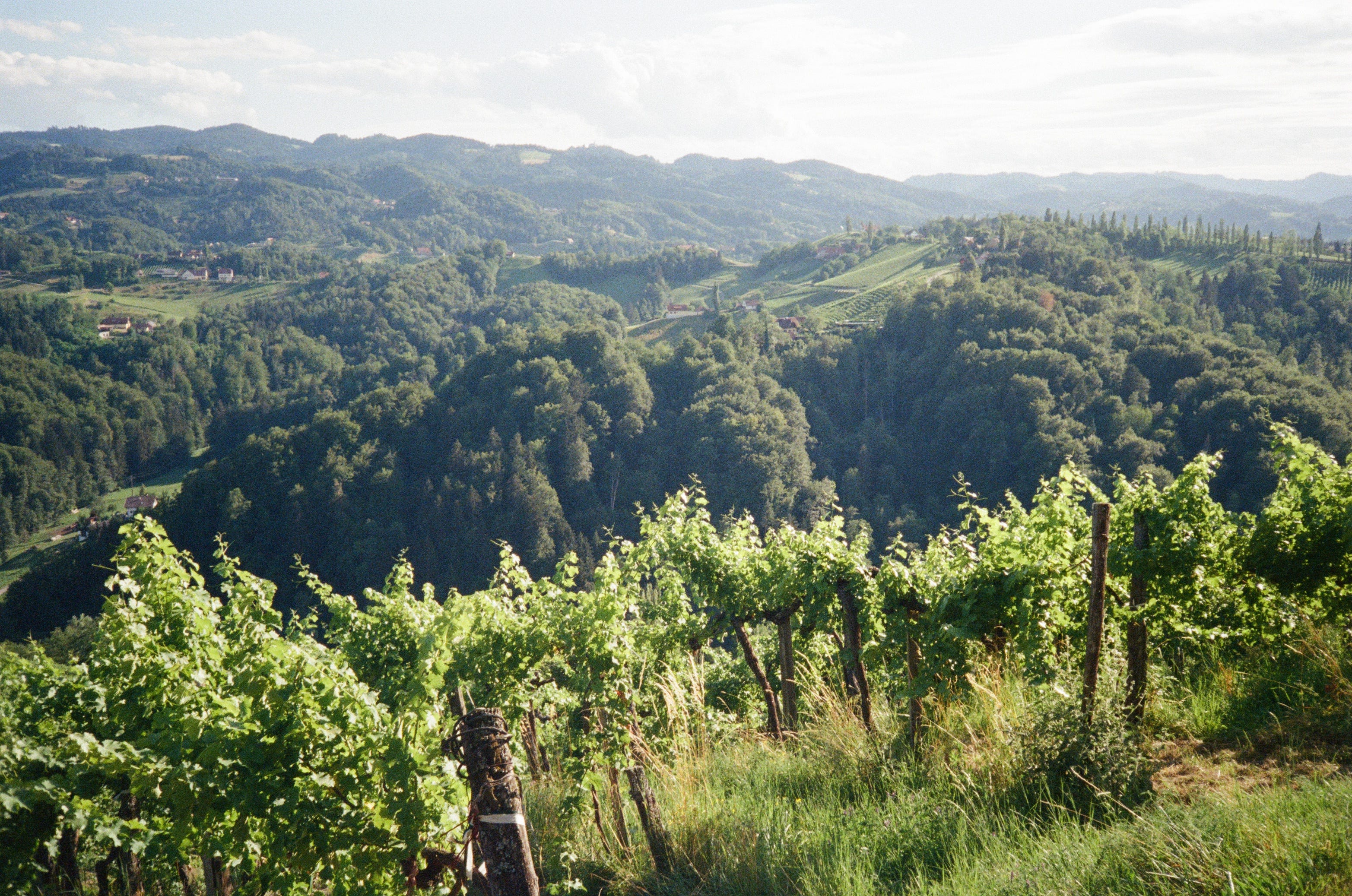
Fortunately, the view — partly across the Slovenian hills — is not bad at all.
On our way to dinner, of which there is regrettably little photographic evidence… We cooked Amur carp, dry-aged by Norbert Thaller, and drank 2007 Erde and 2009 Freude together with the Tscheppes and the Musters. Big success!
Japanese winemaker Shun Minowa works in Emilia-Romagna in the Val Trebbia on the other side of the river from Denavolo. Known for his serious orange wines, his red is less known but maybe even more special as he only produces it in certain vintages. 2021 was such a vintage, and so we have Anitya 2021, made of Pinot Noir and Pinot Gris harvested in August 2021, combined with Barbera and Bonarda in September, all fermented together with just four days of whole-bunch maceration. It sounds like a short maceration time, but the wine is quite deep and serious, like his oranges. The wine is bursting with wild cherry, cedar, tobacco and an earthy smokiness that is unmistakably Shun Minowa, and after four years of ageing in 500-litre barrels, Anitya 2021 has a beautifully long and harmonious finish.
Last month we announced new wines from Justine Loiseau and Patrick Bouju of La Bohème — and forgot to mention their wonderful Pineau d’Aunis. Pineau d’Aunis 2025 is made from organically farmed fruit from the Loire, from the same plots where the Puzelat sisters have also sourced their Aunis in the past. Compared to the 2024, it is a touch deeper in colour, but still gloriously light — all wild young fruit, pepper, cinnamon, minerals and cherry acidity. Complex and uncomplicated at once, and definitely worth a special mention.
SHORT NEWS: VALLI UNITE’S ALESSANDRINO ROSATO 2025
From the always-reliable Valli Unite in Piemonte, alongside all their familiar wines, we are receiving for the first time their Alessandrino Rosato 2025: a large blend of six grape varieties, aromatic and fresh with herbs, wild strawberry and peach. Where Valli Unite’s rosé Rosatea is more full-bodied and warm, Alessandrino Rosato leans towards a Provence style — though no producer in Provence makes wine this good or this genuinely refreshing at this price…
SHORT NEWS: 2NATURKINDER — AFFORDABLE BUBBLES, VATER & SOHN IN MAGNUM AND JEROBOAM, BRUTAL!!! AND BAT-NAT
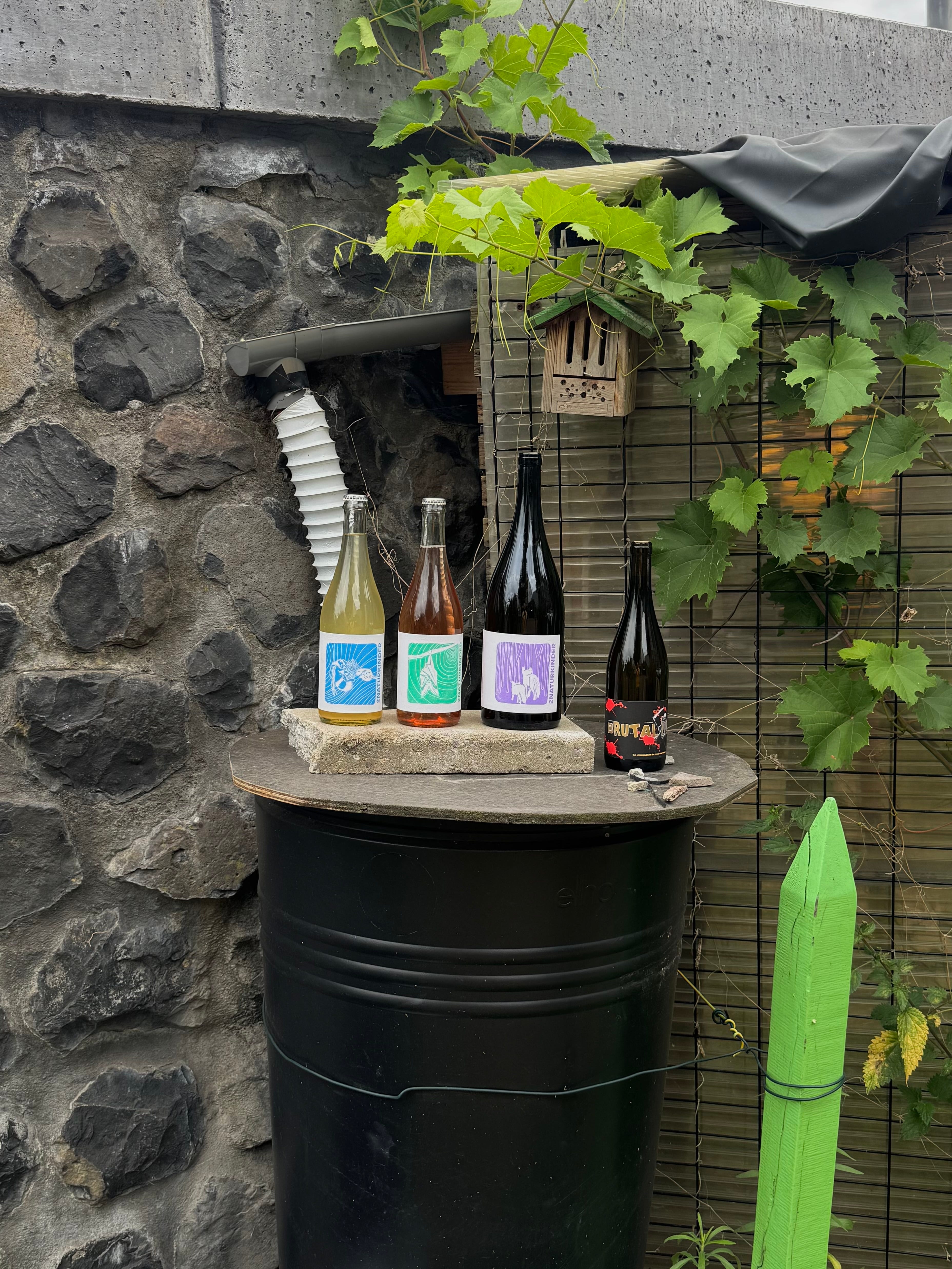
Despite last month’s announcement of new 2Naturkinder arrivals, there are four brief updates from Melanie and Michael worth sharing. Alongside familiar faces, we received the new white sparkling wine called Wiesenhummel 2025 — previously known simply as ‘Bacchus Pet Nat’, now named after the common meadow bumblebee of the Frankish vineyards. Tropical and aromatic in character, with plenty of freshness from early harvest, low alcohol, and a great deal of pleasure for a very good price.
Furthermore, we also now have magnums and jeroboams of Vater & Sohn available. V&S is the crowd-favourite blend of Müller-Thurgau, Bacchus and Riesling from limestone soils, with a remarkable combination of freshness, complexity and minerality from its part-steel, part-oak ageing. We also received the elegant Riesling Brutal!!! 2024, grown on the same limestone hill as Heimat and Fledermaus, which is enormously layered, with deep mineral quality, a hint of petrol but refreshingly light in alcohol.
And finally we have Bat-Nat 2025 back in stock — a sparkling rosé of Pinot Meunier (famous in Champagne, but would be called Schwarzriesling in Franconia) from the bat gardens, pressed after one night of skin contact and hand-disgorged. It ferments dry in bottle like a pét-nat, with relentless energy, fine cranberry fruit and salty minerality. Capable of putting plenty of Champenois Meunier to shame…
ZUIVER BAR IN AUGUST
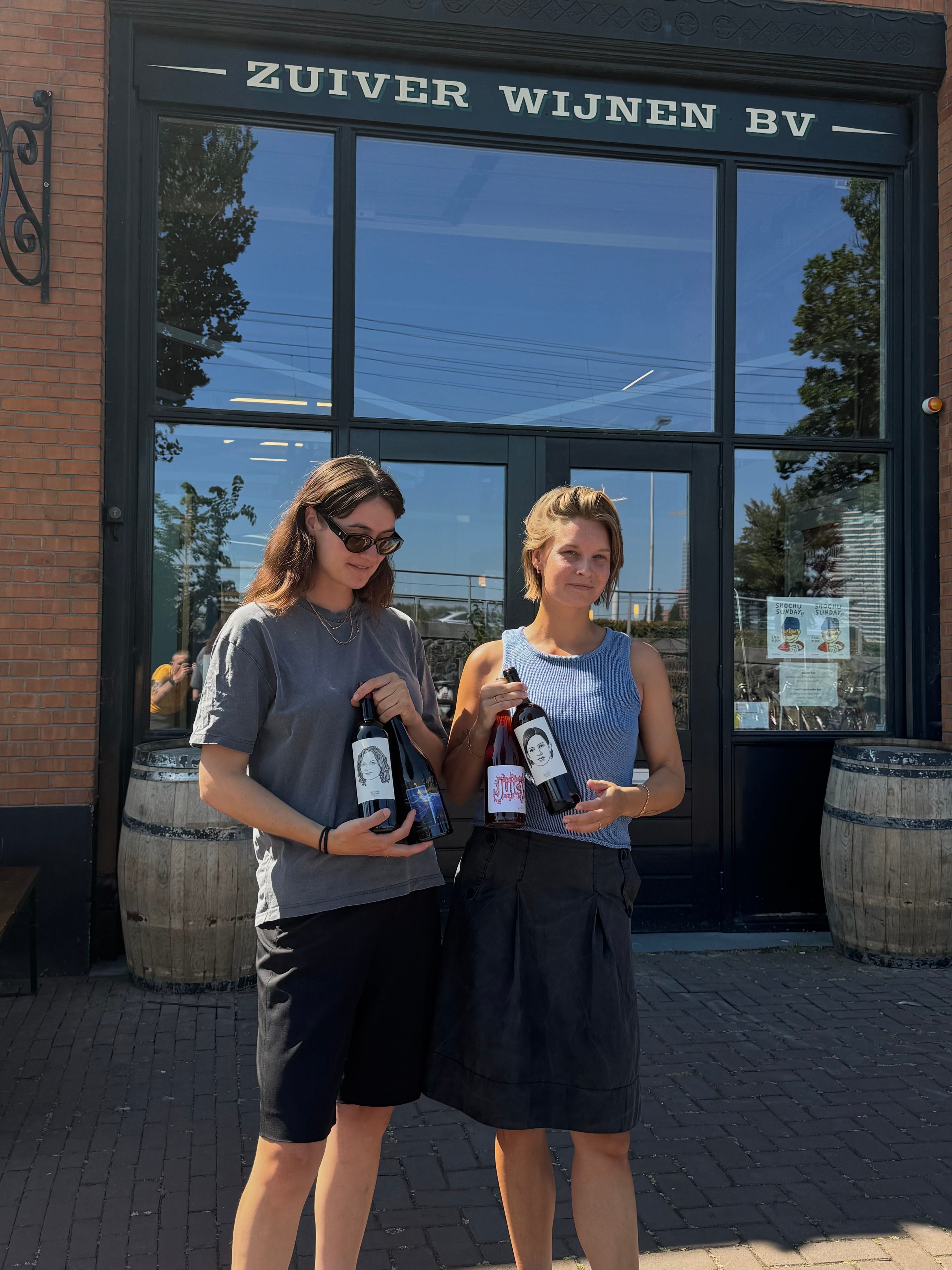
The last two and half months, we have been having lots of fun at Zuiver Bar on the De Ruijterkade, and July was a very special month amidst all of it! We hosted Franz Strohmeier and Mattis Neumann on the 15th, and then — just last week — welcomed Milan Gataric of Restaurant Lux as guest chef for an evening of Bencze Birtok wines and exceptional food. We are getting more comfortable in the space every week, and wanted to inform you about an exciting evening planned for August.
On Wednesday 19 August, Isabelle and Josephine of Table Top — who made their names at Restaurant Choux and now run their own culinary project — will be joining us. The wine list that evening will be in the hands of our old friend Rik Kleuver of Vintage Wine Boutique, who will be pouring alongside Figo.
Follow Zuiver Bar on Instagram for updates. For questions or reservations, drop us a line at info@zuiverwijnen.nl. We hope to see you there on one of these warm August evenings.
That is everything for this month — we try each time to keep things brief, but enthusiasm has a way of lengthening our scribbles… we hope the wines speak for themselves regardless.
August finds us alternately on holiday and on the road — to Burgundy, the Beaujolais, the Jura, and Sardinia — but as always we are reachable six days a week by email and phone for questions, information, or simply a good conversation about wine. We wish you a wonderful August and hope to share a glass with you very soon.
Warm regards, Dick, Figo, Job, Merijn, Olivier, Tom en Luna
Job’s very own 2024s and 2025s from Maastricht are bottled…